14 TIPS to draw better plants, trees

14 TIPS to draw better plants, trees

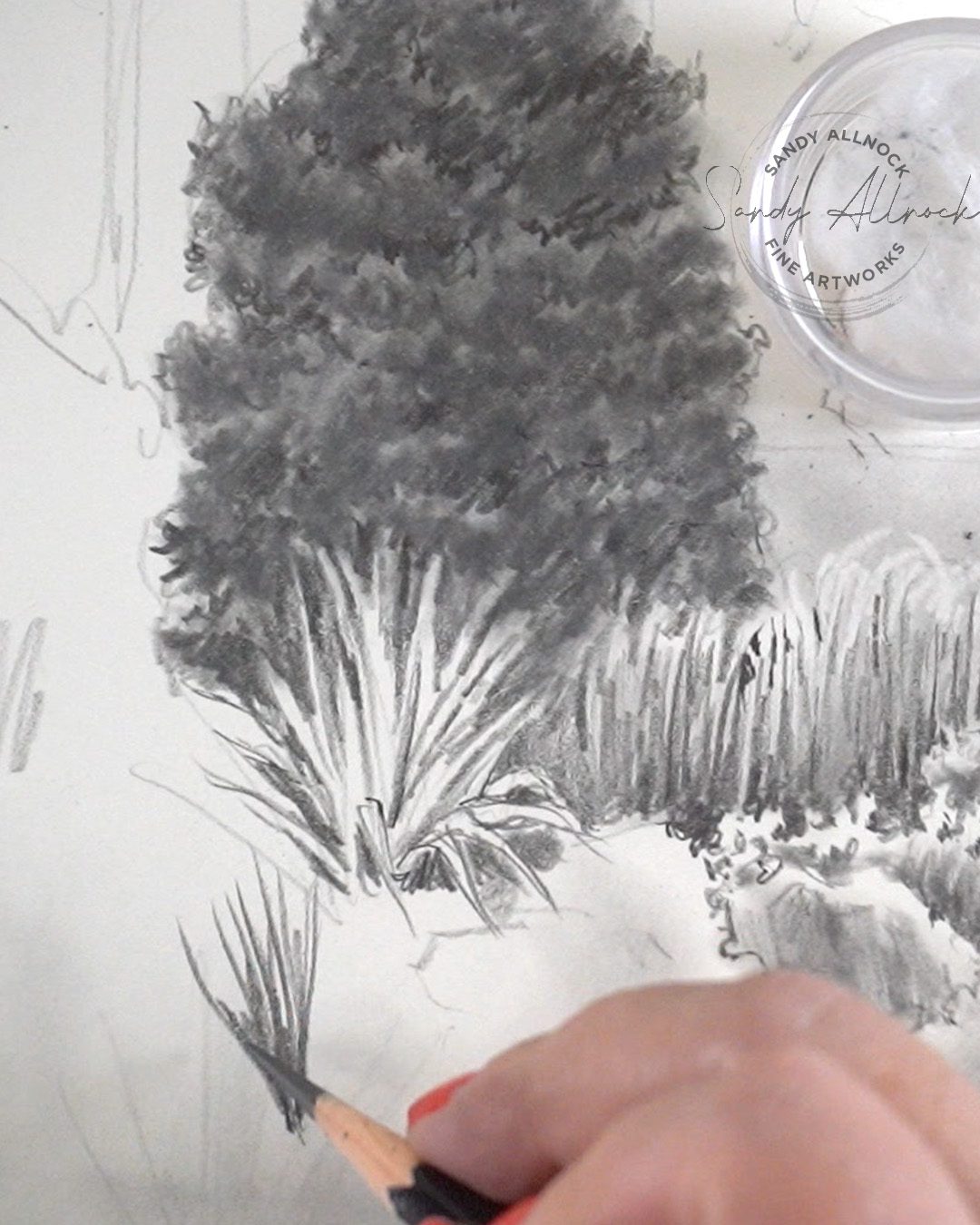
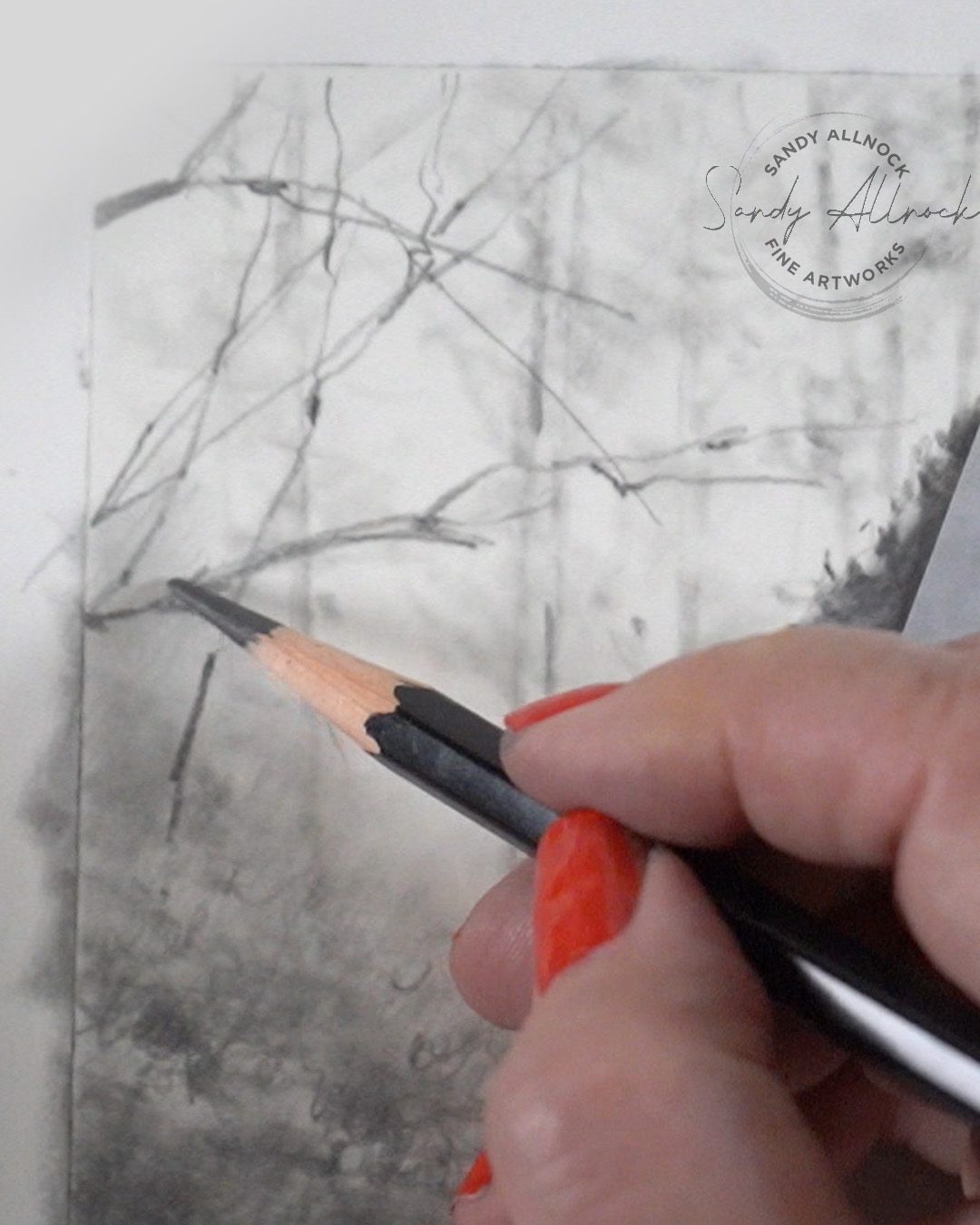
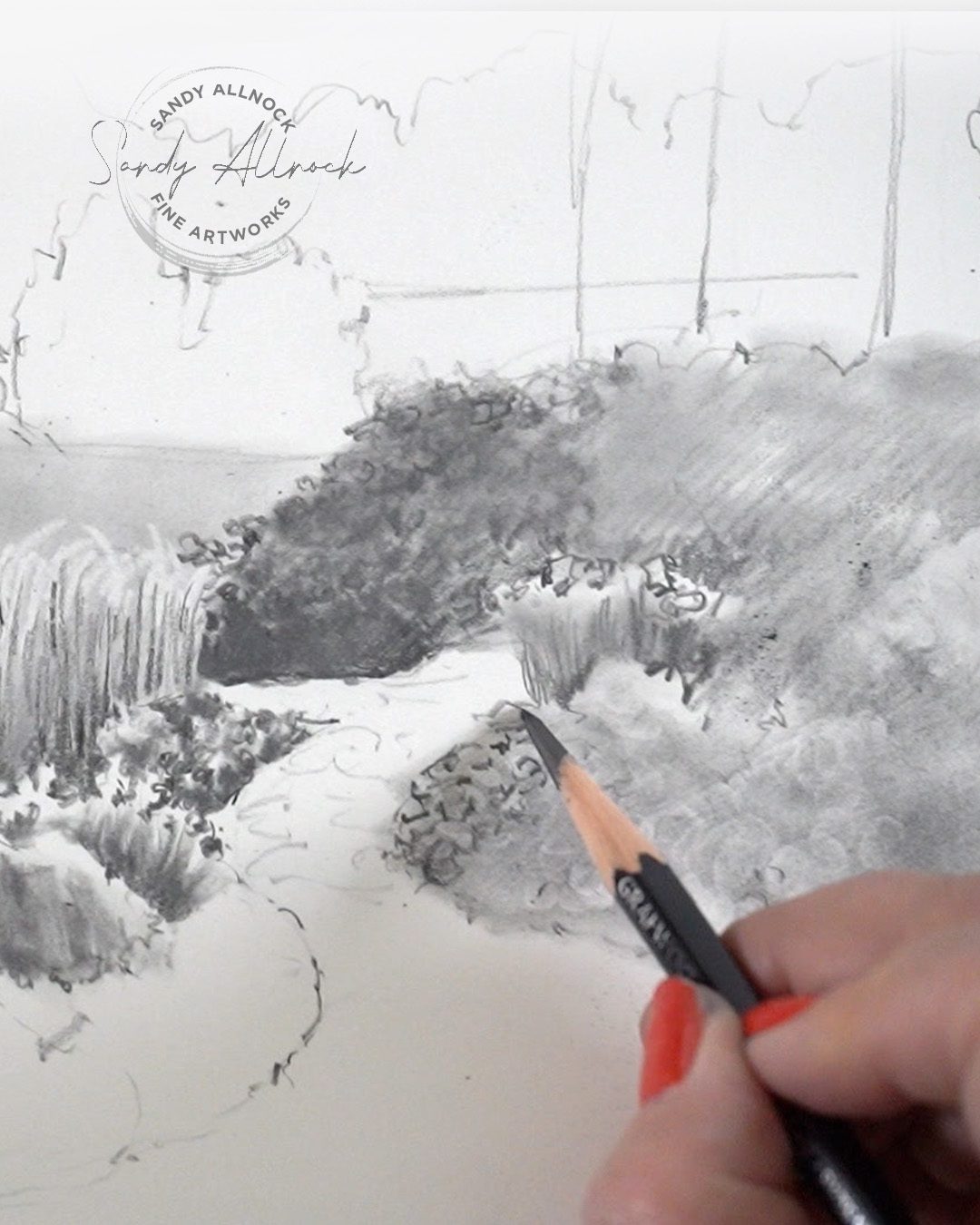
Every artist has their own ‘favorite’ subject to draw or paint. I feel most comfortable with landscapes even though I include all kinds of subjects in my repertoire. I know for some, trees are crazy hard, and I’ve started a series that may go on for a while – I would love to help more people create awesome trees. In any medium the same principles apply, though I’ll be using a graphite pencil.


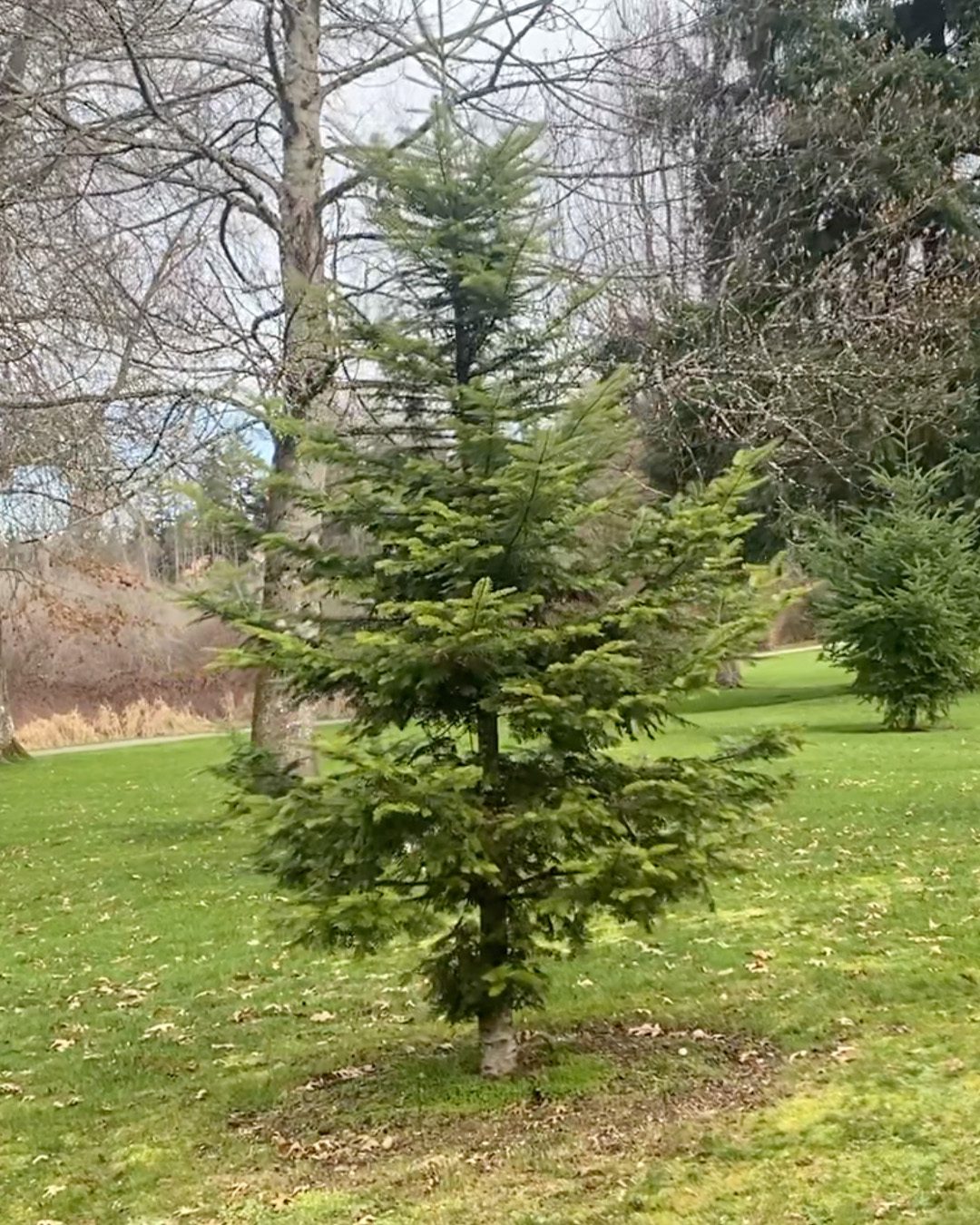
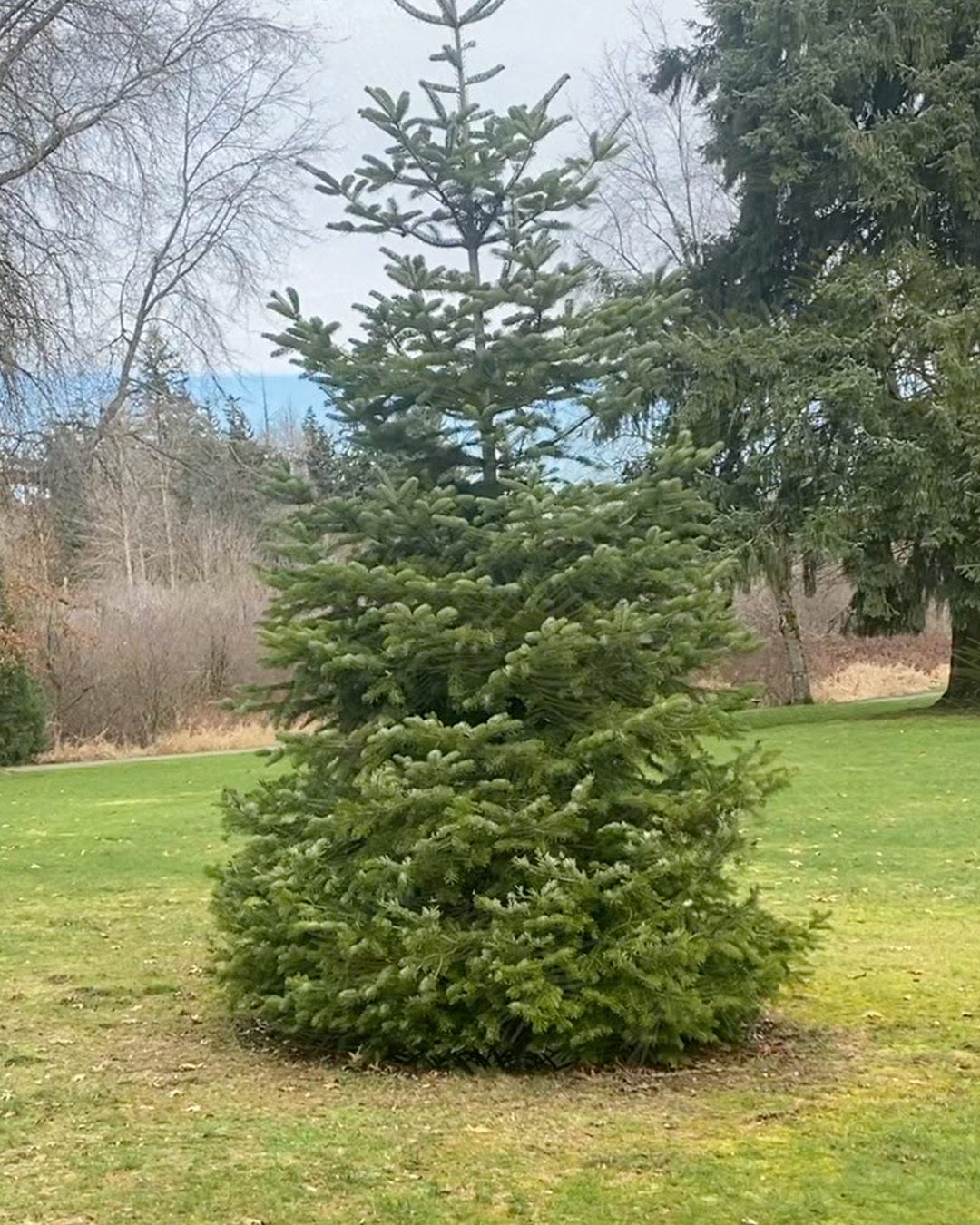
In my last tree tutorial, we talked about pine trees (left)….today we’ll talk about other plants and shrubs too (right).
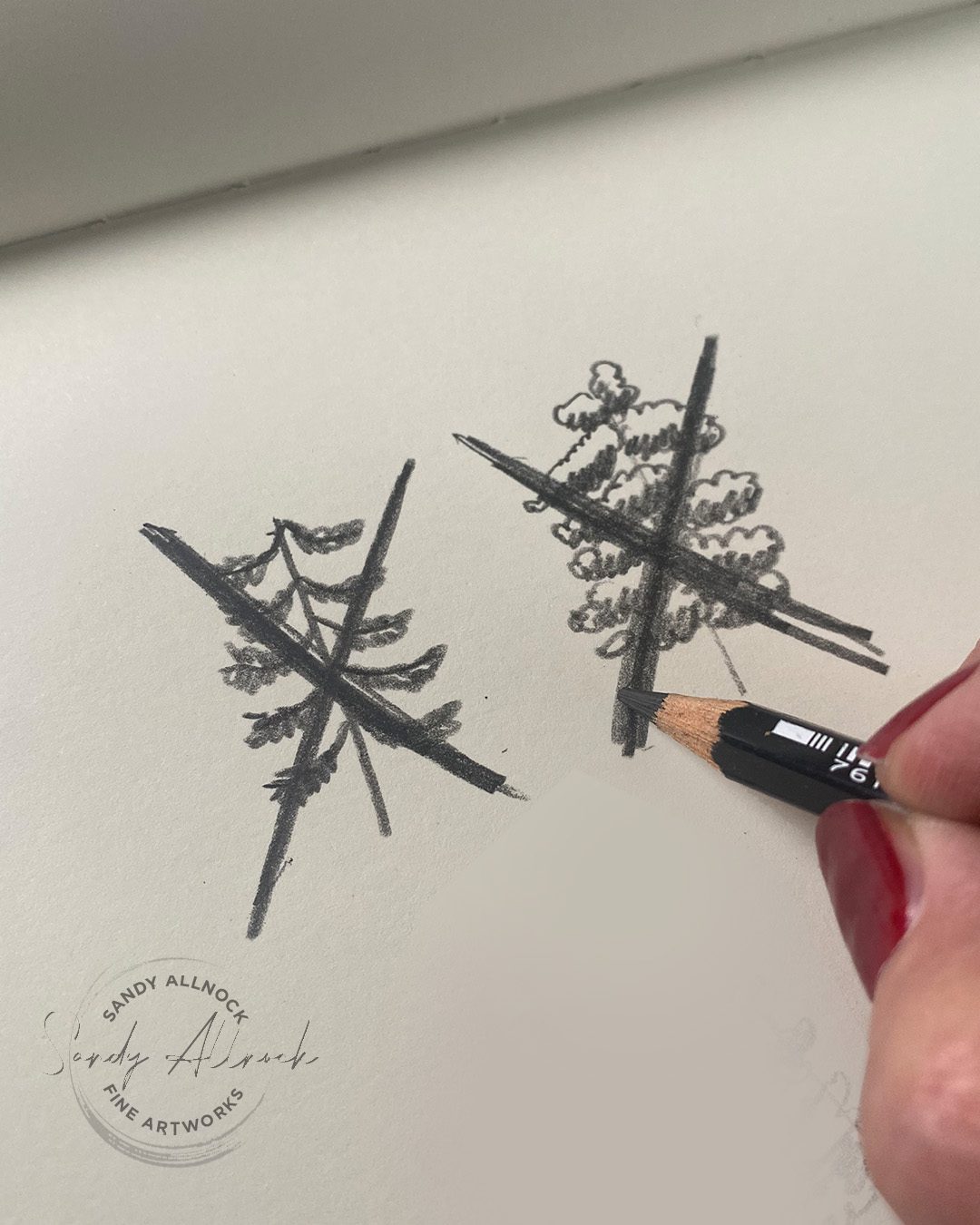
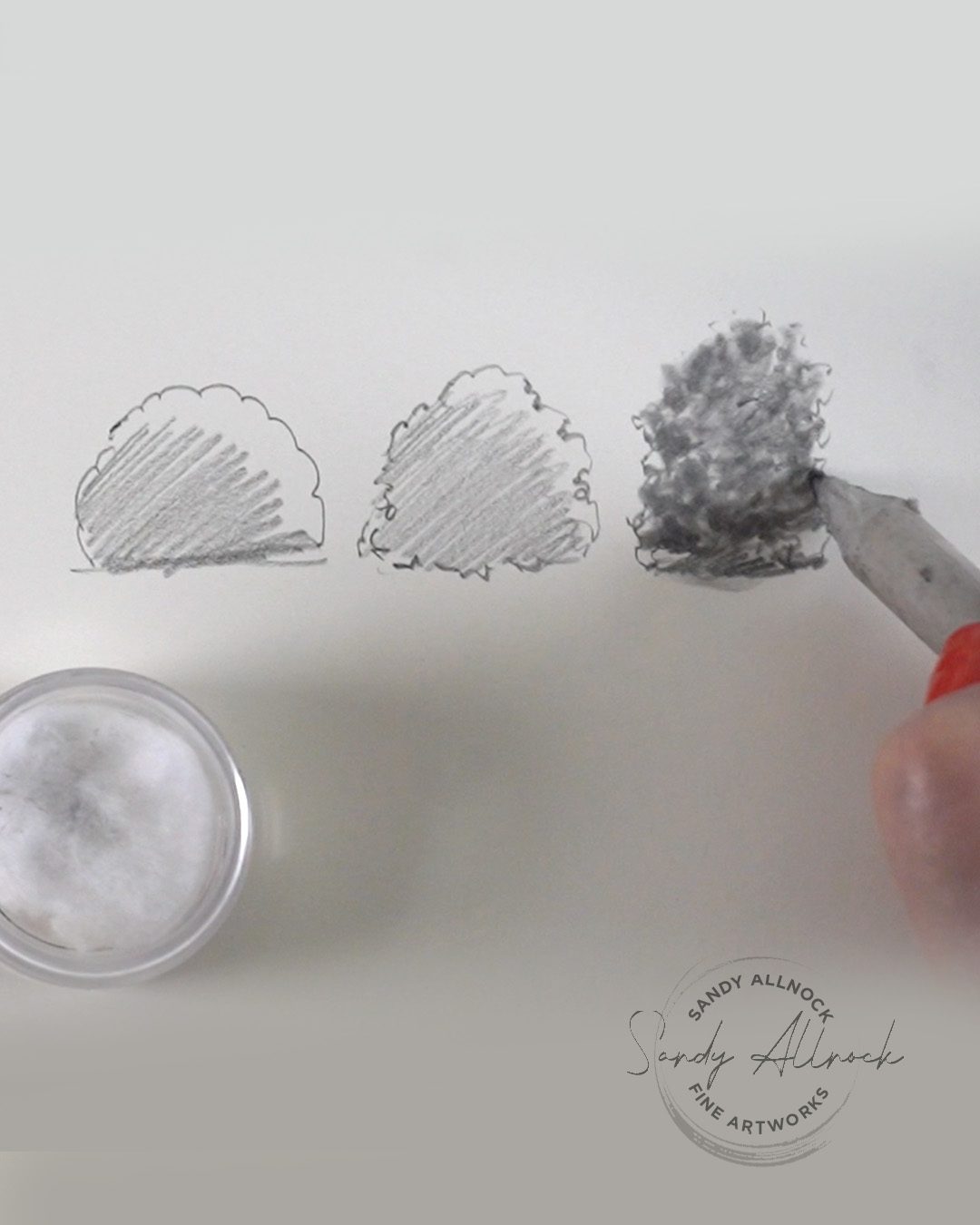
The photo reference is HERE and is by photographer Pauline West.

Tutorial: 14 Tips to draw better plants, trees

Watch the video below and scroll to the end to leave comments or questions — or click HERE to watch it on YouTube and leave comments over there. I read both dutifully!

Subscribe to my weekly newsletter, Creativity In Your Inbox

* indicates required

14 Tips

  1. Study real trees! And bushes. And plants. Walk around them, peek under branches. What’s causing shadows? How bright are the highlights?
  2. Make each plant unique. What shape are the leaves? What size? Can you see branches or are they covered? How tight are leaves packed in?
  3. Set the darks. Choose an area that has a real dark section so you have something to balance against as you work through the drawing.
  4. Create shadows within shadows. A black in a field of 85% black will create more depth than just making the whole thing really dark. 
  5. Differentiate directional grasses. Do they lean in one direction? Vertical or angled? Sharp or soft tips? 
  6. Match darks. Refer back to the dark area you already set. Make sure you populate some of that dark elsewhere in the drawing.
  7. Scale matters. Sometimes scale is dictated by the plant itself and the size of its leaves or needles. But additionally, the further away the plant is, foliage gets smaller further away.
  8. Clearest detail in the foreground. It’s closest so you’ll see the most sharp detail. Additionally, draw the viewer’s eye to the place YOU want them to look by putting the most detail and value change there (lightest light next to darkest dark).
  9. Repeat yet vary. Most landscapes will have several plants of the same variety; be careful you aren’t replicating the same plant shape or floral pattern – mix it up.
  10. Strategically deploy an eraser. Don’t forget sometimes a light coat of graphite can be erased to great effect.
  11. Layer plants. Look for where one is in front of another. Lighter plants in the back with darker in the front are much easier than the negative drawing that has to be used to go the other direction.
  12. Soften distant elements. Exaggerate the value differences from the distant background to the mid and foreground. Let them be both lighter and more out of focus.
  13. Crisp midground twigs. On top of distant elements, add in some trees or plants in the mid gruond.
  14. Leave openings in canopies. When trees have sky behind them, you can often see light areas – they aren’t empty, but will have some twigs or leaves breaking into them.
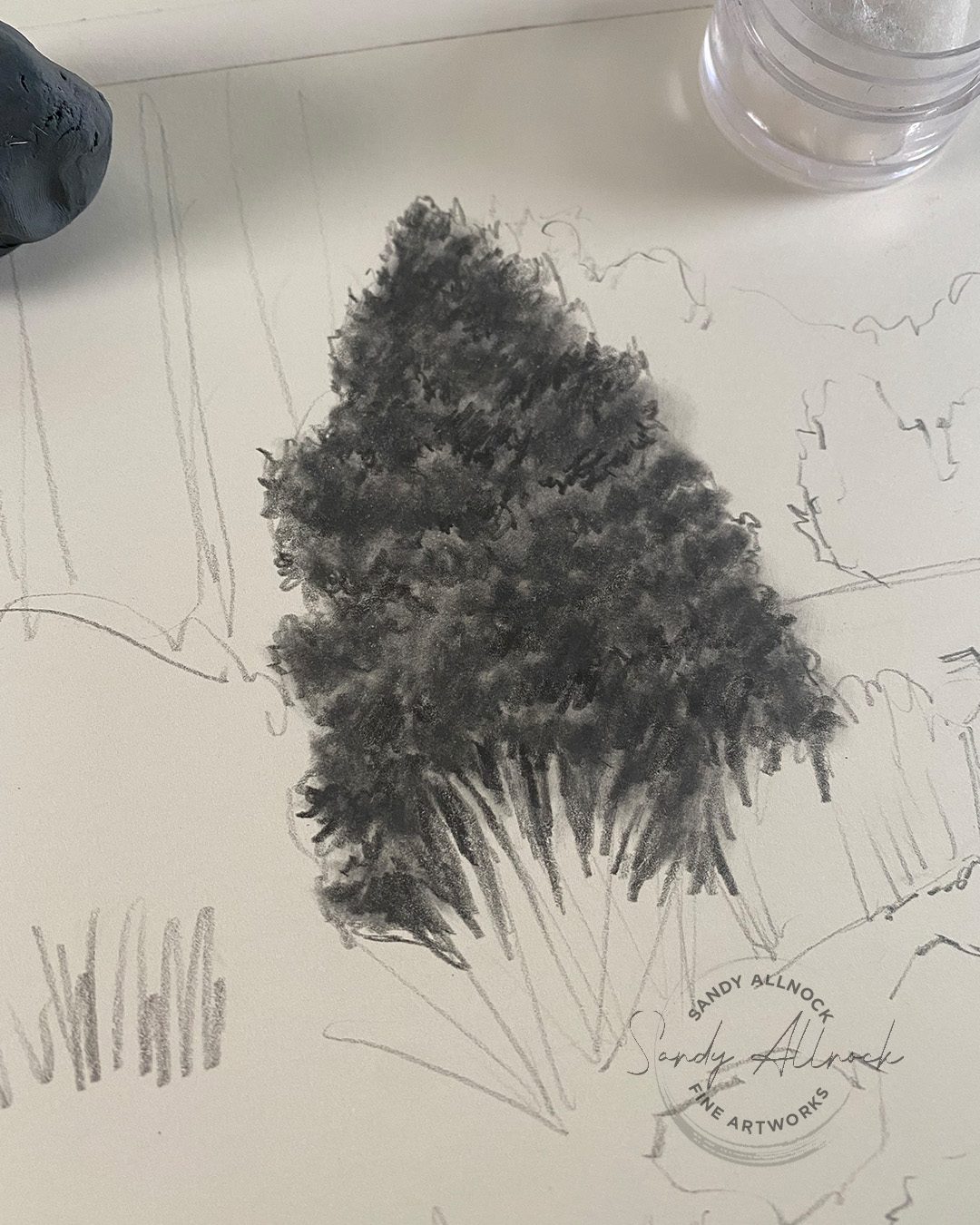
Need a class?

I wasn’t planning on a class but I had posted a few days ago on the Community tab about whether a class is in order since I have the footage of this drawing. Let me know if you’re interested! 

Supplies

Some product may be provided by manufacturers for review and use. Compensated affiliate links are here at no cost to you. I appreciate your support of my work with your purchases! Full affiliate and product disclosure | My trusted partners in art

Current Sketchbook Flip-through

Current Sketchbook Flip-through

A quickie today – I’m sick! Waaaah. Partly I got sick due to trying too hard; I went out in the rain trying to get footage of deciuous trees and came home soaked. And the next day I walked the dogs on another pouring down rain day. I came home and changed into dry clothes and had some soup – and woke up with a terrible sore throat!

The good news is that I tested negative for Covid. But i also know a bunch of people with some kind of long, slow, miserable cold….and I need this to be gone fast! Monday I’m teaching art to a homeschool group, and I have a new Travel Sketches class ready to do the voiceovers.  Cmonnnnnn cold medicine do yo thang!

In order to keep YT moving forward, as slow as it is, I thought a flip through video without me having to talk might be fun. Hope you enjoy it!

Video: flip through

Watch the video below and scroll to the end to leave comments or questions — or click HERE to watch it on YouTube and leave comments over there. I read both dutifully!

Subscribe to my weekly newsletter, Creativity In Your Inbox

* indicates required

Supplies

Some product may be provided by manufacturers for review and use. Compensated affiliate links are here at no cost to you. I appreciate your support of my work with your purchases! Full affiliate and product disclosure | My trusted partners in art
How NOT to draw trees (part 1 pines)

How NOT to draw trees (part 1 pines)

Hey there, welcome to a little miniseries on trees and plants! In the 30 Days to More Confident Sketching class we hit the usual roadblocks – it happens allllll the time so do not feel bad if trees are your nemesis! I think I have an explanation that might really help to change how you SEE trees – plus I’ll take you on a walk to a park so I can show you what you need to look for.

Before we begin: if these first sketches are like yours – NO SHAME. Okay? Seriously. Whether you’re a beginner struggling to make a pine look like a 3D tree or someone who can draw everything BUT a pine tree….all are welcome here. I wanna help you get over that, alrighty? And I am sure we can do this together!

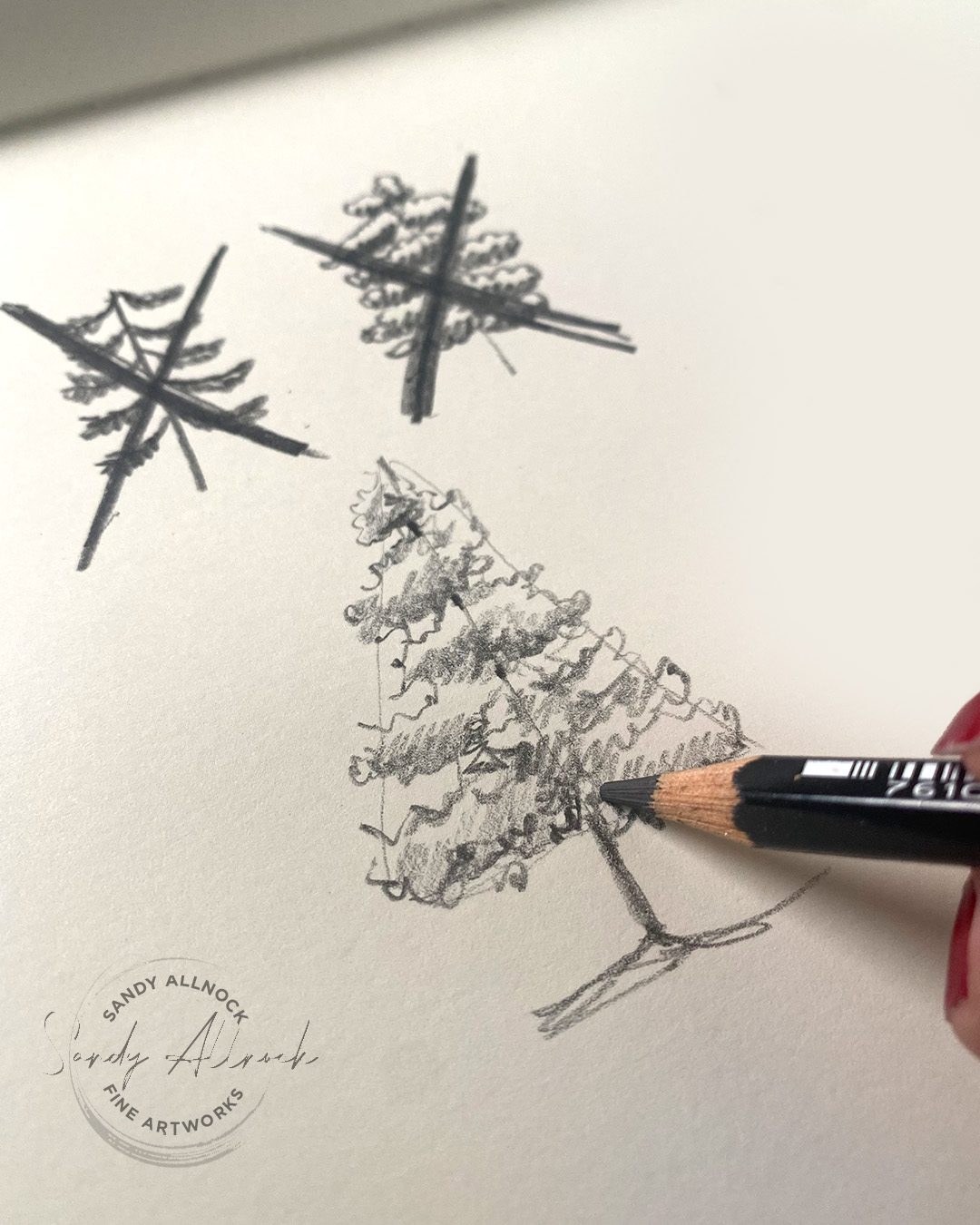
Above on the left: a stick with horizontal lines, adding needles onto them…basically a Charlie Brown Christmas tree. (I love Charlie, so that’s a happy thought for me!) A tree like this looks flat – like a fake tree laid on the ground with all its “arms” to the side, nothing coming out from the middle to make it 3d.

Above on the right: this one is MY fault, since I know I have often said “just scribble, then add some shading.” That’s not a very careful explanation of what’s actually going on with a tree, right!?! Making a long scallopy shape and adding shading along the bottom of it reminds me of a stuffed animal appendage – it’s bumpy on the surface and would have its shading down on the bottom side. Makes sense for a stuffed animal, but NOT for a tree.

I owe you better than that lame explanation! And I hope this video is going to help.

Tutorial: How NOT to draw trees (part 1 pines)

Watch the video below and scroll to the end to leave comments or questions — or click HERE to watch it on YouTube and leave comments over there. I read both dutifully!

Small scribbly sketch

This small tree started with a LIGHT triangle if you need training wheels so your tree stays in an approximate shape. Hold your pencil BACK from the tip and loosen your grip! As you scribble, make some roundy curvy lines and occasionally some points – but as  you go, change the pressure regularly. If you need to, count 1, 2, 3, 4 and figure out if you should lift up on 1 and 3 or on each number (depending on how fast you count!) to get heavier (darker) lines along with faint (lighter) lines.

Add some midtone shading either with the pencil, a qtip, a blending stump, or any tool you like. I did leave some light areas here. Then add some dark shapes – NOT just lines across under the branches, but make interesting shapes. If there’s enough midtone in the tree, the darks shouldn’t stand out too much – you want the whole tree to feel unified, not focusing on OMGTHESHADOWSAREDARK! or WOWALLISEEISTHEBOLDTREETRUNK! 

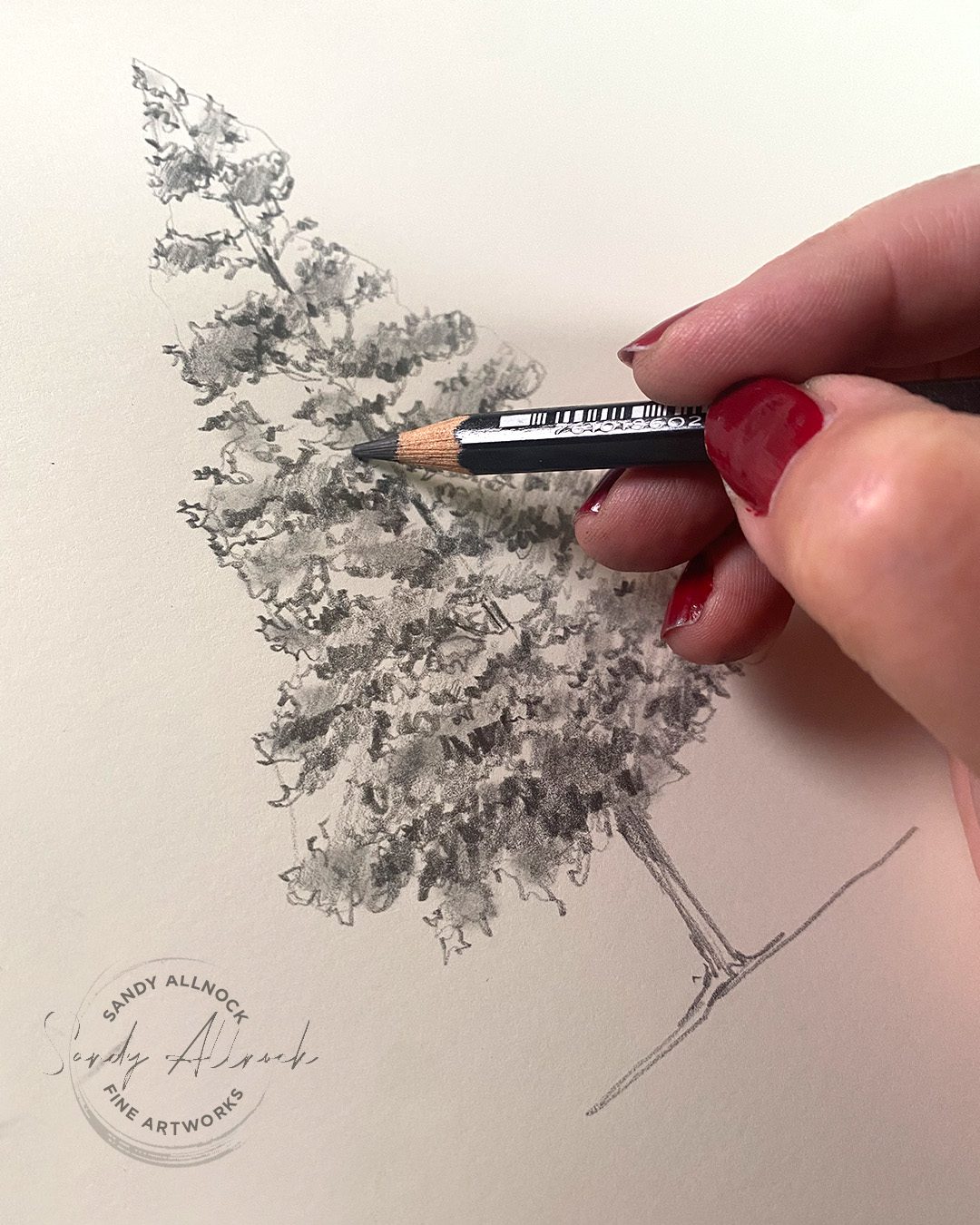
Larger pencil tree

It’s easier to get more detail and more values into a larger drawing of course! The base shape here wasn’t a triangle, but it’s how I usually sketch a tree: I look for where branches bulge out to one side or another or if there’s a main feature (a bald spot, etc) to note in very light pencil. Then I pick a spot on the tree and one on my drawing using the shapes I see to make shapes on my paper. 

Note: I’ve been working on my own calligraphic style of line work for years now – if it takes you a while that’s perfectly ok!

Cover with a light midtone the area of the branches. In reality you’ll rarely see any VERY light highlights on a pine, though some species will have a light(ish) green in good sunshine. Then start carving in the darks – this is where I adjust some details too, since my initial scribbly outline might need a little twig hanging out or something to make the whole shape more interesting. 

Smooth out some of the graphite using a stump or blending tool of some kind (a finger can work!) then re-establish the darks and refine details.

This week I’ll be working on a big pine tree drawing so watch my social media, and I’ll post it here when it’s all done!

Subscribe to my weekly newsletter, Creativity In Your Inbox

* indicates required

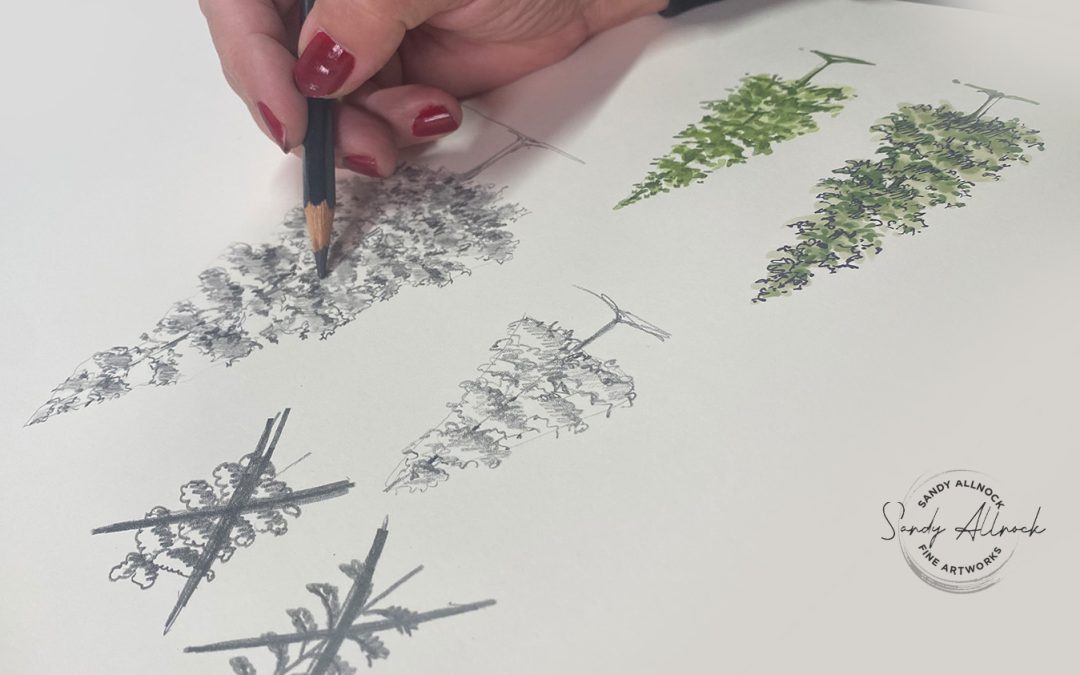
Color and ink

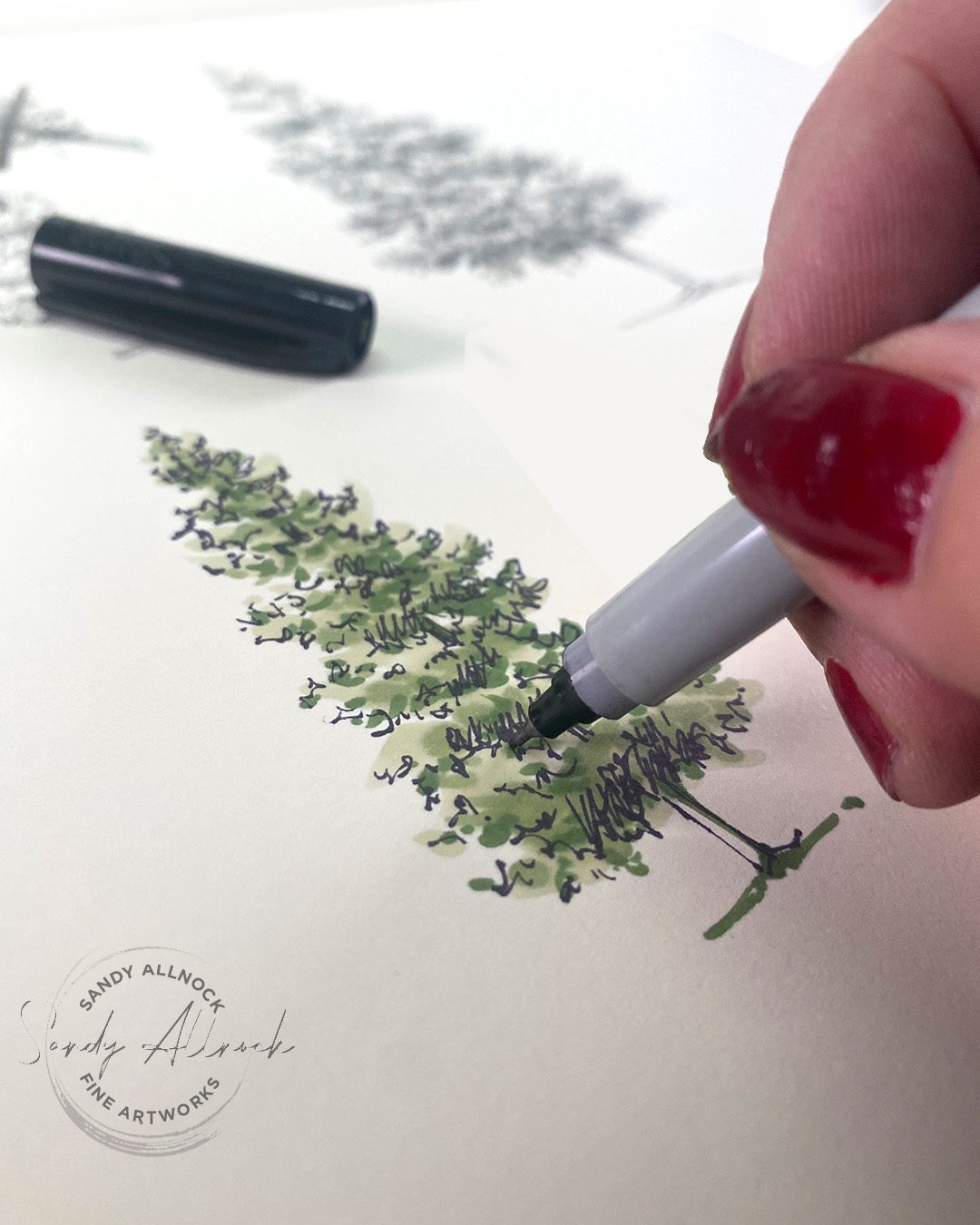
Whatever your favorite medium is, it may well do great with this technique. Start with a light “wash” of color – loose edges to define the whole shape of the tree. With a midtone add in more; don’t get fussy with detailed small marks yet! When you get to adding darks, use your calligraphic line drawing style developed with pencil – sometimes it may look like dots, but other times wiggly little lines. Polks dots can make it look like the measles, so be careful; you’re only adding darks in the shadow areas plus perhaps breaking up any large sections.

Then go over it with a ink pen; if this is your last step it won’t matter what kind since the color medium won’t drag any pen lines around. Use that calligraphic style again, letting the lines come and go so it’s not a solid outline.

Color only

If you won’t be adding pen, you’ll need to use a dark enough value of the color medium to create that last pass. Keep reducing the size of the marks as you go from the first light wash of color to the dark details.

A few photos for you to use

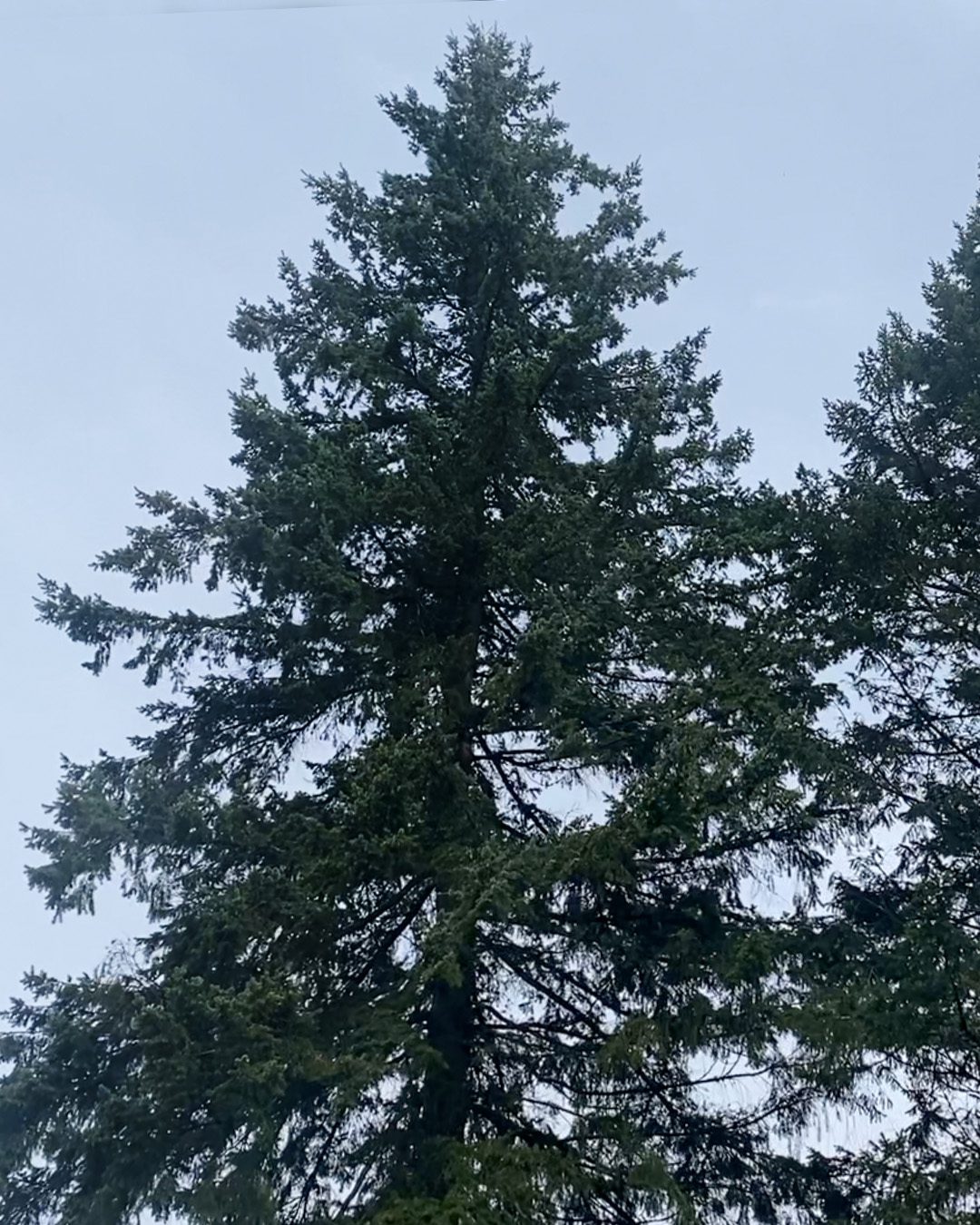
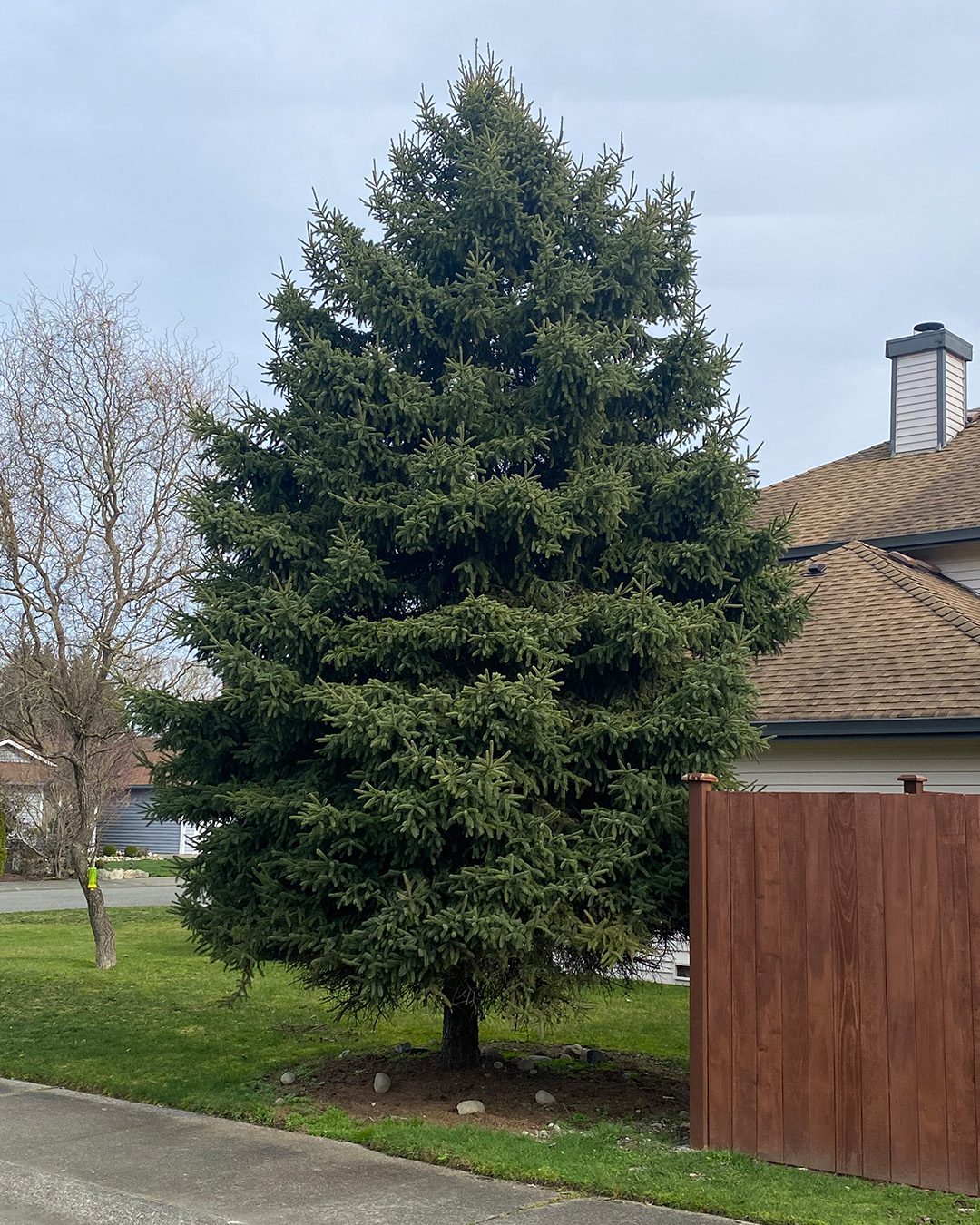
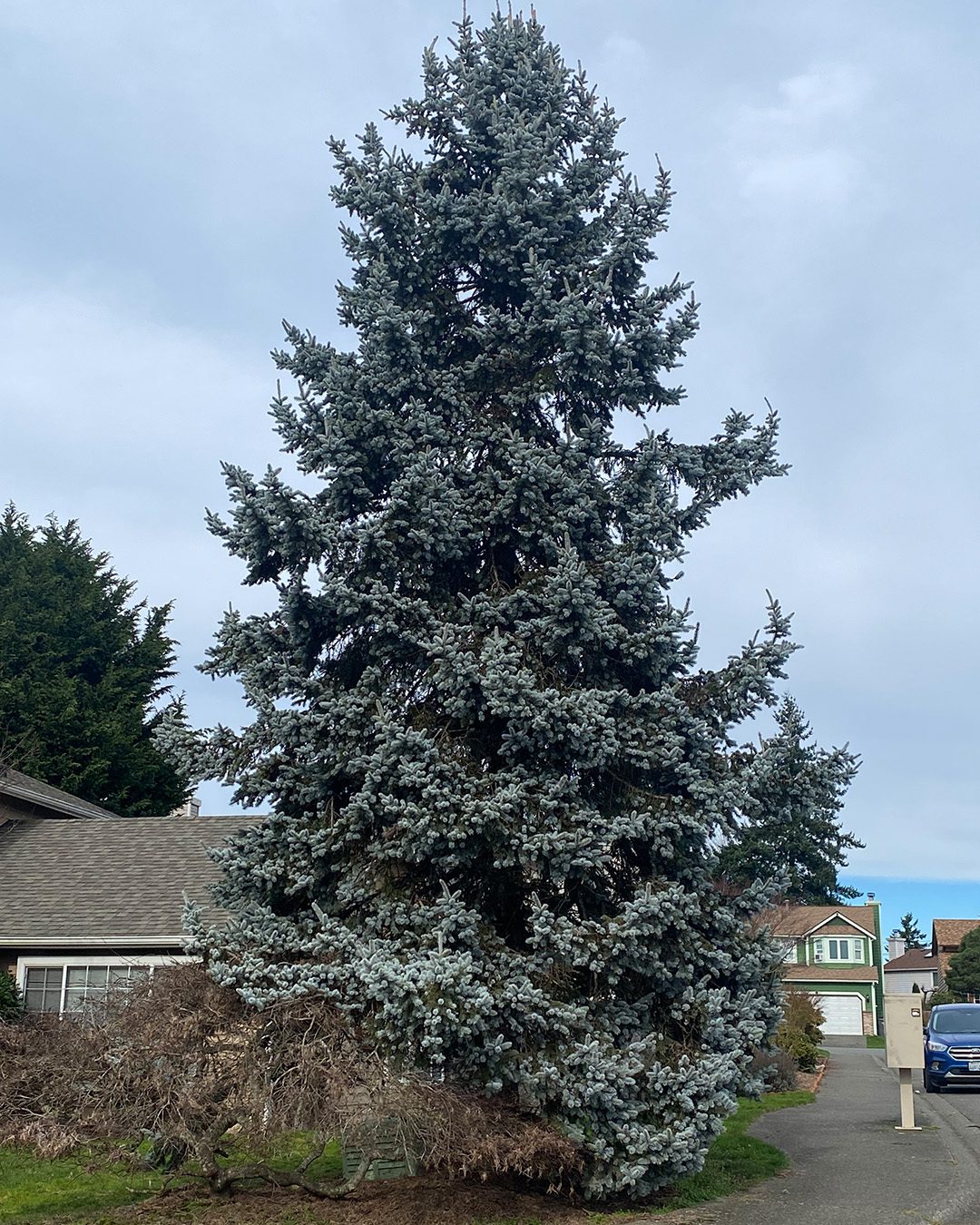
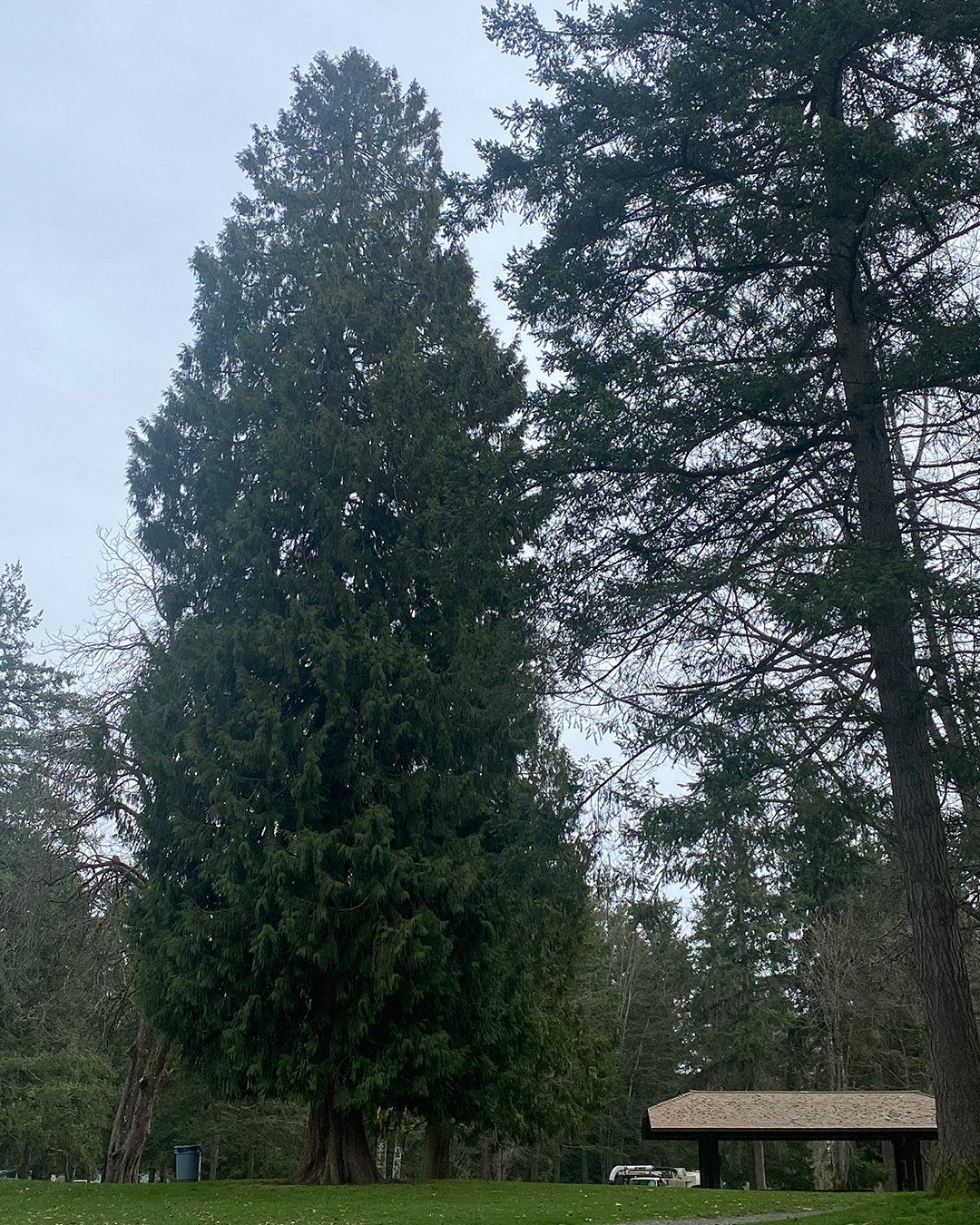
I collected a few pics while I was out – feel free to use any that you like!

See you in a few days with part 2!

If I find any deciduous trees with actual leaf canopies, I might be working with those, otherwise we’ll draw some bushes next, ok? See you Saturday!

Supplies

Some product may be provided by manufacturers for review and use. Compensated affiliate links are here at no cost to you. I appreciate your support of my work with your purchases! Full affiliate and product disclosure | My trusted partners in art
Cats! 2-Minute Gesture Drawings

Cats! 2-Minute Gesture Drawings

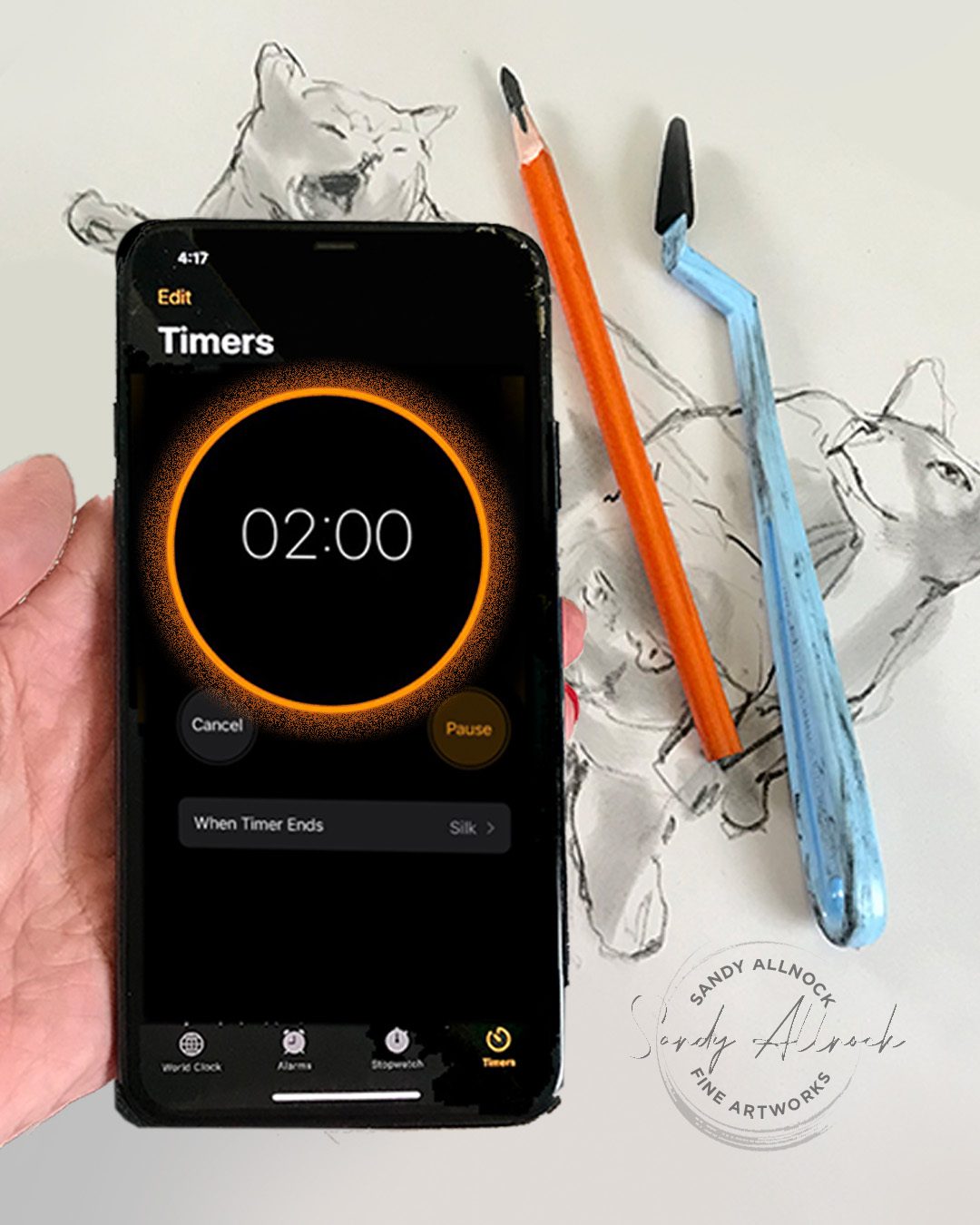
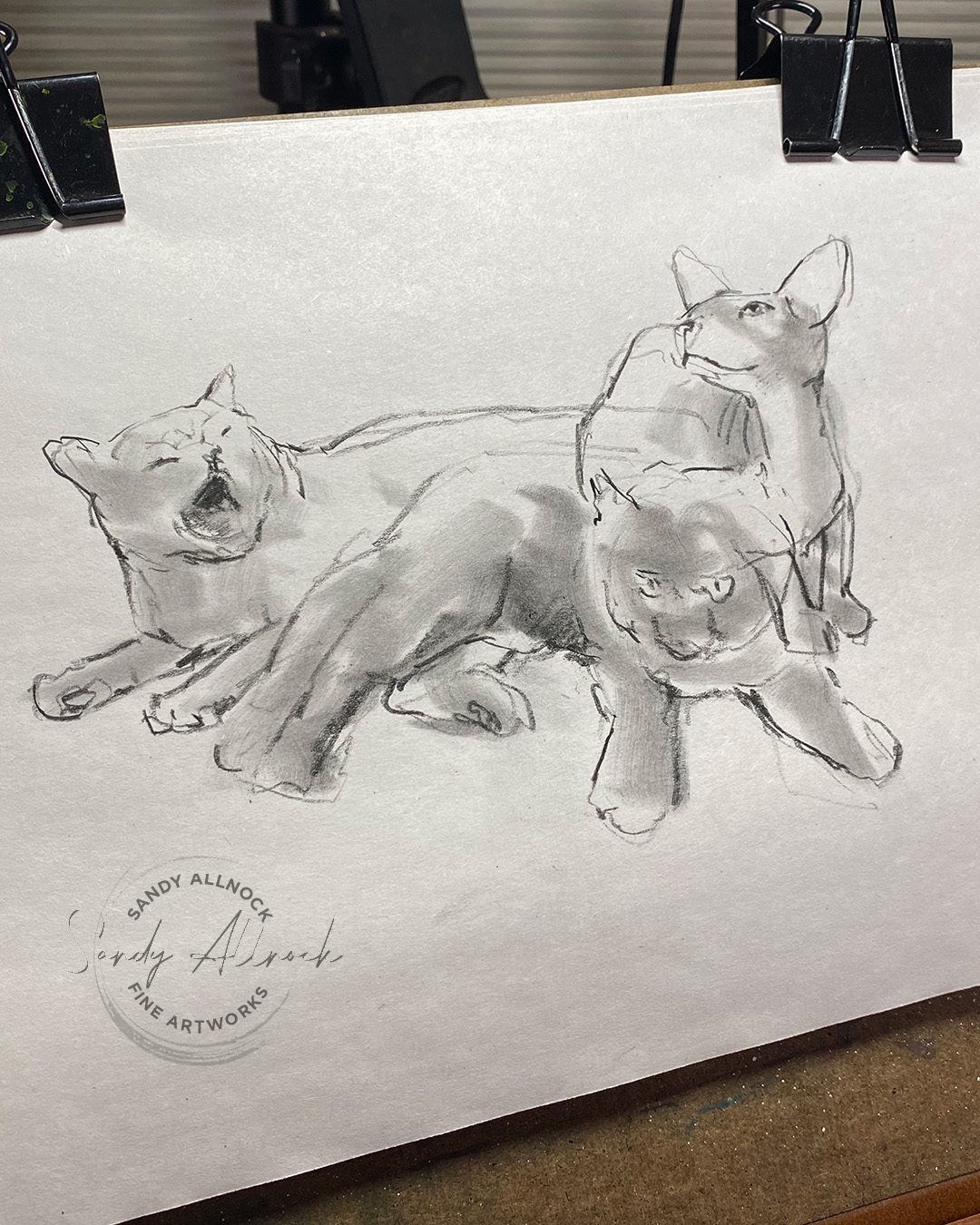
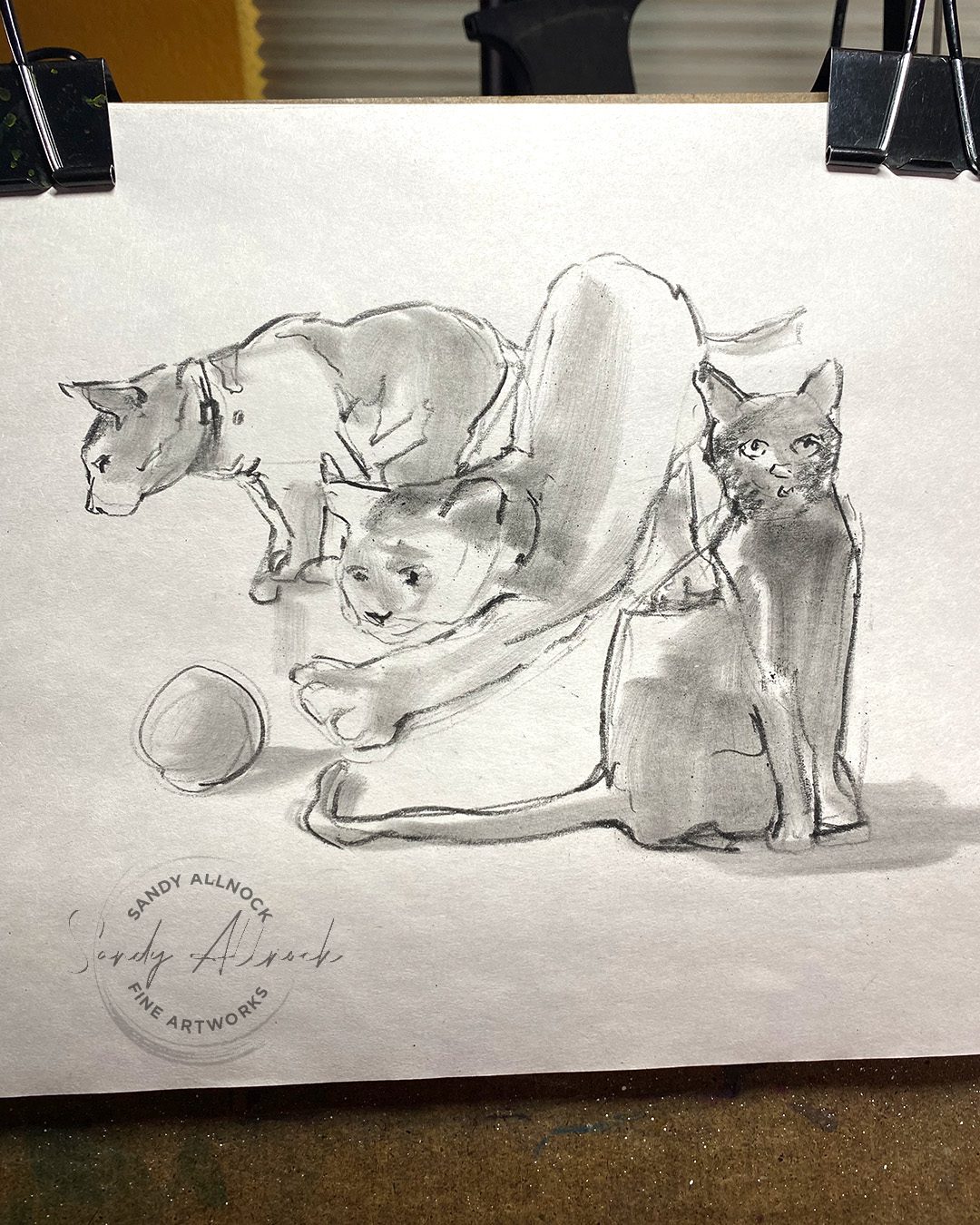
Two minutes and counting! Today’s tutorial is all about creating quick gesture sketches—these are timed, but not just for the sake of speed. There’s usually not a “duel” to see who will be able to draw a subject faster than another person…but there’s plenty of good reason to consider these sketches anyway.

Tutorial: Cats! 2-Minute Gesture Drawings

Watch the video below and scroll to the end to leave comments or questions — or click HERE to watch it on YouTube and leave comments over there. I read both dutifully!

Tips for learning to create gesture drawings

You can make gesture drawings in a variety of time segments; in college we did 10 second poses! But once you get to 10 minutes or more I think you’ve moved out of the “gesture” realm. The idea is to quickly capture the essence of the subject: the pose, the movement, the shape. It need not be perfect!

Aim for loose strokes made with not just your hand but your arm; try a large sketchbook (I usually use something that’s 20X24 or so) and sit or stand in a way that lets your have movement in your arm up through your shoulder.  Hunching over a sketchbook only tightens your hand and arm.

Draw from life if at all possible. Search your local meetups or community pages for Life Drawing Groups – sometimes you can join one at a college or university – just be aware that “Life drawing” typically means nude models. There are also online groups that meet over Zoom; one thing to remember is that most will tell you no screenshots or photos, and that’s important to follow for a variety of reasons.

For clothed models, you might find portrait groups, and I know near me there are “sip and draw” events too, and you can check with organizers to see if they have gesture drawing evenings or sections of evenings. (Anytime there is a model, please know they are being paid, so you likely will be paying to attend these events. You can also just sit in a park or a mall or a coffee shop and draw people anytime!

I recently discovered Line of Action, an online site that will help you in your gesture drawing discipline too. It’s not optimal since it’s not real life, and some of the photos aren’t high quality (I believe they’re sourced from their community)….but I do love that you have no idea what photo is comimg up next. You can certainly just set a timer and draw your dog or the lamp in the living room in 2 minutes—but there’s something energizing about not knowing what’s coming. 

Why try gesture drawing?

No matter the medium you select, the basic foundations of drawing undergird all you do. Yes, perhaps you’re at a stage where you still trace a picture you want to paint—but you are still drawing with the paint. If you’ve been unsatisfied with the results, consider that it could be that underlying skill that could use some polishing.

I find gesture drawing helps me see my subject as shapes. In 1-2 minutes I can’t get lost in anatomy, I can’t fully render the jacket and its pockets, and I am not able to think back to the last time I drew something similar. There’s not time for more than anything than observing what’s right in front of me, and looking for its shapes.

I’ve found that a circle for a head is okay but it’s not the shape it really is. That a torso often bends, and only some people have an hourglass shape. That each person’s hands at their sides come to a different place in comparison with their hips or thighs. I’ve learned that by getting quick with seeing shapes in their relation to each other, and those relationships help me see if I’m capturing the subject.

Some people get more focused on the line—creating contour line drawings around the edges. Others pay close attention to where the weight is being carried (left or right foot, leaning to one side or another.) Plenty of artists have their own focus, and you will find yours in time as you practice and begin to see your own style of calligraphy emerge – that’s your own “handwriting” as an artist with a pencil, pen, or brush! We’re each unique and yours is unlike anyone else’s. What better way to find it than to let yourself try it out!

Subscribe to my weekly newsletter, Creativity In Your Inbox

* indicates required

Supplies for gesture drawing

Gesture drawings can be in any style – just google the term and you’ll see that! Some people use a single elegant line. Others a bold stroke of chunky marker. Graphite, charcoal, paint – whatever medium works for you! The paper isn’t important either, though you’ll find different kinds may help you make smoother marks in your chosen medium.

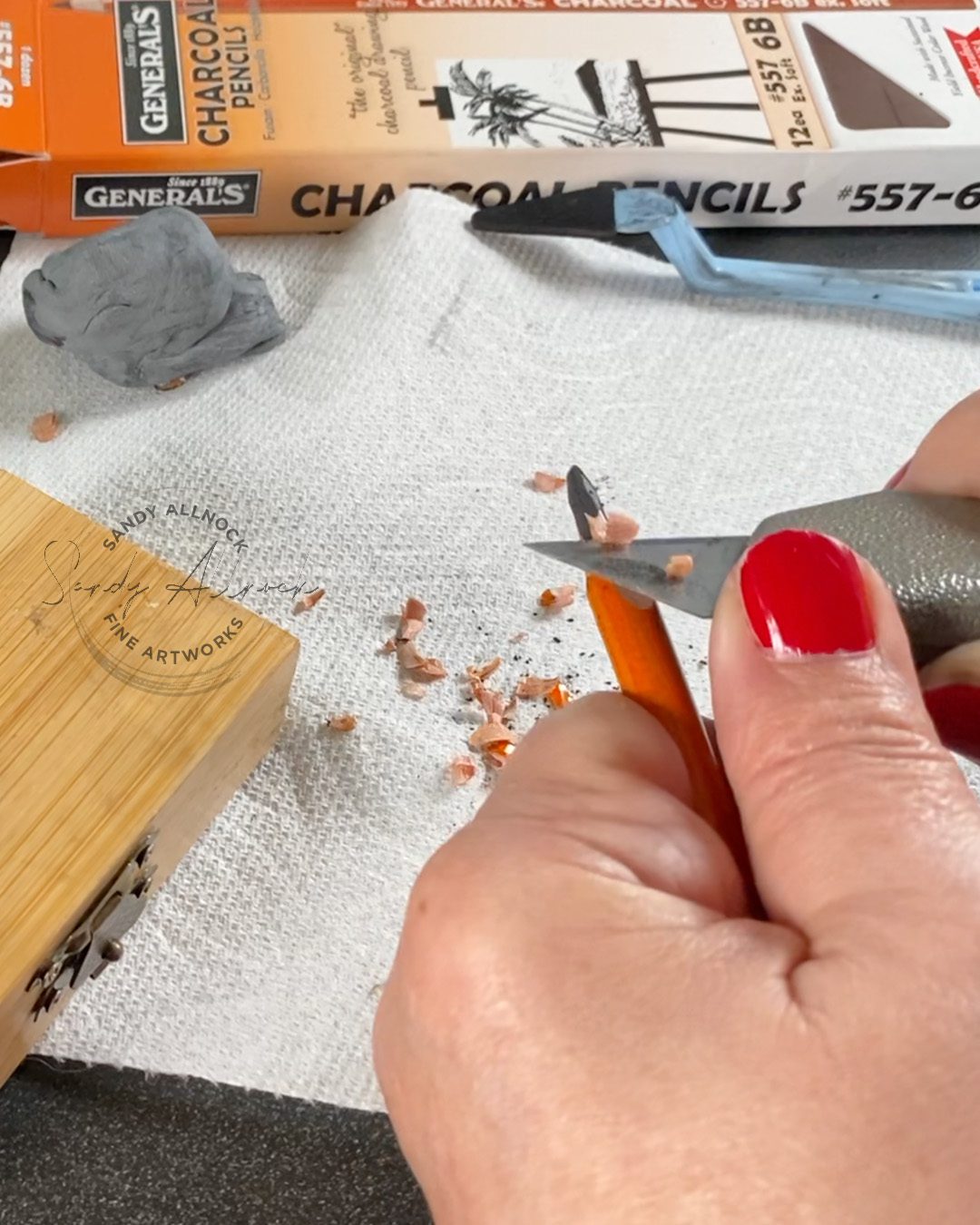
The charcoal pencils shown in this video are ones I discovered about 6 weeks ago – I used compressed charcoal sticks for a while, vine charcoal for a season, pencil during another season. I seem to rotate between them. One friend uses watercolor and makes huge splashy paintings in minutes. Another uses gouache to create her sketches—I’ve tried that a few times but found that for this season I’m enjoying charcoal so much that I’m sticking with it til it outlives what it’s teaching me. 

Scroll down a little bit for links to the supplies I used for the cat sketches.

Let’s Draw Together 

As we get rolling on the 30 Days to More Confident Sketching on Feb 1 at Artventure, we’re going to be doing a lot of drawing. Come join us! I’ll be right there with ya.

Supplies

Some product may be provided by manufacturers for review and use. Compensated affiliate links are here at no cost to you. I appreciate your support of my work with your purchases! Full affiliate and product disclosure | My trusted partners in art
Subscribe to receive blog posts by email:

Huge news on commissions – and a sale!

Huge news on commissions – and a sale!

Today’s been coming for a long time!! I’ve been thinking about what to do with my December sabbatical all year long, and it’s time to start the planning – commissions, animals, pastels, and fun!

I know not everyone cares, but a number of you have asked me over the last couple years about a commission. I apologize for always putting you off, but now at least I have a way to get going. 

Side note – I was filming the headshot portion of this video, and apparently there’s some kind of automatic emoji stuff going on – if I put a thumb up, a thumb bubble popped in. I was freaked out when the software threw balloons all over the screen! I think I need to find out how to turn that off, it scared me! ha!

Tutorial: News about commissions – and a sale!

Watch the video below and scroll to the end to leave comments or questions — or click HERE to watch it on YouTube and leave comments over there. I read both dutifully!

A few pics

The rest of the photos are over on the commissions page, but here’s a few to show you here:

Kitty

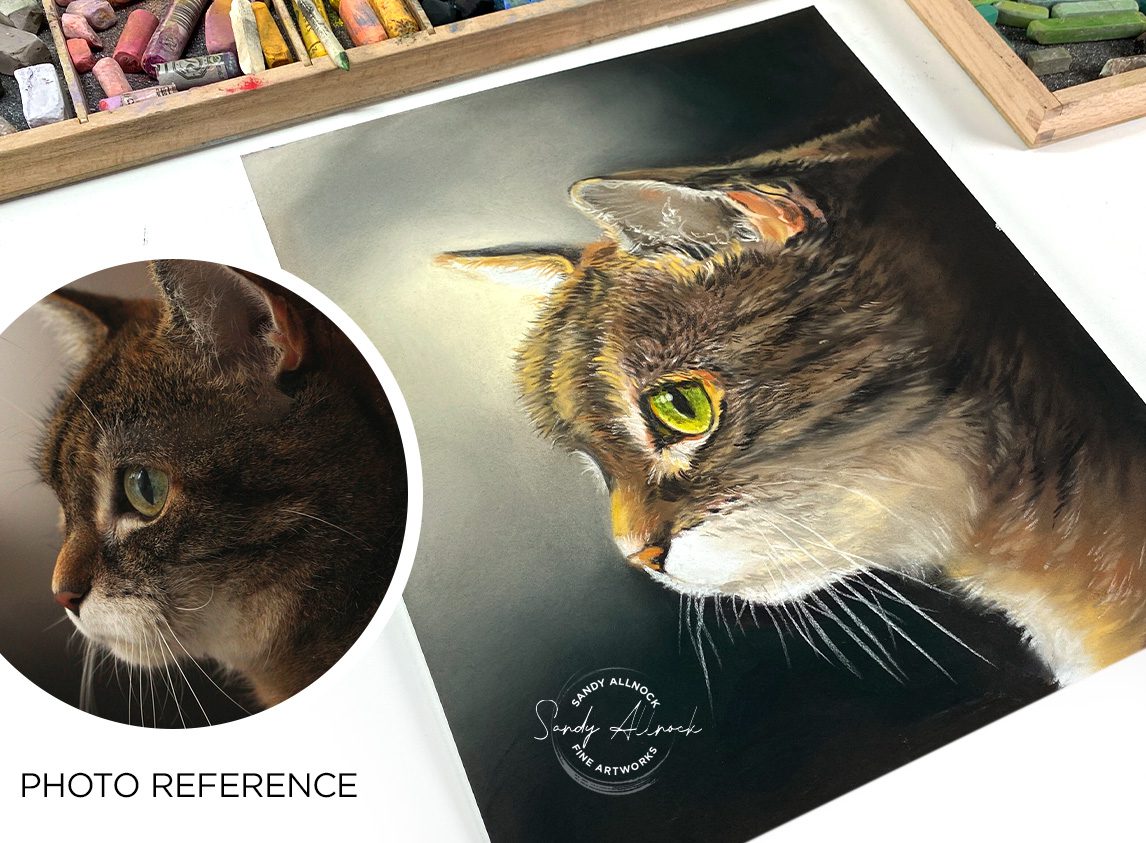
This sweet kitty makes me want to cuddle him! I brightened up the colors for the portrait and amped up the saturation. 

Simplification

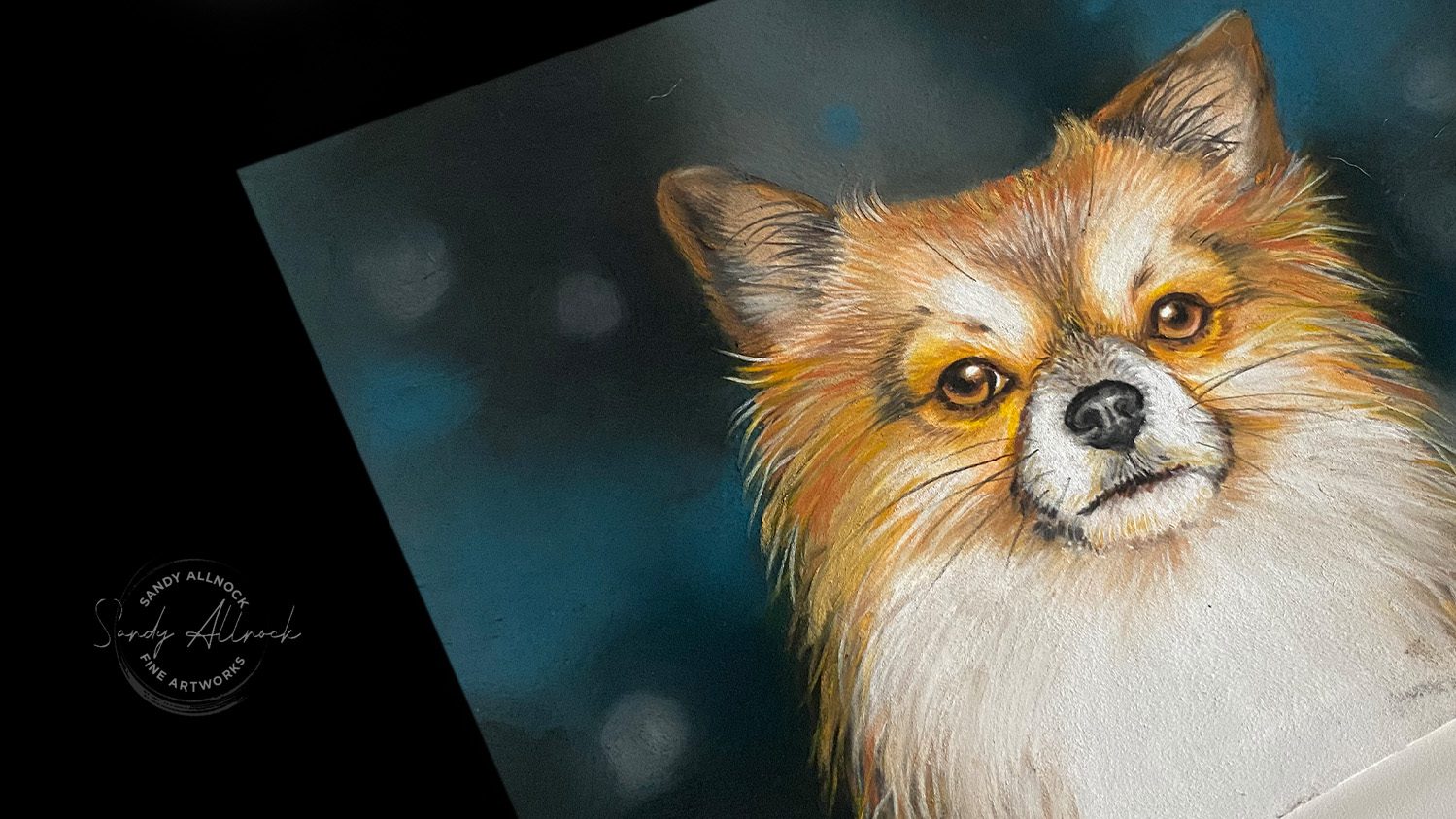
I’ve been playing with backgrounds – soft blends, a little bokeh, enough to be interesting but a nice way to make the attention really fall on the subject.

Size matters

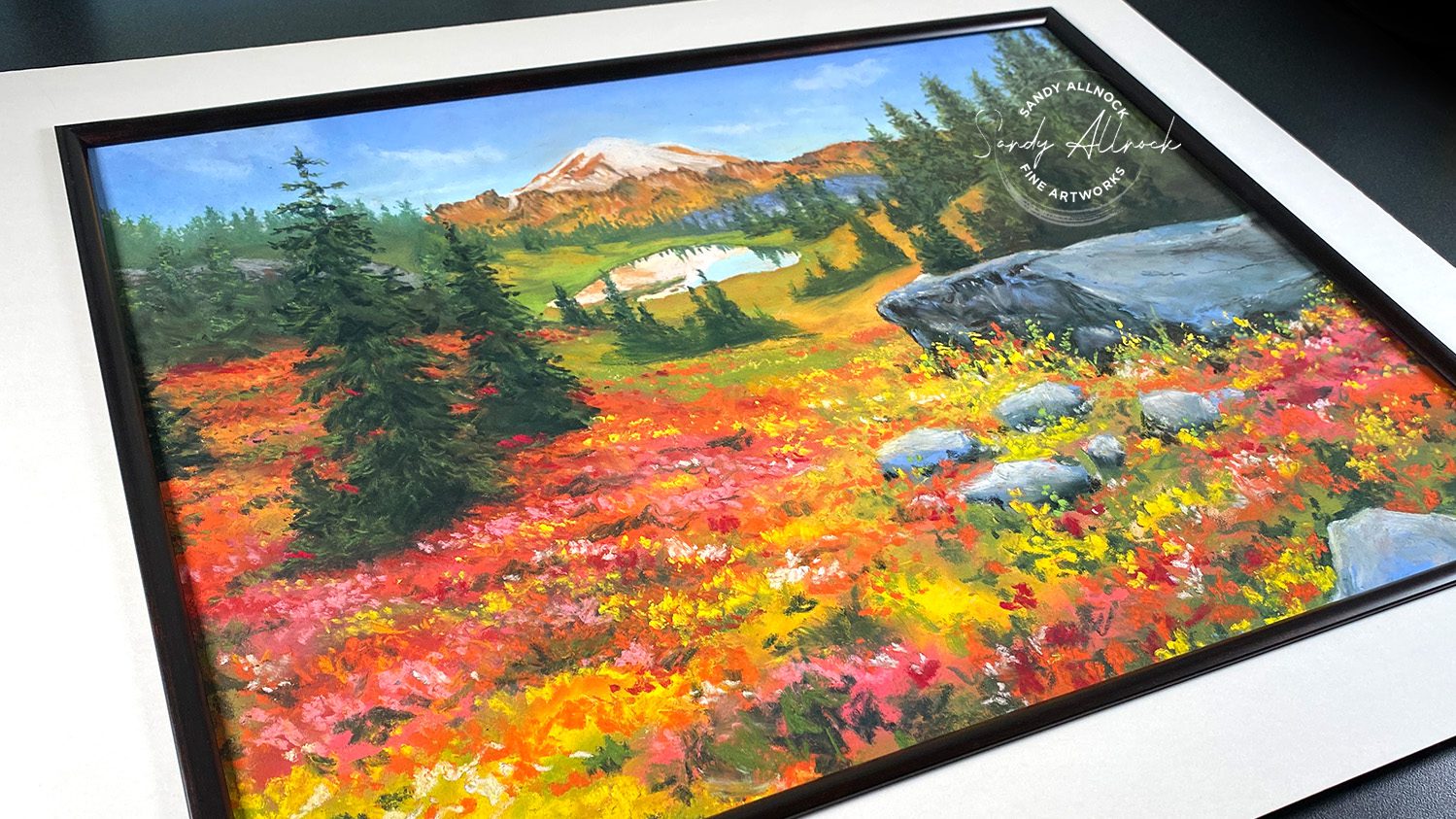
For some subjects you might need/want something bigger. Like if you want all your dogs and cats in one picture, the 8×10 or 9×12 would be too small. This landscape is done at 16×20 – and yes, that means you can request a landscape too.

Sketch option

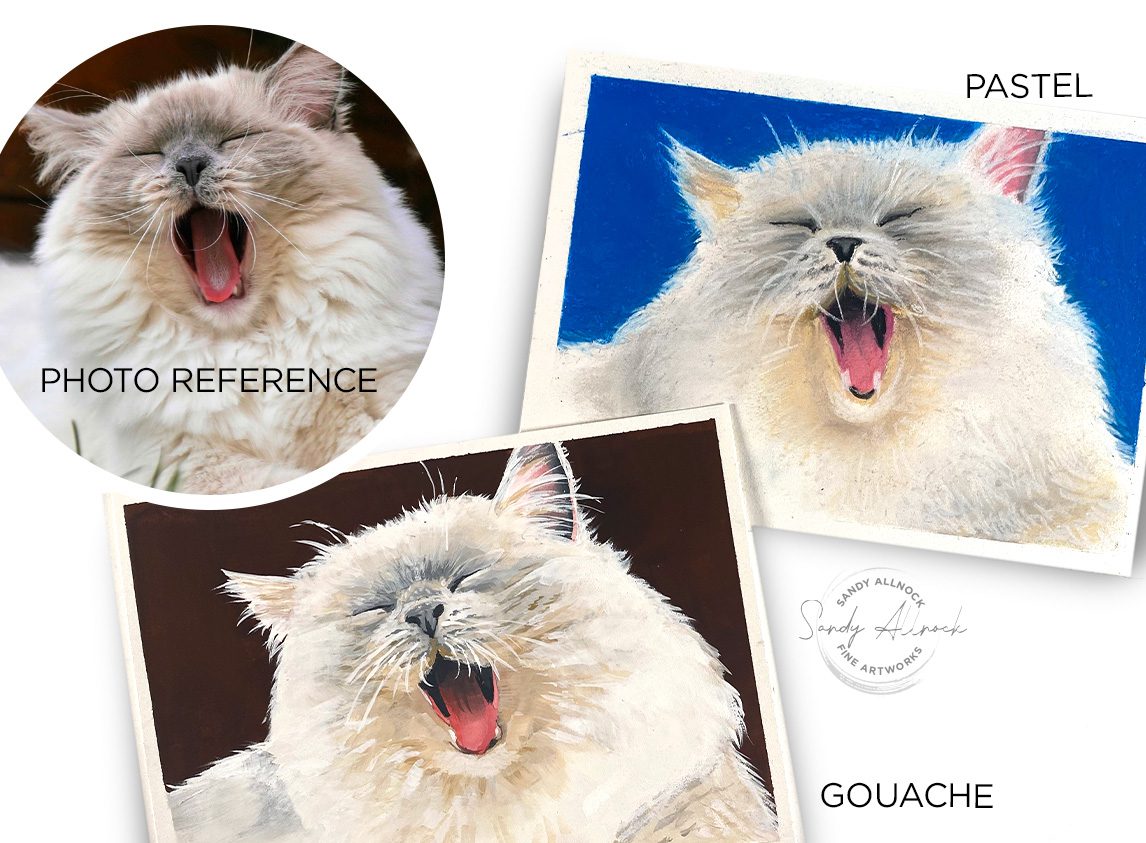
I decided to include an option for 5″ x 7″ sketches – looser since they’re smaller, and they can be in pastel, gouache, or pen and ink. I created a yawning cat in both pastel and gouache to compare them.

Pop over to see more

On the Commissions page are more photos of my pastel paintings and the small sketches, plus the form. And on the Works for Sale page, you can get 20% off with coupon code – it’s at the top of the page. Help me clear the shop, I have more to add but need to get a few things moving 🙂

Subscribe to receive blog posts by email: