The Healing Power of Art (Sketchbook, part 1)

The Healing Power of Art (Sketchbook, part 1)

Many of my readers know life’s not been ‘normal’ of late; I’ve had some medical procedures that were called for years ago and finally was able to get all that done over the last 6 weeks or so. Nothing life-threatening, just so no one gets too concerned – but the process of healing meant I wasn’t able to spend time in my studio. I won’t get into the medical details of the surgeries etc, but – I do want to say THANK YOU to all those praying for me during this time!

I fortunately had plenty of time to prepare for this season; beforehand I not only filmed what felt like a gajillion videos so my channel and blog would appear as ‘normal’ to the algorithms, wrote all my weekend newsletters, prepared social media posts. But I even cleaned the studio! I knew I’d keep walking past it and groan at the mess, or would begin to dread eventually getting back in there due to the mess. (I also do a spring cleaning on my house anytime I go on a trip, so yeah, I’m THAT kind of person!)

The one thing I missed getting done was cleaning the window above the desk – ha! In my defense it was January, and very cold. I tried cleaning the inside but yikes did I find out how ineffective and incomplete that was…but if that’s my only problem, then hey, life’s good, right? 
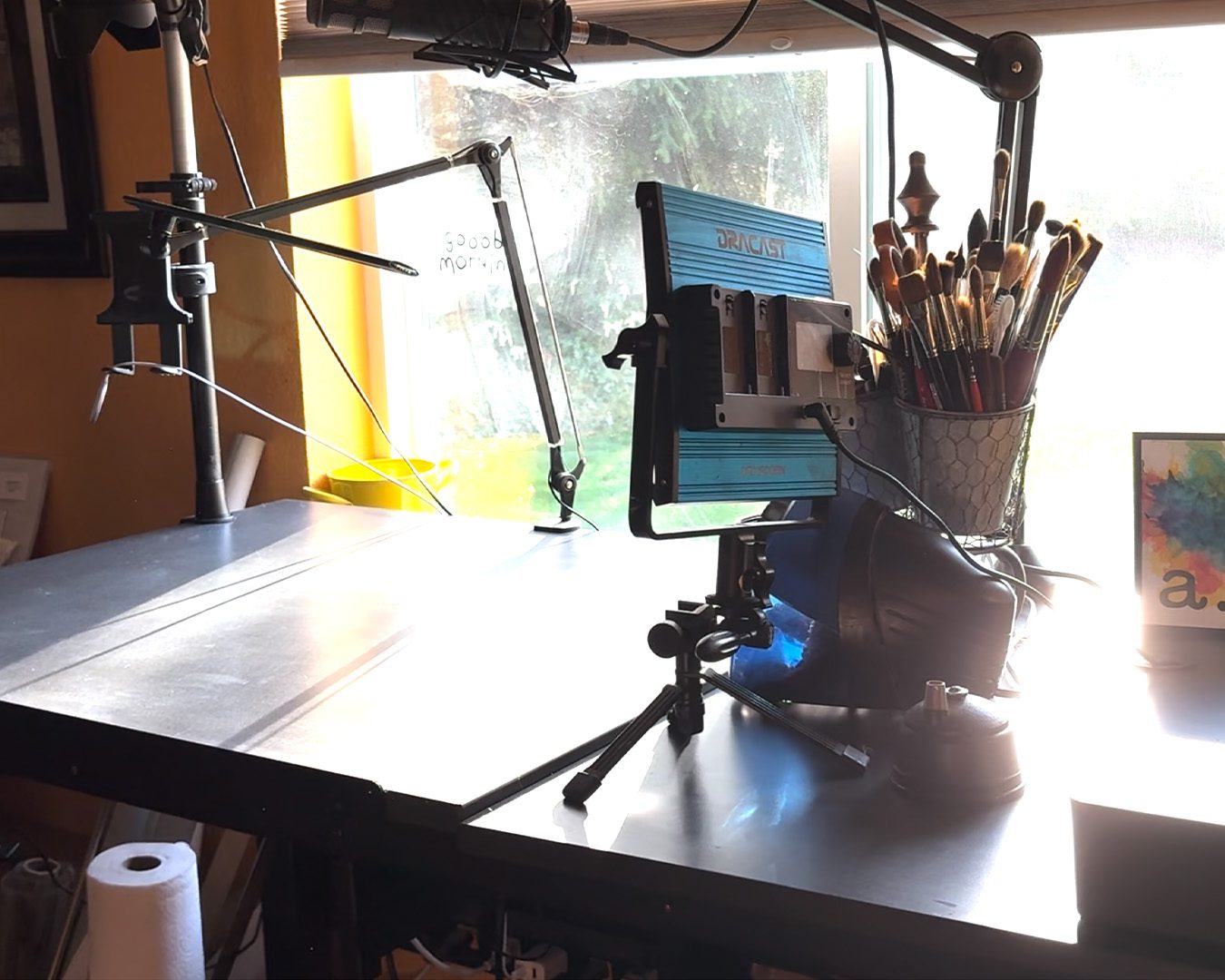
As I’m moving closer to getting-back-to-normal season, I decided to do something about the desk – inspired by artwork, of all things…..you might remember the earlier piece I refer to in the video, which I remembered when working on a pencil sketch. Check out the video to see the connection!

Tutorial: The Healing Power of Art (Sketchbook, part 1)

Watch the video below and scroll to the end to leave comments or questions — or click HERE to watch it on YouTube and leave comments over there. I read both dutifully!

SUPPLIES

Some product may be provided by manufacturers for review and use. Compensated affiliate links are here at no cost to you. I appreciate your support of my work with your purchases! Full affiliate and product disclosure | My trusted partners in art

Book

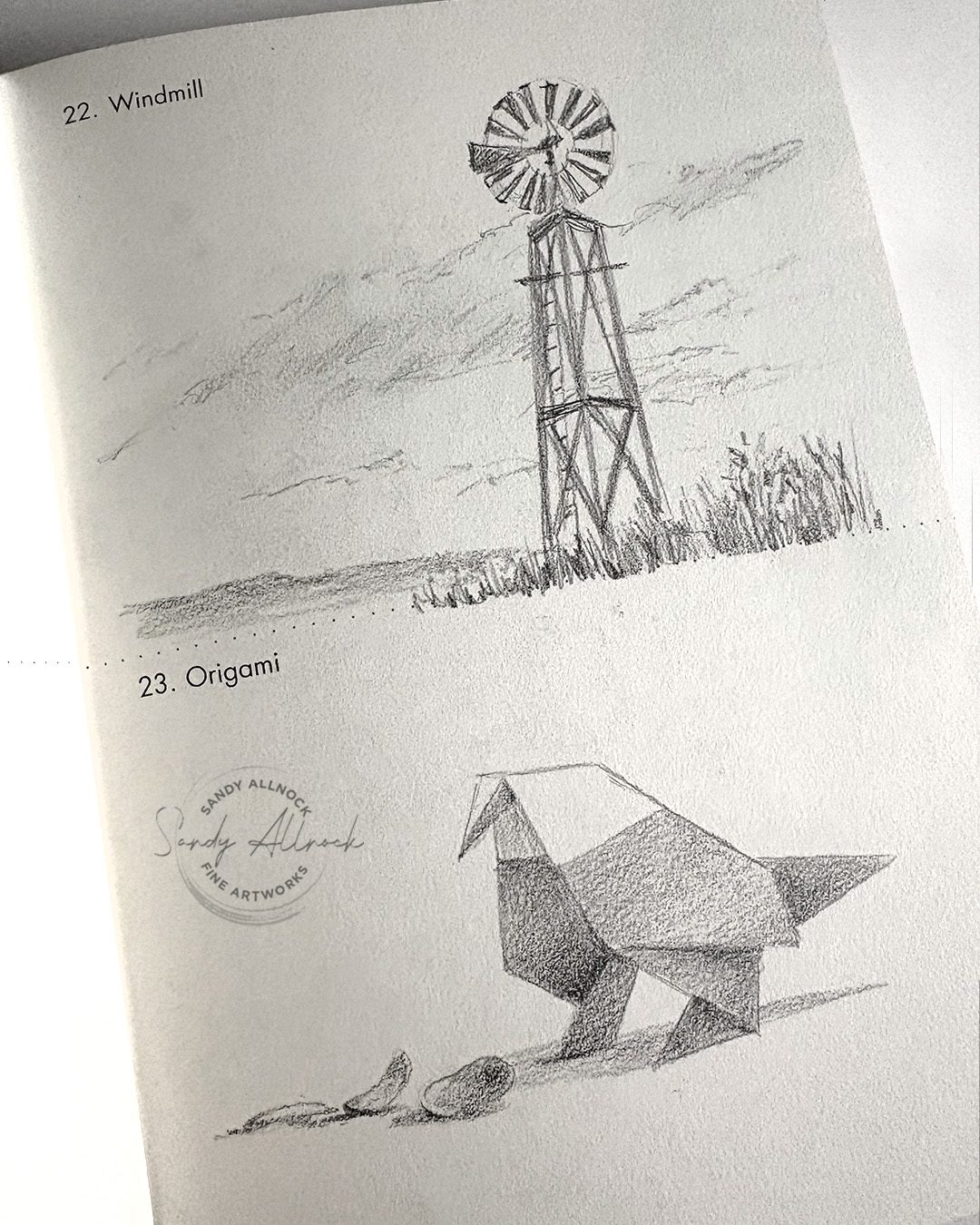
  1. 301 Things to Draw Book https://amzn.to/3FzlPnB

Pencils and erasers

  1. Caran d’Ache Grafwood pencils 9B BLICK   AMZ  JACKSONS 
  2. Mont Marte Electric Eraser
  3. Faber Castell Kneaded Eraser BLICK   AMZ   JACKSONS

Revamped!

Over the last week or so I visited some local shops to see if I could “rehome” some green stems – because I’m not good at keeping plants alive. (Inside or outside!) Just remembering to water them is so hard for my poor brain; I have a sprinkler system to at least save the grass, but there’s no such thing for my indoor plants. So I went with fake greens.

I used a yellow bucket and blue ceramic pot for my new “plants” on the desk – filling in the empty space on that back corner that is too far over to be helpful for storage. (I had debated a stack of drawers over there that could have worked, but everything felt very dark because of all that blocked light!) The plants let plenty of light in and make me feel surrounded by at least a reminder of Mother Nature.

I even included a small pot on the windowsill with some floral stems in it, which makes the 360 view feel more full. And my sister’s flowers on the desk as well!

These changes make me even more excited to start getting back in the studio. And excited for some good weather to go clean that window.


The Healing Power of Art

That all brings me to how I’ve gotten through this season of life. I know many of my subscribers have ongoing chronic health issues – and after just this season of waiting and healing, I have fresh empathy for that situation.

I’ve had surgeries before, and found art got me through those as well. The kind of medical issue often has dictated what kind of art I could create in those seasons. Crutches or casts cause different problems than back issues or vision problems! And sometimes fully bedridden means even sitting up to try to create can be near impossible.

My situation in this season meant sketchbooks were my constant partner. Different types, as both my health each day and my state of interest would dictate if it would be pencil, watercolor, gouache, or marker. So I am very grateful for the ability to have all those mediums and sketchbooks at hand!

Simply the act of putting marks on paper made me feel like less of a bump on a log; there were days, even almost a week at one stage, when just sitting there and doing nothing was all I could do. Reading wasn’t possible, either, and catching up on podcasts was all I could do – so I do feel I got smarter during this time! But none of those learning-days made me feel as good as a day when I could look at a sketch or a little painting that would open up the hope in my heart that this season, too, would end.

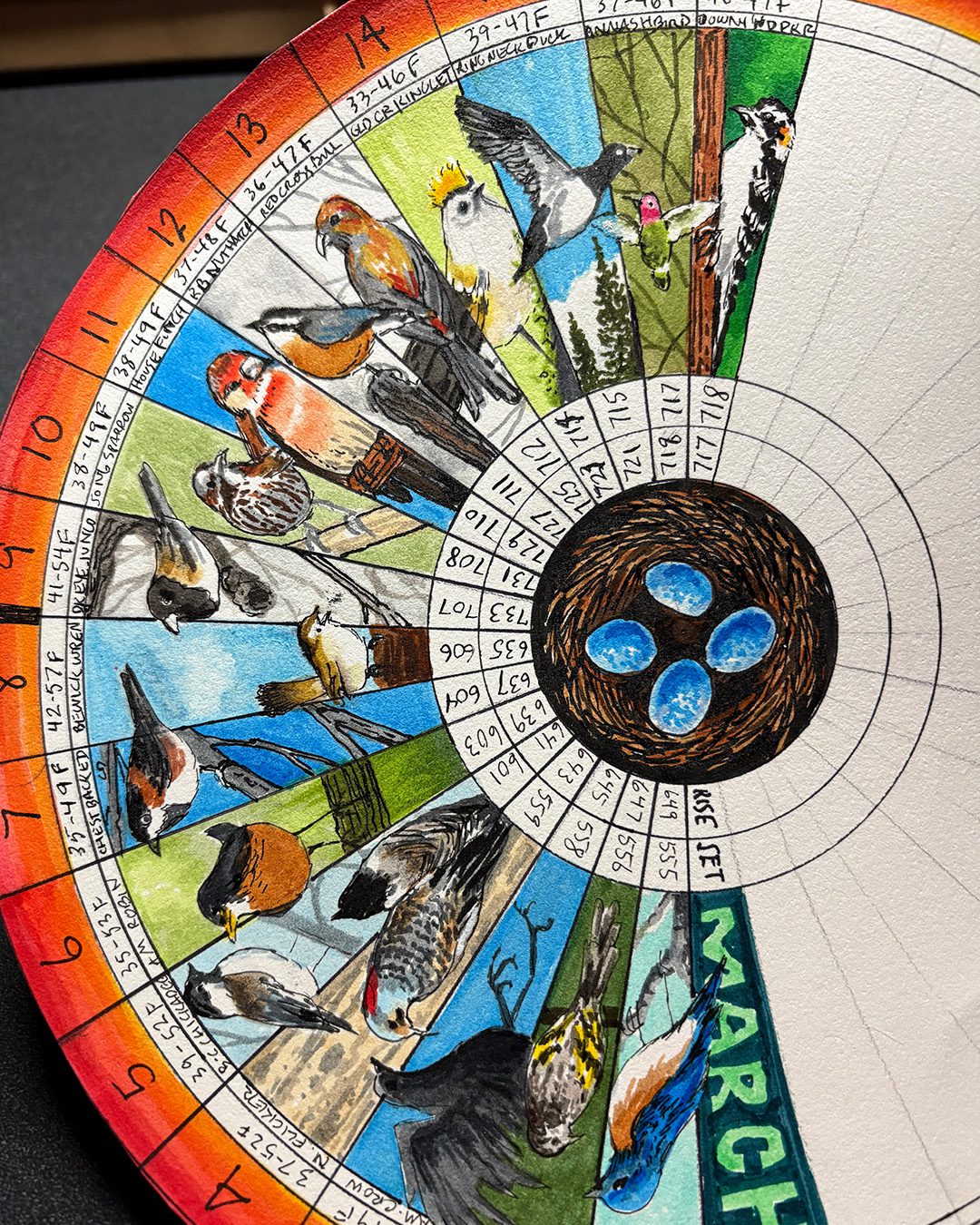
My daily phenology wheels have been so helpful – getting me to go outside even for little walks on bad days, longer walks on good days, and then trying to create a little something when I returned home. My progress is underway- my blobby gouache skies of February (specifically planned, knowing it would be a challenge) have moved into sometimes-mushy drawings of birds for March! I’ve been identifying them primarily from sound and the Merlin app. Will I find a full 31 birds? Who knows! So far someone new has showed up every day…

Healing is not the same for everyone

Each person’s journey and health status is their own; only you know what’s right for you. I’ve done different things for different illnesses/types of surgeries, and none have followed the same patterns. Day to day everything can look different depending on energy level and even mental health status.

But I would like to suggest finding something you can create as you heal. It could be a 3″ square sketchbook where you doodle with a pencil. That might be all that’s doable. But it could be a step toward healing as you work through it; practicing something, a flower a day, could give your heart the hope you need that a season of illness can come to an end and transform into something beautiful. 

It might be crocheting or knitting that keeps you moving. You might need to find an arrangement of your surroundings that can accommodate your needs. A lap desk, tray table, side table – or just treat yourself to a fancy pencil cup that’ll get your attention and inspire you to try something. 

During some of the most dire days I had in these past 2 months, all I could do was take in the creativity of others, often just listening to podcasts about creativity, or listening to someone narrate the art they were creating. I couldn’t see well enough to sketch, I couldn’t type on a tech device. But those days I would make voice notes for myself for later…ideas I want to try, something I heard or saw that day which I want to capture later and not forget. Those days were so hard since I couldn’t create, but trying to process my creative thoughts helped.

Whether you’re in a temporary or extended season of health challenges, I encourage you to find something that’ll keep your creative mind engaged; instead of being a “waiting” season to getting back to your usual style or medium for creative expression, see if it helps to view it as an alternate season to create something entirely different. 

Subscribe to receive blog posts by email:

Drawing book

I picked up this 301 Things to Draw book back in December, knowing this season of life was headed my way. Not only would it be something “new” that might keep me entertained, but I liked the feel of the paper inside when I was at Barnes and Noble. And was right!

(Tip: when you find sketchbooks you like, get a good idea of what the paper tooth feels like, so you’ll be able to decide if a book is sketchable!) 
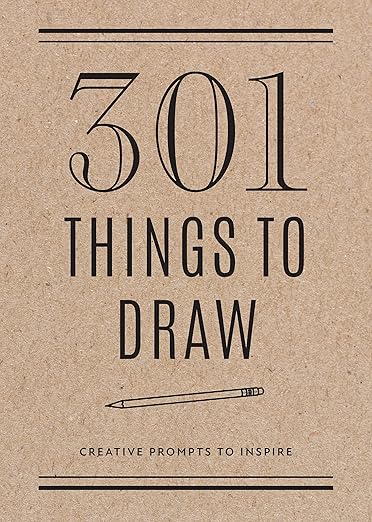
 

I used a 9B pencil for my drawings and it worked out great – a kneaded eraser and electric eraser were by my side too. During this time when sitting at my desk wasn’t do-able, I hung out on the sofa with the pups, and had my 2-drawer easel with some art supplies tucked inside. It meant everything needed was right there with me, whether I used the whole thing on my lap or just had the drawers close at hand.

The Post-Apocalyptic Vehicle

When I got to prompt 34, I wasn’t at all sure what to make of it. Other prompts were very ‘normal’ and could be easily sketched, though I worked to MAKE my lazy brain try a little harder to imagine a new view of the topic.

But this one….it had me stymied. If the apocalypse already happened, what would a new vehicle run on? What would it be made of? Who’d be driving it? What purpose would it serve?

I decided on a regular vehicle – made probably of metal, with big tread-y kinds of things – not wheels per se – for navigating over the dangerous surface of the ground. The vehicle resembles perhaps a tractor, which got me to think farming….and the dinosaur driving it, who has come back from extinction, is repopulating the earth by spreading seeds and watering them!

He’s even got tunes playing for his own entertainment and that of nearby dinos…got any suggestions for a save-the-planet spotify list we could cue up for him?


A few more pages….

If you’d like to see more, most of these are on my Daily Sketches page – you can subscribe for free to just get one a day in your inbox.
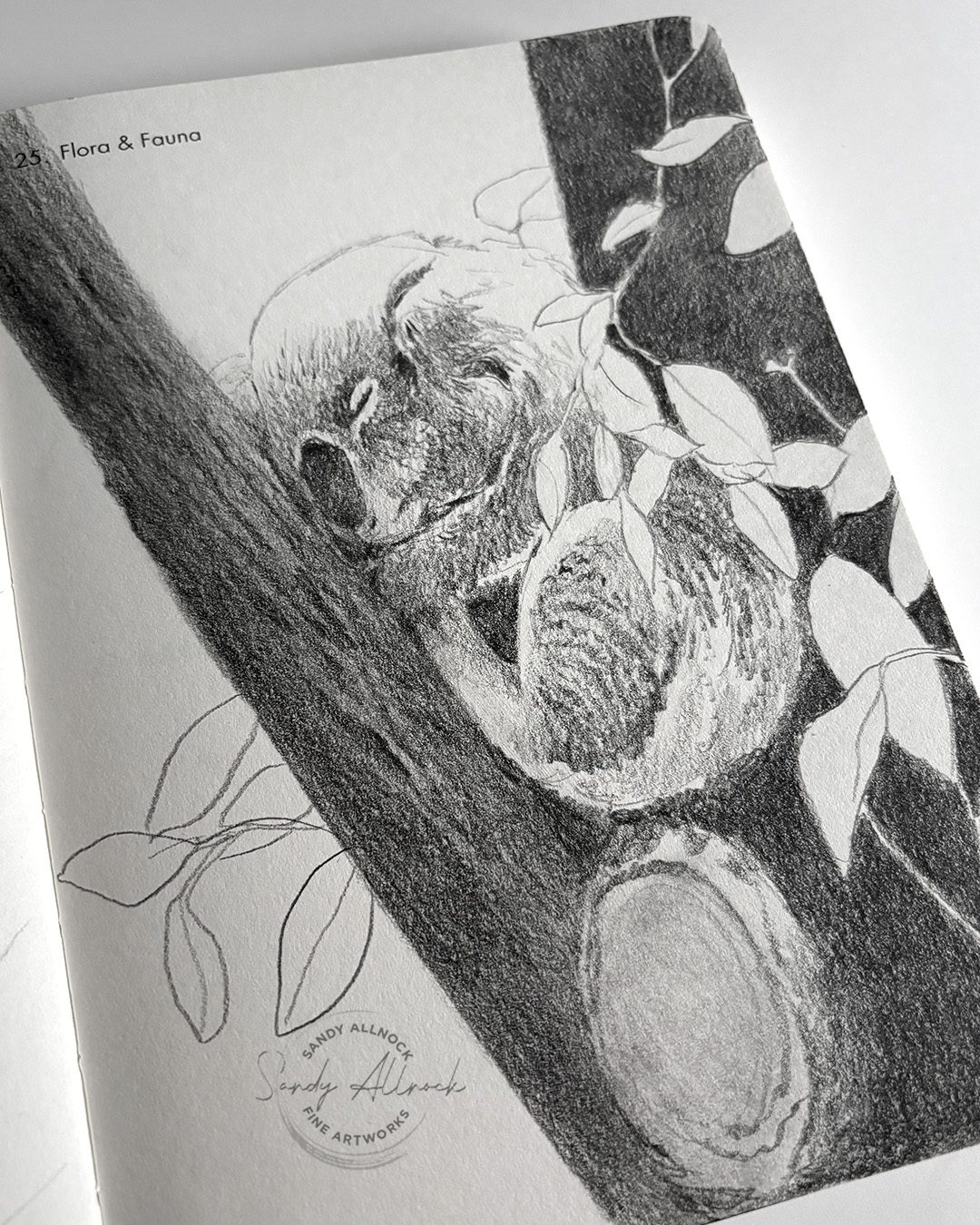
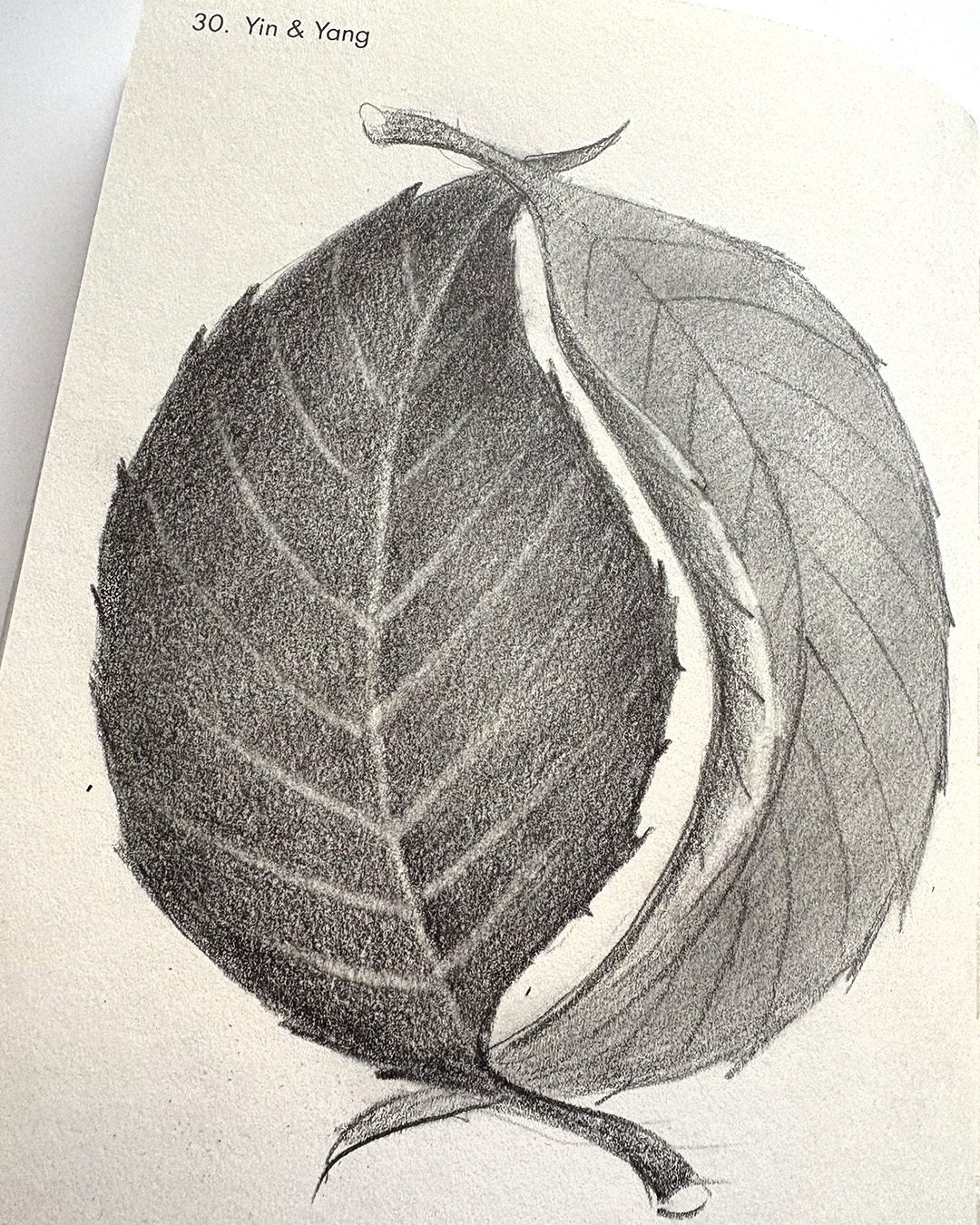
I got punk’d by a ‘Monet’ plus my 2025 watercolor palette

I got punk’d by a ‘Monet’ plus my 2025 watercolor palette

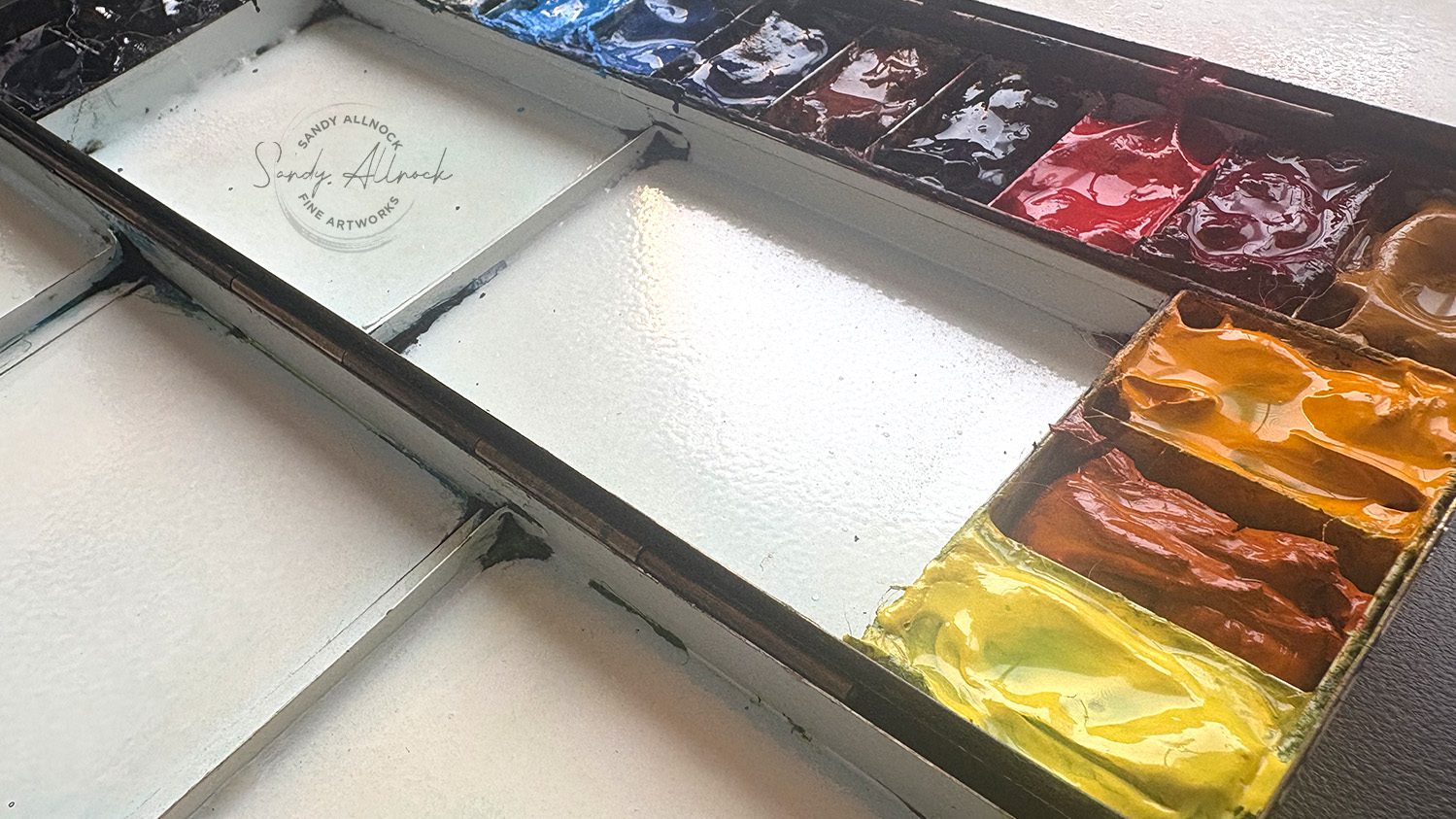
At the start of each year, I tend to do a little rethink on the colors in my palette. Lots will just stay on, but if there’s anything that didn’t get used much/enough to get refilled, or if I have something in mind that I really want to add in….it’s time to vote someone off the island! Last summer I kicked off a few colors, which I neglected to talk about…and today two more went buhbye. Not permanently, maybe, but they’re more for work I’d do in the studio, and I want my palette to work well for me outdoors.

The rethink this year was informed by a bit of a side trip I’ve taken into art history – getting the education about favorite painters that I kinda forgot from college! I wasn’t paying nearly the attention I should have (sorry Dr Rodeiro!!!)….I stuffed enough in my brain to be able to recognize a Caravaggio vs a Rembrandt in a slideshow exam, but I didn’t take in enough of their life stories to get to know them as people. So that’s now changing, thanks to the magic of the internet and a lot of educated folks on documentaries available for free on YouTube!

Tutorial: I got PUNKED by a “Monet” (plus my 2025 watercolor palette)

Watch the video below and scroll to the end to leave comments or questions — or click HERE to watch it on YouTube and leave comments over there. I read both dutifully!

SUPPLIES

Some product may be provided by manufacturers for review and use. Compensated affiliate links are here at no cost to you. I appreciate your support of my work with your purchases! Full affiliate and product disclosure | My trusted partners in art

Palette

  1. House of Hoffman Signature Series Palette 
  2. Magic Eraser to clean palette

Sketchbook

  1. Sennelier handmade watercolor sketchbook

Daniel Smith Watercolors (in order around my palette)

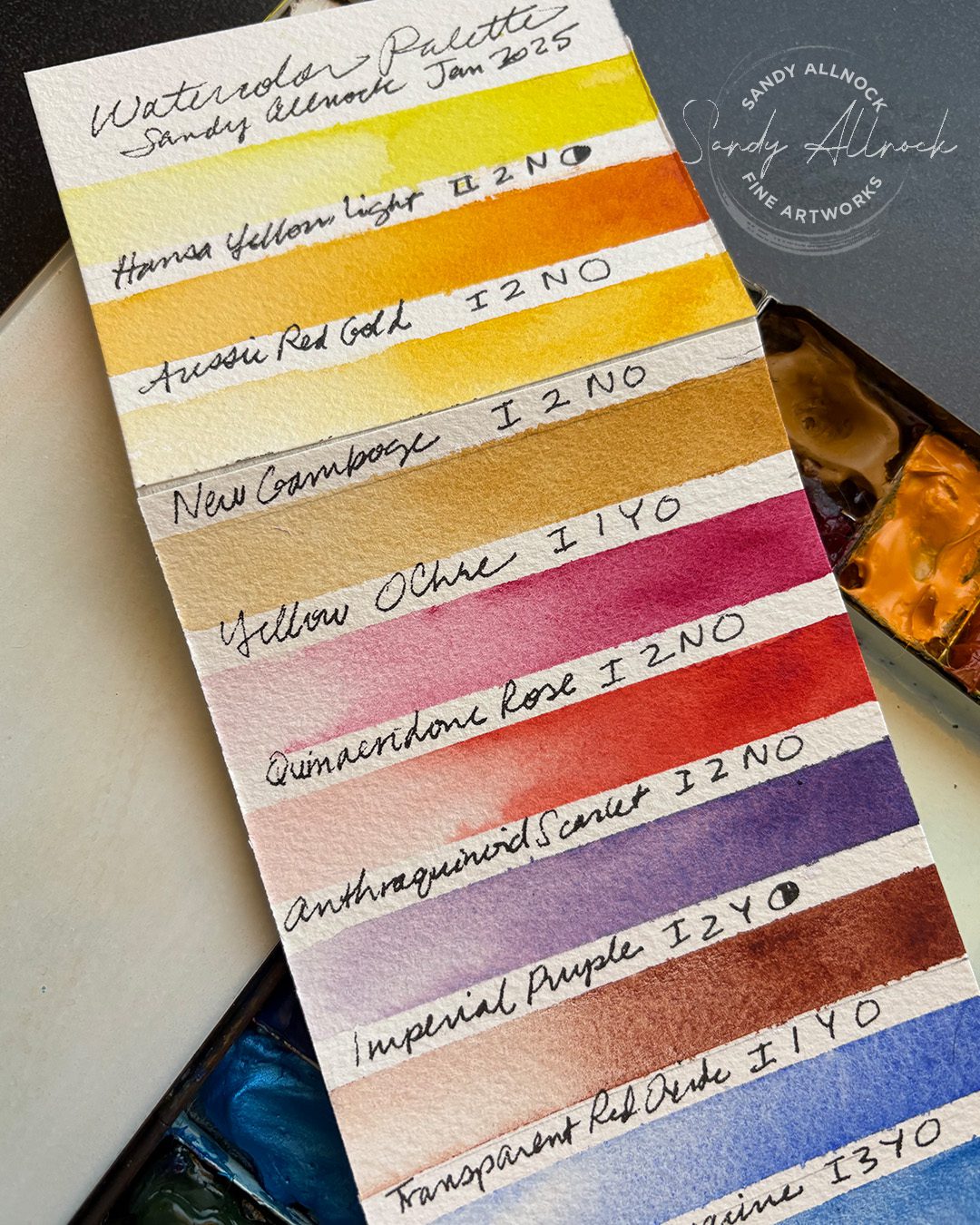
  1. Hansa Yellow Light BLICK  AMZ  JACKSONS 
  2. Aussie Red Gold BLICK  AMZ  JACKSONS 
  3. New Gamboge BLICK  AMZ   JACKSONS 
  4. Yellow Ochre BLICK  AMZ  JACKSONS 
  5. Quinacridone Rose BLICK  AMZ  JACKSONS 
  6. Anthraquinoid Scarlet BLICK  AMZ  JACKSONS 
  7. Imperial Purple BLICK  AMZ  JACKSONS 
  8. Transparent Red Oxide BLICK AMZ  JACKSONS 
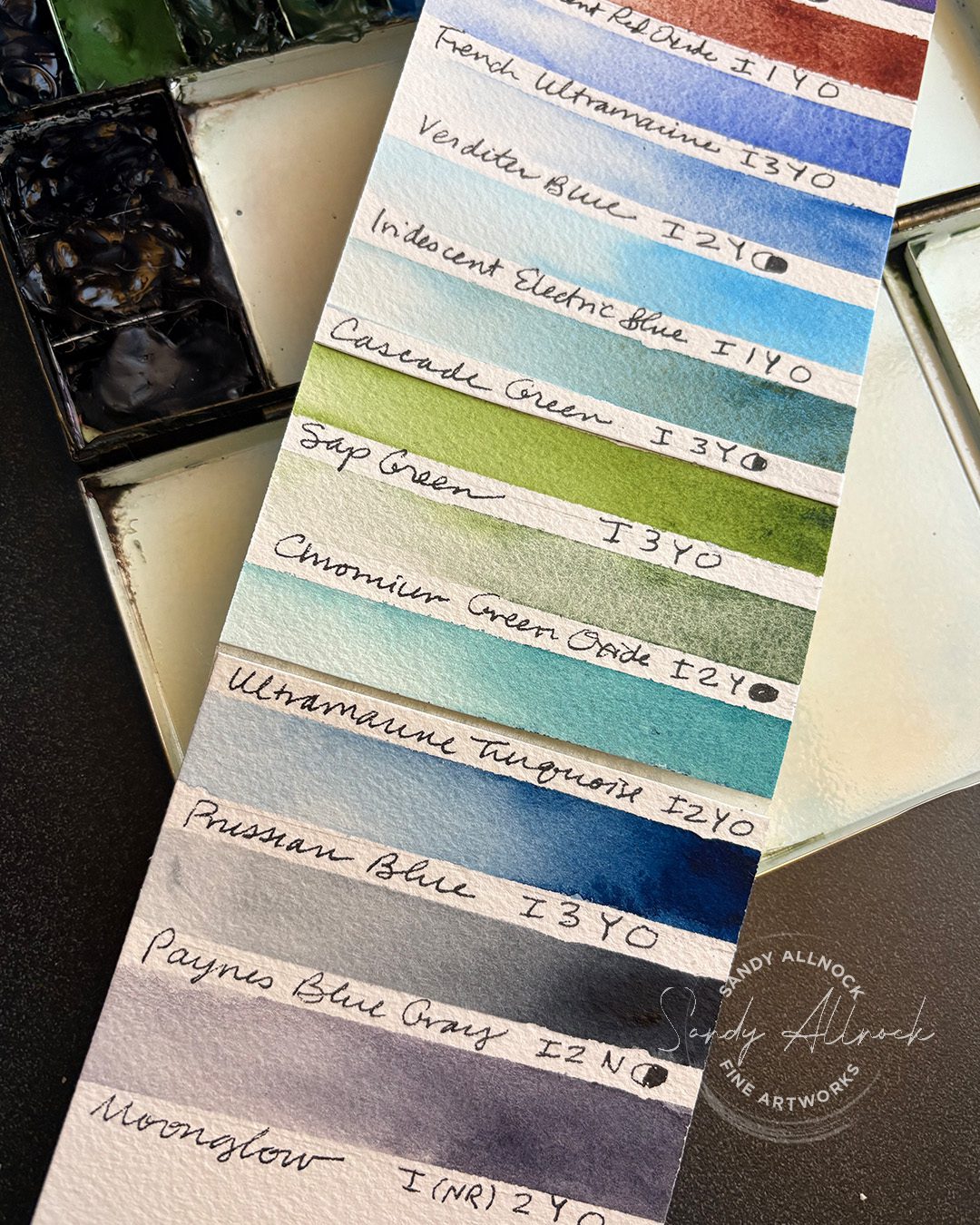
  9. French Ultramarine BLICK  AMZ  JACKSONS 
  10. Verditer Blue BLICK  AMZ  JACKSONS 
  11. Iridescent Electric Blue (Luminescent) BLICK AMZ  JACKSONS 
  12. Cascade Green BLICK  AMZ  JACKSONS 
  13. Sap Green BLICK  AMZ  JACKSONS 
  14. Chromium Green Oxide BLICK  AMZ  JACKSONS 
  15. Ultramarine Turquoise BLICK  AMZ  JACKSONS 
  16. Prussian Blue BLICK  AMZ  JACKSONS 
  17. Paynes Blue Gray BLICK AMZ  JACKSONS 
  18. Moonglow BLICK  AMZ  JACKSONS 

My 2025 palette, for now

I recommend setting a palette and sticking with it for a year or so – it’s not an iron-clad rule, but if there’s not time to really settle in and play with that group of colors, then there’s not all that much learning to be had. I recommend 24 colors or less if you can vote enough colors off the island; it forces you to mix colors from what you have, rather than have a 48-color palette that only gives you the ability to skip that part of the learning process.

You can always change out a color or two before a year, of course! I figured out early that the two reds I had were not working for me. I missed the reds I already had well-practiced, and swapped them last summer. But now I decided since I needed a good cleaning, I’d also just dive in an change a few colors – courtesy of the impressionists. More on that in a minute.


My colors are swatched out here if that’s something that’ll help; they’re all Daniel Smith colors, and they’re linked above in the supply box. I’ve listed color names, lightfastness, staining level, gralation y/n, and opacity/transaparency.

My art history side trip

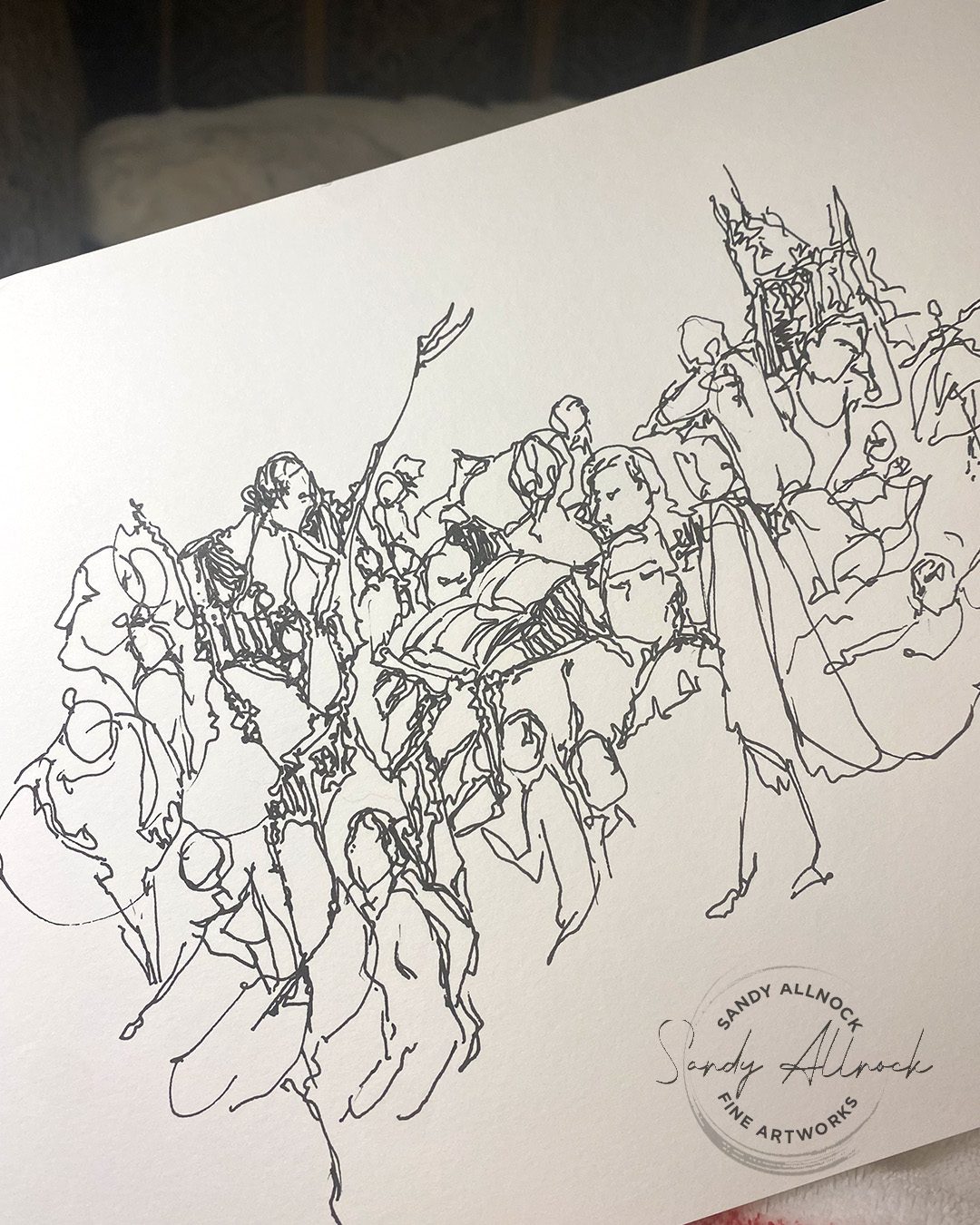
During this long dark winter, when I wanted to feed my brain good stuff and do less scrolling, I decided to do some research on a favorite painter. I started with, of course, Caravaggio, my hero. And I started doing little sketching while watching videos about him, about each artist that kept cropping up in more and more documentaries. Some evenings I had a pen out and drew quick gestures of paintings as they passed by my screen for 20 seconds.

Subscribe to receive blog posts by email:

Taking visual notes

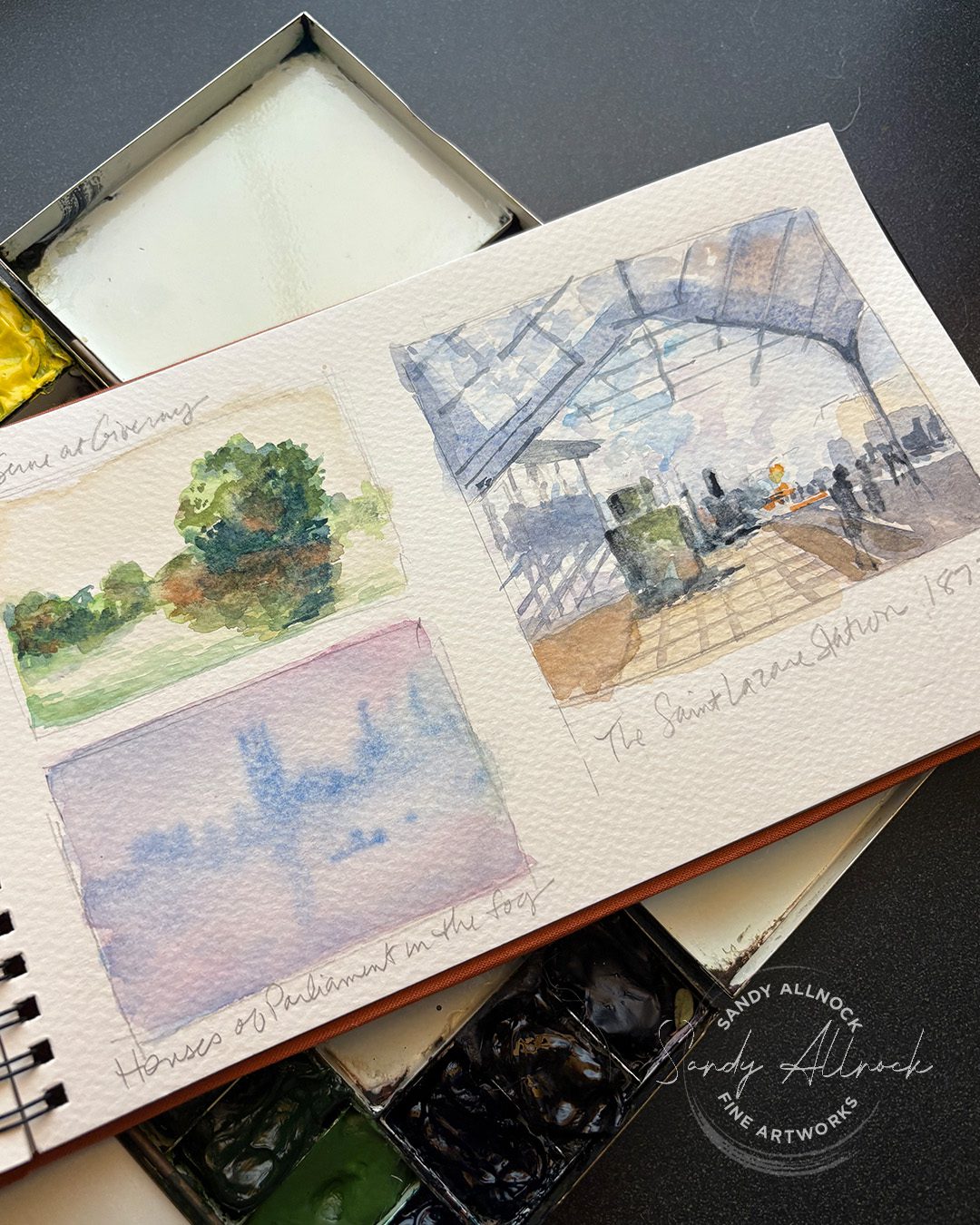
But then I got out watercolors and a sketchbook, and decided to try some color studies. I wasn’t sure what was going to happen – but as the documentary would discuss a painting sometimes I’d look it up so I could zoom in, and would sketch a portion, or a thumbnail of it all.

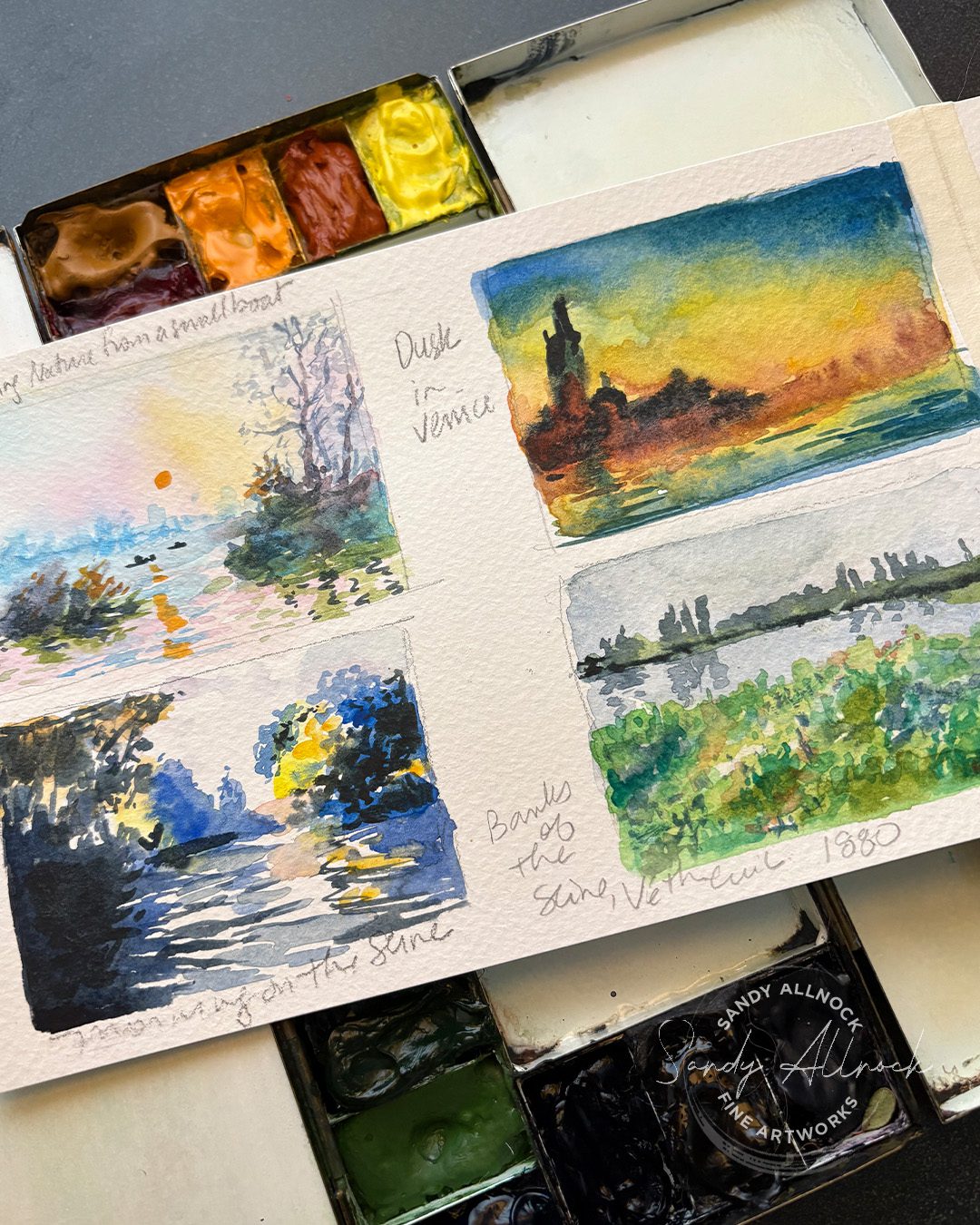
During my Monet period (ha!) I just googled “paintings by Claude Monet” and started doing quick little thumbnails while the art historian told stories. I was taking visual notes from the paintings – what colors I could see in a tree or grasses that I never use. What would it feel like to include that? These were quick 5 minute paintings, max. 
And the blue and yellow one, well, that one’s not a Monet. The artist who painted it was trying to paint the Seine in Monet’s style, and I should have known it was not a color combo that appealed to Monet at all – but the title was the same as a Monet totle and was in French, and  I didn’t question it til I went to locate the picture to grab for the video. Whoops! Punk’d. Alas. 
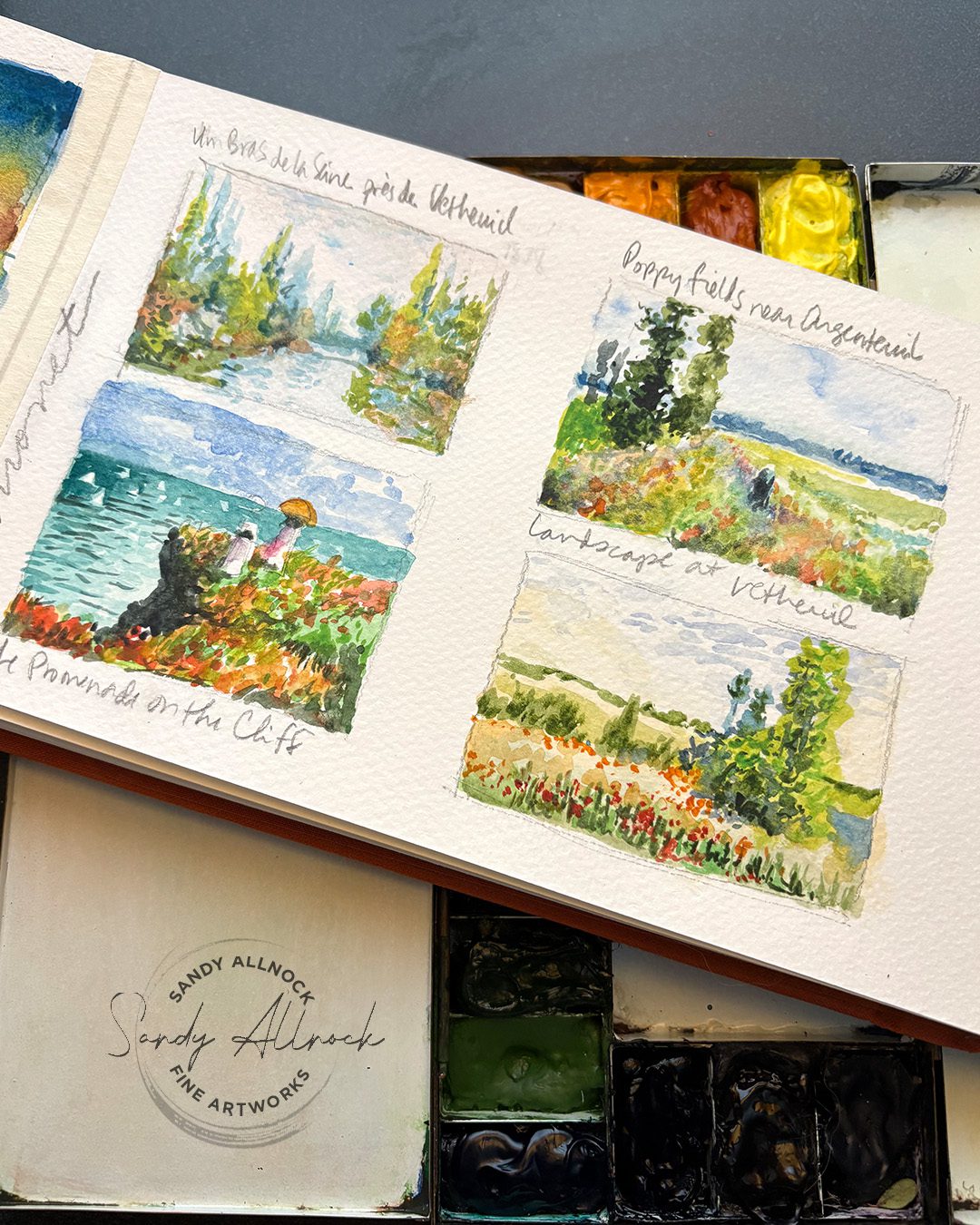
I created a few pages of these sketches, and the panel on the far left was taped in to give me room for more paintings in a spread about Monet. But the Promenade on the Cliff has colors that are, again, unlike Monet’s work – he did add color but now I saw quickly what OVERdoing Monet’s colors could be like. While it pleased the “ooh color!” side of my brain, I don’t have interest in painting that way, and want to do more of the colorways in real Monet paintings….closer to realism but with great pops of color that meld together when looking at the painting as a whole.

Monet’s Poppy Fields at Argenteuil has got me anxious for spring to get here so I can try some of these colors in fields of flowers. (And reminded me that I treated myself to a park pass for 2025 so I can go up to Rainier anytime to paint now!)


In little sketches like these, accuracy wasn’t my goal – it was getting a feel for what it might be like to paint with pops of color. I’ll be experimenting with what that impressionist “pop” could look like within my own style; while at some point I might get out the pastels and gouache and try it, what could I do with watercolor to incorporate that excitement? I’m anxious to see.

I was talking with artists on Reddit about painting water and boats last week, and promised them I’ll be painting a boat in the near future, so maybe I’ll give these ideas a try then. 🙂


Who would you research?

Picking an artist needn’t be choosing someone who you would like to be when you’re a grown up painter. That’s not really the point of studying their work, in the way that I’m approaching it. Sure, if you want to be an impressionist, mimic all you like.

But if, like me, you want to dive deeper into your own style, sometimes trying on something new will teach you either how to expand your own visual language – or might show you that NO you don’t want to create that artist’s work, you just love that artist’s work. And sometimes, that’s a very good thing to learn about yourself.

How to make daily drawing MORE EXCITING – ft OLO marker storage tower

How to make daily drawing MORE EXCITING – ft OLO marker storage tower

Has your sketching time become a chore? Do you dread that “oh now I need to figure out what to draw!” moment? I hope I’ll have a little fun to inspire you to make that daily drawing time a lot more impactful for you!

Looking around your home/studio to find “something to draw” can lead you to the same objects again and again, especially if you follow my advice to draw from real life, every day for at least a few minutes.

Yes even if you “can’t” draw. That’s when it’s even MORE helpful! Get yourself a sketchbook and a pencil, promise yourself you won’t show that sketchbook to another living soul, preserving your dignity. Then draw daily!

I know I have too many cups, glasses, and bowls in my sketchbooks. Lots of fruit, cookies. Yes I have a food problem but that’s for a different blog post! But I like drawing those things. So how do we take those same objects we’re drawn to over and over – and make them more FUN!?

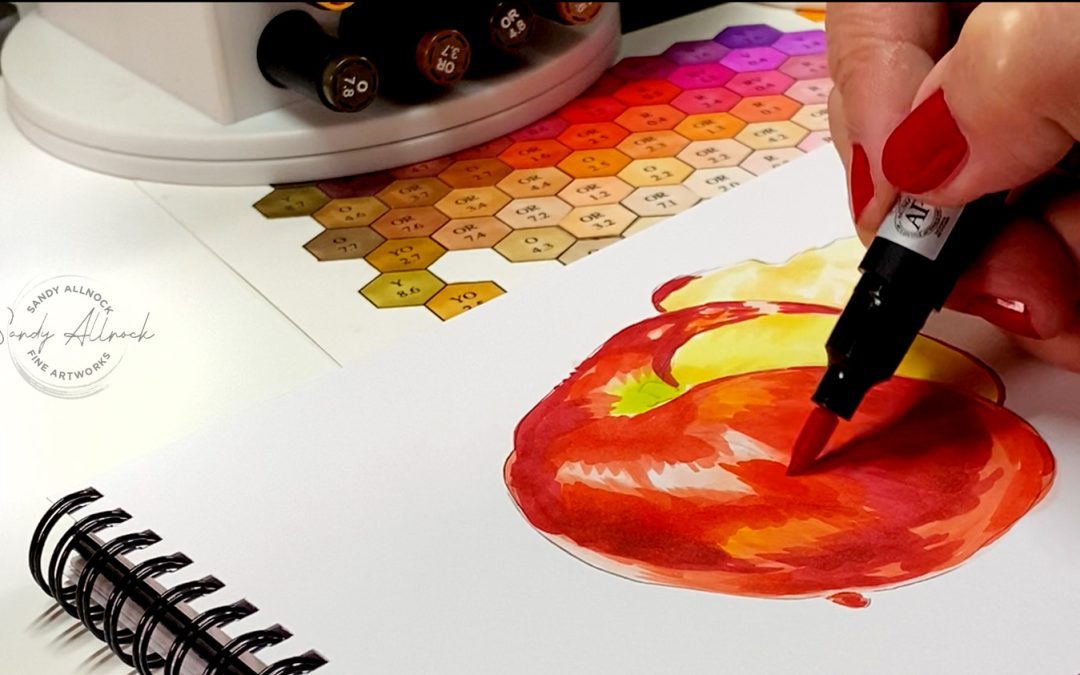
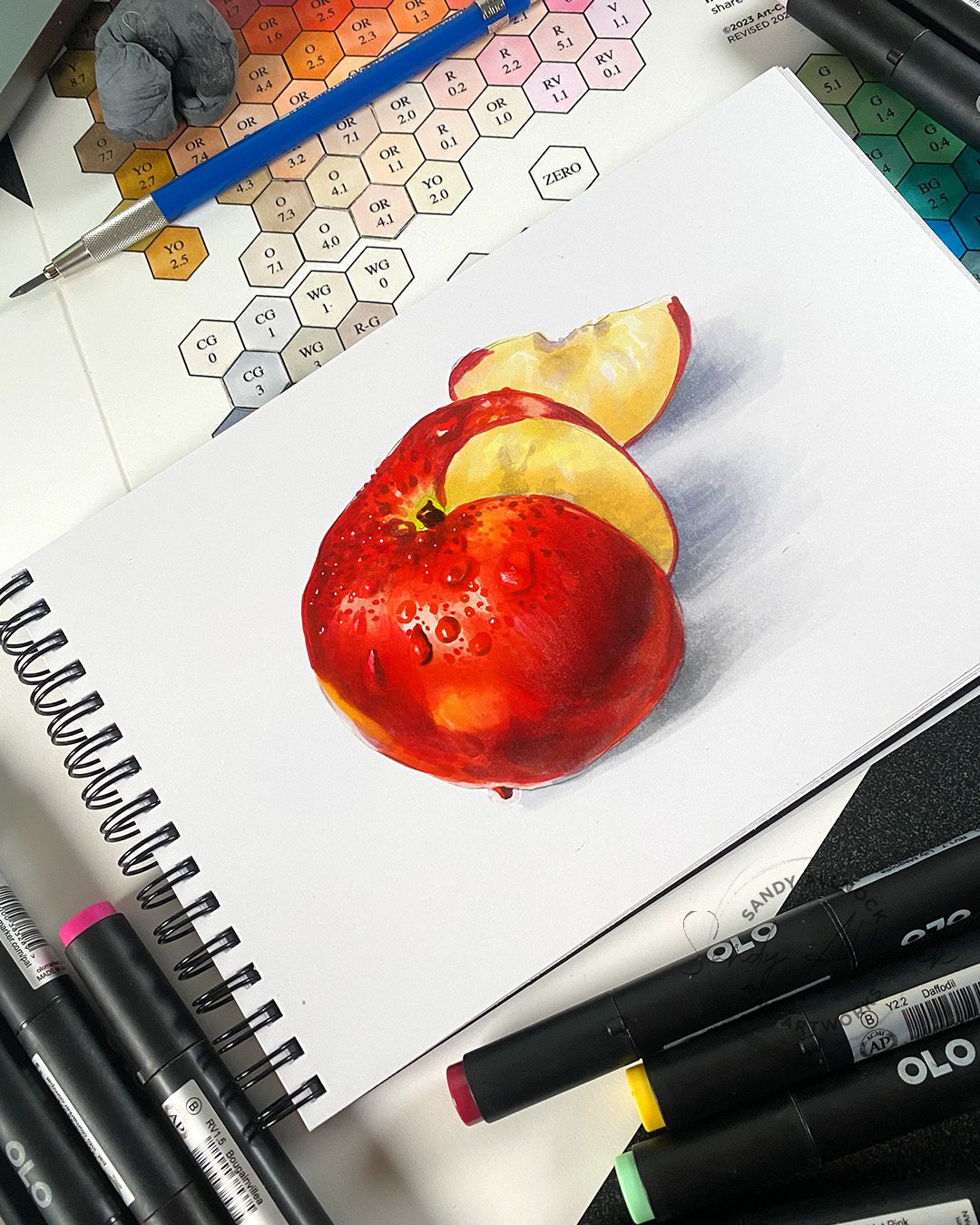
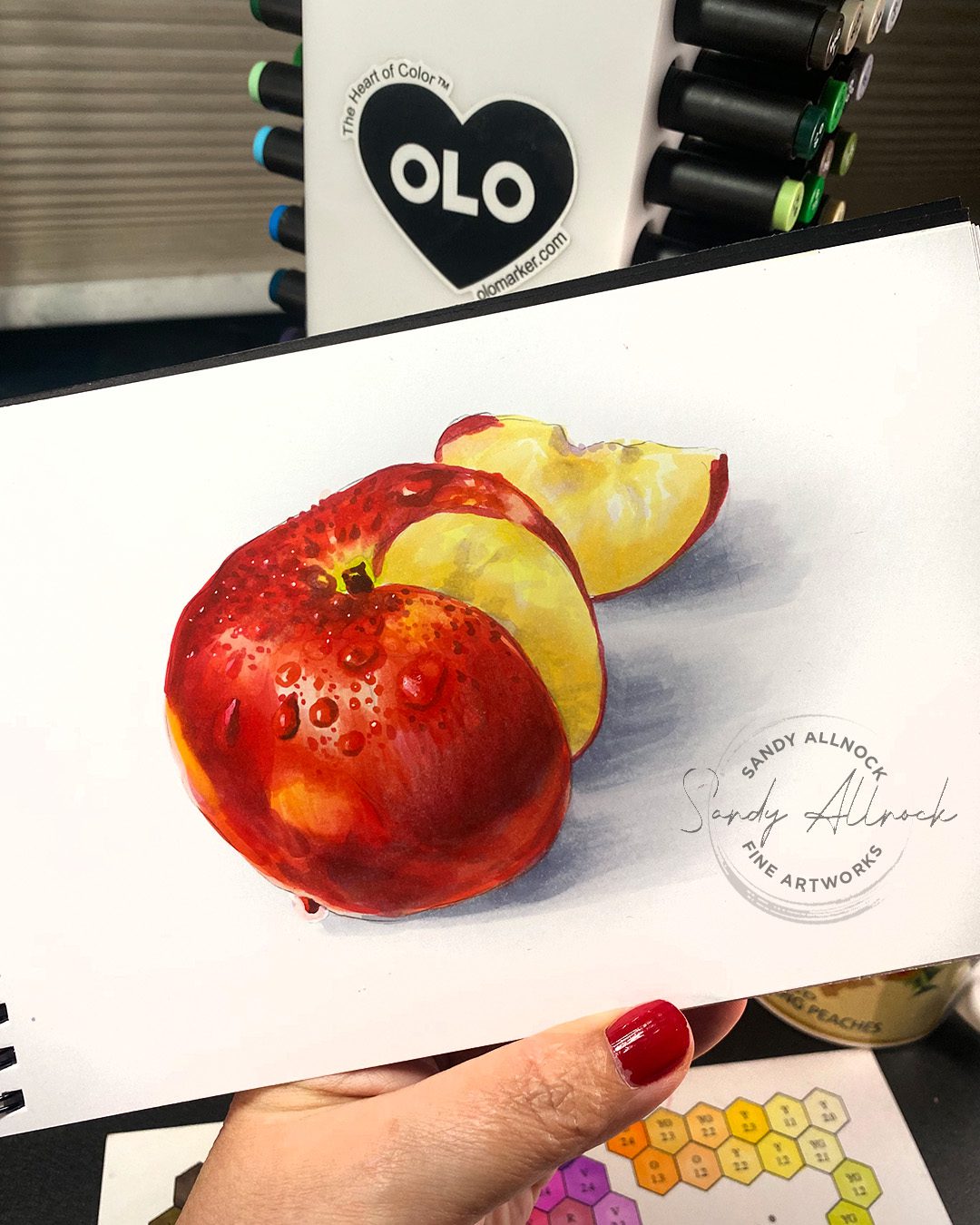
A few months back I posted a reel of this daily sketch of an apple that falls into the make-it-more-exciting camp….and it got a surprising amount of attention! A closeup, lots of water drops. So I hadd put “apple” on my to-do list for a video. Today’s the day!

Tutorial: How to make daily drawing MORE EXCITING

Watch the video below and scroll to the end to leave comments or questions — or click HERE to watch it on YouTube and leave comments over there. I read both dutifully!

SUPPLIES

Some product may be provided by manufacturers for review and use. Compensated affiliate links are here at no cost to you. I appreciate your support of my work with your purchases! Full affiliate and product disclosure | My trusted partners in art

The OLO tower (on sale Jan 13-19)

This sweet spinning tower holds 64 pens – which for me is 128 colors! Most folks don’t own the full set, since the company is fairly new, so the 64 is likely adequate for most people.

My marker set has 24 colors – and I have them paired with their refills on side 2, so i’m keeping them in a separate cup so I remember which ones are mine. I also put 3 grey markers and the blacks in that cup, as well as the rando brown that ended up with the long handle on the back end (I don’t find that handle particularly helpful.)

I arranged the tower in roughly rainbowish order; each pen has a color from the same family on the other side of it, then all the reds are near each other, all the blues, purples, etc. This makes it so easy to find the color I need. And this tower spins easily!

The sale on the OLO tower will be from January 13 -19, 2025
• 10% discount on the tower.
• If you purchase a set of 128 colors (half brush or half chisel), the OLO Tower will be included for free.

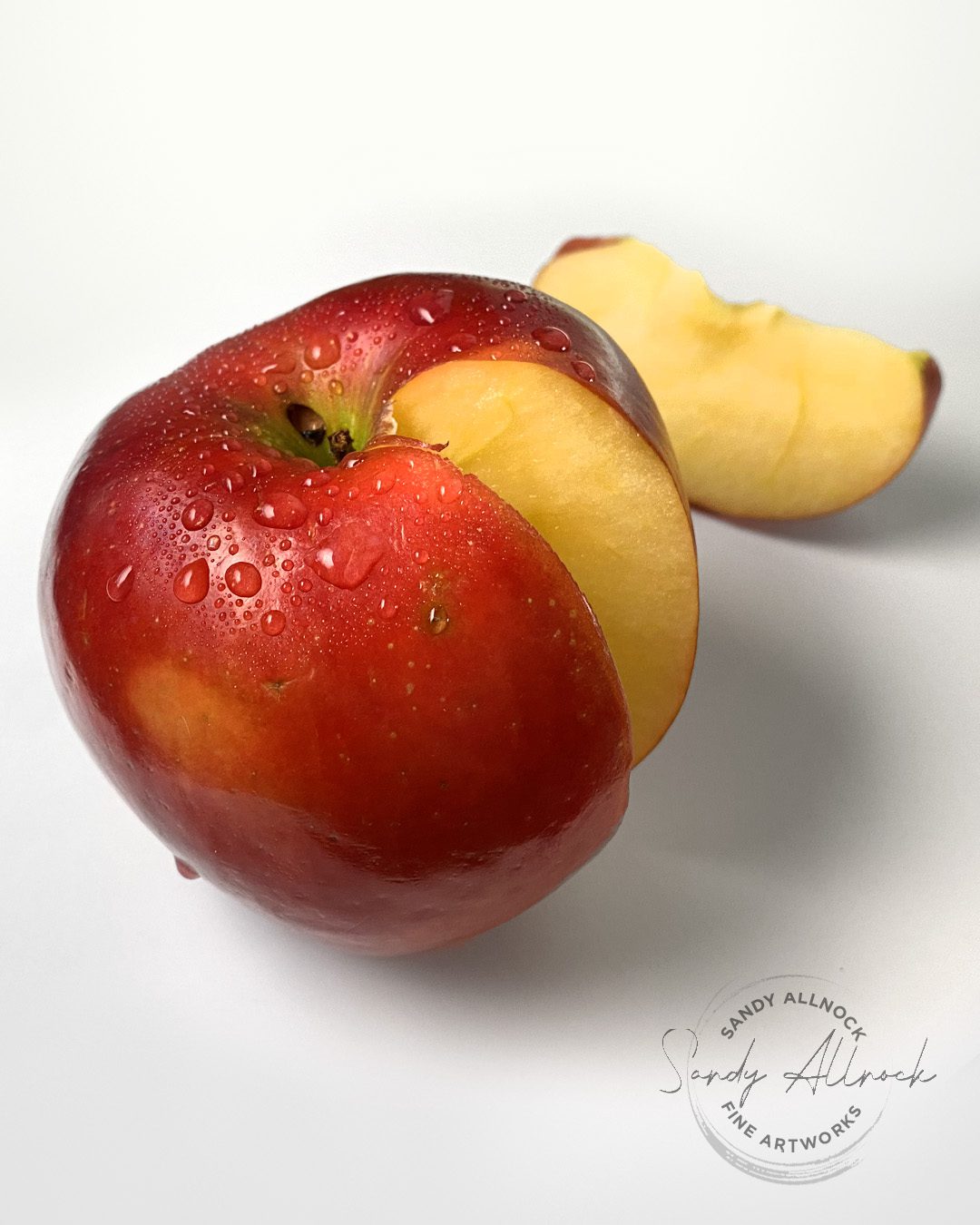
My apple photo

Feel free to use my apple photo to create a sketch – better yet, cut into your own apple to draw from life!

Subscribe to receive blog posts by email:

To make drawing time more exciting and fun

Think outside the box a little; so many of the humdrum objects around us don’t seem “fun” enough to spend our valuable time and supplies on….but we can make them more fun!

  1. Food: partially prepare it! Cut it, slice it, dice it, spritz it with water. I’ve even steamed broccoli for dinner and done a quick sketch while eating.
  2. Containers: put something IN the container…not just a liquid or expected plant. But what about your hedgehog? Fill it full of jellybeans? Spill the liquid or beans from a tipped cup!
  3. Light it up: Find a spot, or several spots, in your home/studio where the light is good and strong; see if creating strong highlights and shadows with light makes it more clear where values change.
  4. Mix and match: find 2 objects that normally wouldn’t have anything to do with each other and position them together. A pencil eraser balanced on a golf ball. Anything that’ll make you smile while sketching!

Get out of your own head

So many times we think we know what an object looks like. Haven’t we been writing with a pen forEVER and should know what it looks like? Don’t we drink out of a coffee mug daily?

Surprise yourself by really LOOKING at the subject. Note what the designer of the mug did with the handle…does it get skinnier in one part or another? Just how was that pen clip constructed? 

Be prepared to admit you were wrong about knowing what that object looked like – and find more things to be wrong about. The feeling of conquering something you didn’t even know you needed to learn is kind of amazing!

My daily sketches

It’s free to visit or subscribe – just pop over to my fine art site and see what’s cookin! There’s nothing fancy to read in the posts you receive by email, just a little tidbit of inspiration.

My weekly sketches

On my Patreon I share a sketch a week for those at the $10+ levels, with some descriotion that may be in a book I hope to write someday. For $5 subscribers it’s a weekly sketch but not much text. And for $1 a month folks, once a month they receive one of the sketch pages to enjoy.

What is a phenology wheel?

What is a phenology wheel?

Have you ever stumbled on an idea that got you so excited and you kept asking “How am I only finding out about this now?”


That happened to me. Around Thanksgiving time, I was wasting time on YouTube (it’s not all a waste but that day it seemed to, until….) the algorithm showed me a video by Marion, and I nearly didn’t click. I had heard of Phrenology and knew it was bad, but…I clicked anyway. How could something in her beautiful thumbnail be related to that other thing I knew?

(see her video later in this post)

Well it turned out that I was wrong. 100% wrong.  I had the wrong word! It wasn’t phrenology. It was phenology. A completely differnet world!

In the video below I’ll explain the difference, then get into how you can get started like I am.

Tutorial: What is a phenology wheel?

Watch the video below and scroll to the end to leave comments or questions — or click HERE to watch it on YouTube and leave comments over there. I read both dutifully!

SUPPLIES

Some product may be provided by manufacturers for review and use. Compensated affiliate links are here at no cost to you. I appreciate your support of my work with your purchases! Full affiliate and product disclosure | My trusted partners in art

PAPER

Arches Bright White CP 22×30 sheet BLICK  |  JACKSONS

TOOLS

  1. Westcott Compass and protractor set BLICK  | AMZ
  2. Westcott Tsquare JR BLICK |  AMZ 

WATERCOLORS

Daniel Smith All Watercolor Tubes BLICK 

PENS

  1. Tachikawa Comic Pen Nib Holder AMZ 
  2. Sharpie Ultrafine black marker: BLICK |  AMZ 

My reasons to study phenology

Pheno;ogu is the study of cyclic and seasonal natural phenomena, especially in relation to climate and plant and animal life. We already do this in our daily lives – we look out the window to look at the sky, or stick our hand out the door to decide what jacket we need that day. You’re already a scientist, how cool is that?

However, if we don’t document what we learn about the natural world around us, we won’t be learning as much as we could. I’m finding that the further we move into climate changes, the more interested I am in finding out what the effects are on the area I live in – and will I be able to detect any of it? I have a “gut” feeling about when summer used to arrive, how many REALLY hot days we used to have vs now. But nothing tangible. It might be time to start taking notes!

I also want to start creating art directly from objects in front of me, whether inside or outside, and making a commitment to do that more regularly can’t possiblly be a bad thing. My word for 2025 is “observe” – and phenology wheels seem to be the perfect thing for me!


The questions I came up with that should help you decide if/how you want to join in:

DECISION 1

What do you want to observe? Plants overall or one? Wildlife/birds? Skies? Rocks? Soil types? Depends on what’s around you Look for apps to help identify plants and animals.

  1. iNaturalist,  identifier w social component so you can share info
  2. LeafSnap: plants, flowers, fruits, and trees 
  3. Merlin: birds
  4. Seek: for plants, insects, fungi, and wildlife
    Rockd:  
    nearby geologic units
  5. Skyview: An app that can help you identify stars

DECISION 2

  1. How often will you journal?
  2. Daily 365 or 31? Weekly 52? Monthly 12?

DECISION 3

What data will you capture?

  1. Sunrise / sunset? 
  2. Plant ID? 
  3. Cloud types? 
  4. Temperature? 
  5. Humidity?

DECISION 4

What art medium will you use? What makes sense?

  1. Paper type? 
  2. Size?

DECISION 5

What format will you use?

  1. Portability or in studio? 
  2. Normal journaling? 
  3. Accordion sketchbook?
  4. Wheel?

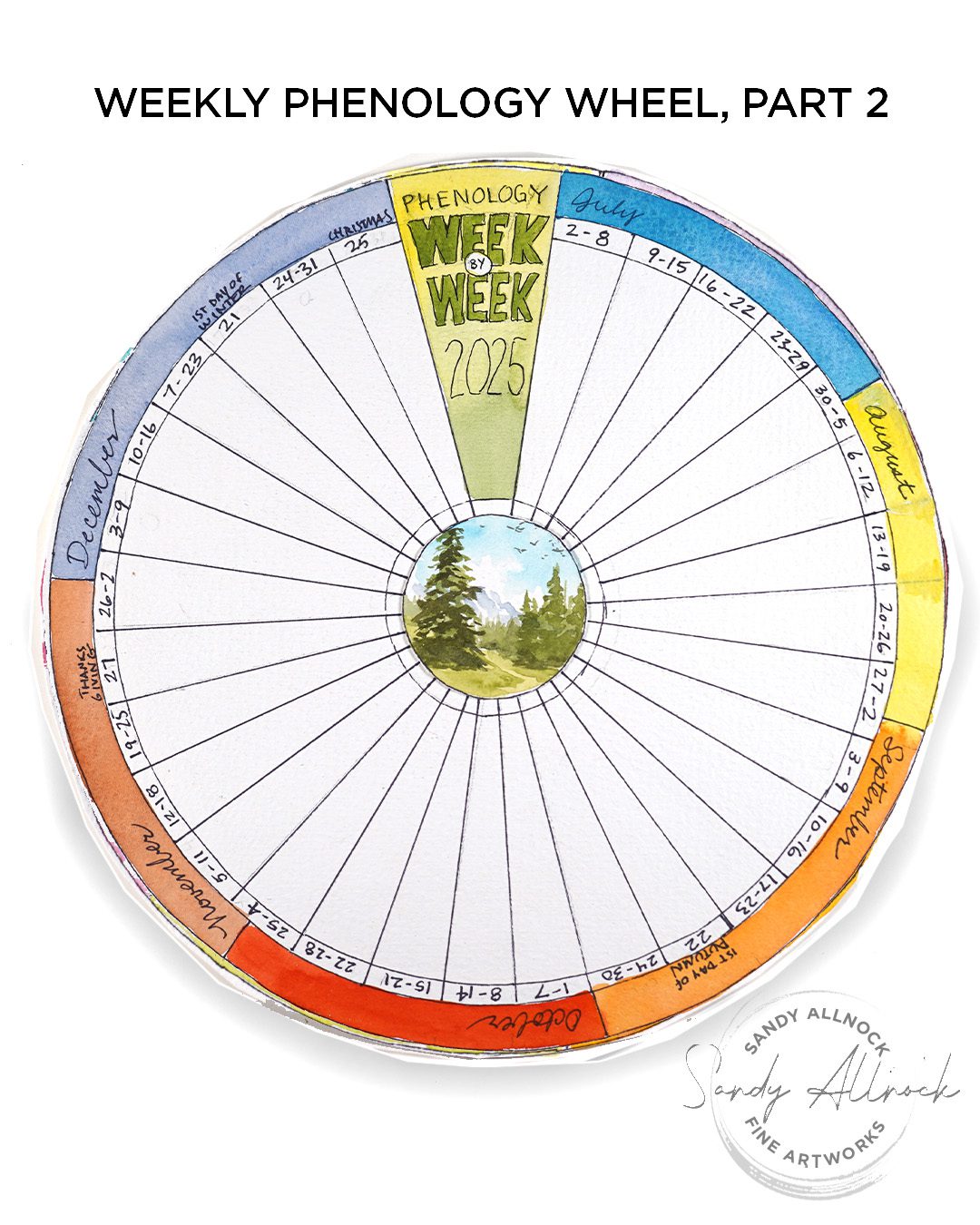
One-month phenology wheel

Dividing a circle into 32 slices or sectors gives you enough to create any month – with 1 or more extra spaces left. You can use those for bonus entries, or combine them into a bigger pie slice to create a title for it or write notes about what your goal was. Lots of options!

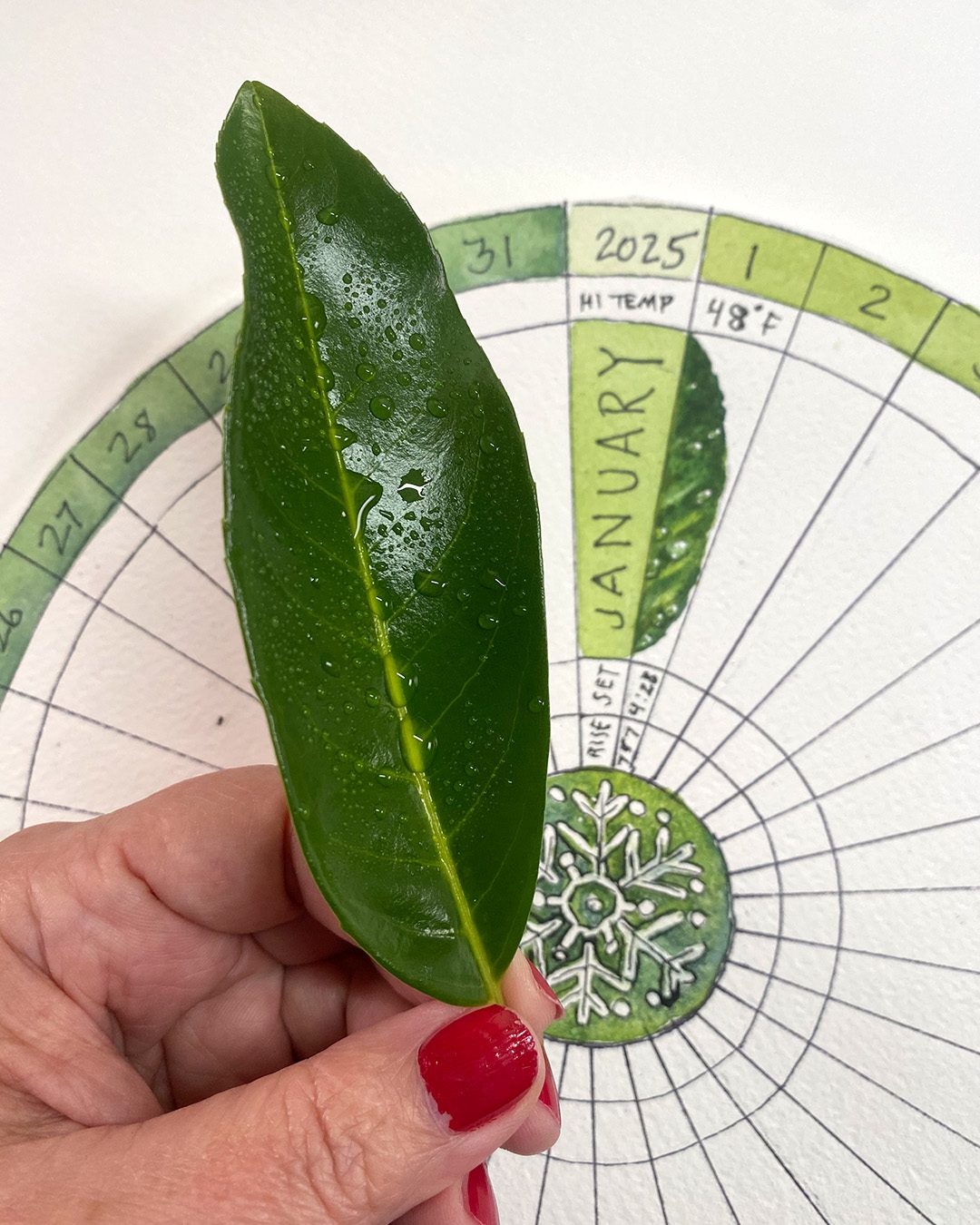
I’ll be collecting data on the high temperature for each day, along with the times for sunrise and sunset. The art will be observing everything green around me – both in my yard (lots of weeds, ha!) and on my daily walks. Hopefully the dogs will help me pick out plants to observe each day, too!

My plan is certainly not “the” way to do this. You can pick anything – document clouds in the sky. Tree bark all around your town. Bugs you see. If you’re at the coast, try rocks and shells! The data you collect should be what YOU are interested in.

My measurements: full circle is 10″. Dates are 1/2″. Temp is 1/4″, sunset/sunrise are each 3/8″. Center is a 2″ circle, drawn at 1″ from the center point.


Once a month journaling

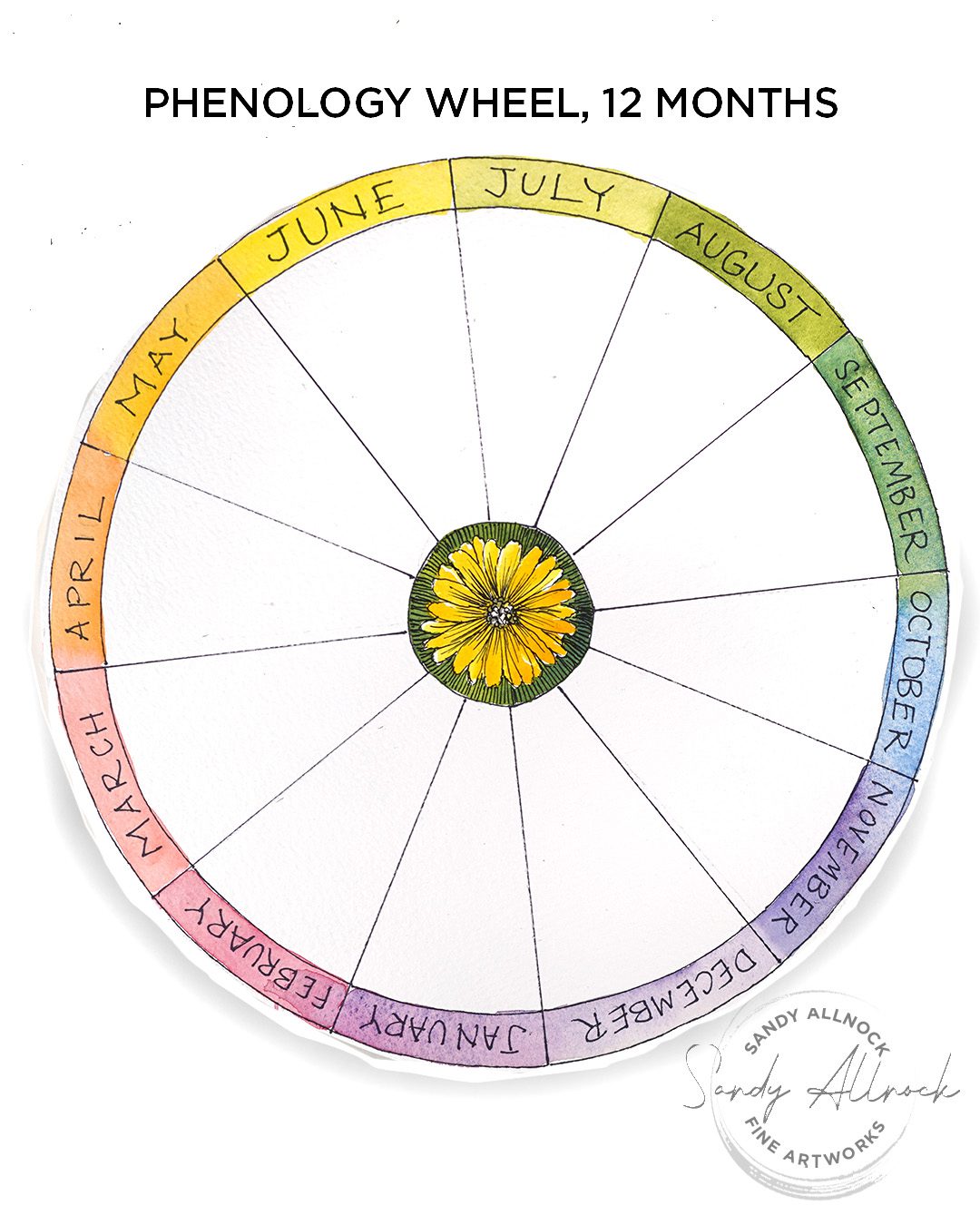
I’m not certain how I’ll use this – but perhaps as I work through my January wheel I’ll figure that out. If you have ideas let me know! Just remember this one is mathematically a little tougher; instead of dividing in half, you have to divvy each of the 4 quadrants in THREE so the angles are different.


My measurements: full circle is 10″. months are 1/2″. Center is a 2″ circle, drawn at 1″ from the center point.

Subscribe to receive blog posts by email:

Weekly journaling

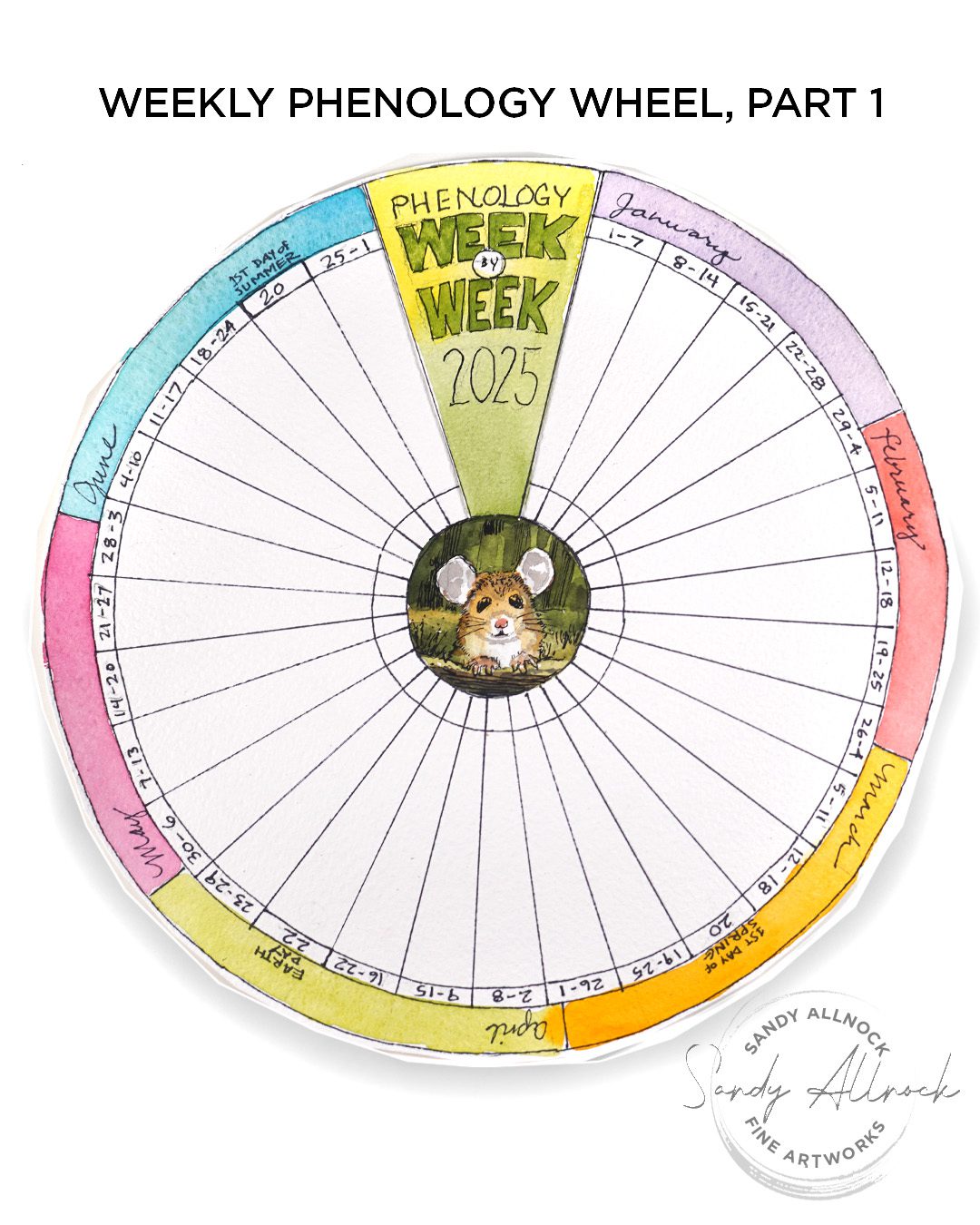
I was thinking about what I’ll do when I get distracted – which is inevitable! Once I start paying attention to green plants, what if I find a flower blooming early? What if a bee shows up in January!? The weekly entries will, in my current thinking, be for whatever I found most special that week. It could be one of the green things, but could also be something entirely unrelated. 

This one needs 2 wheels which will give you 64 slots. I wrote out the days for each week, then inserted some special days that I can imagine journaling something extra for – like Earth Day, first days of seasons, etc. You might also just punctuate the charts with 12 special entries of whatever kind you want. Just write it all in pencil first! I had to erase mine and move stuff around.


My measurements: full circle is 10″. Months are 1/2″. Week dates are 1/4″, and inner data ring might be which day of the week I found the special thing, to see if I am more observant on a particular day. Center is a 2″ circle, drawn at 1″ from the center point.

The video that inspired me!

Marion’s video came up through the algorithm, and I was delighted! See her video below or click HERE to watch it on YouTube.

I’m tickled to follow Marion’s lead!

I know she’s not the inventor, but hey, she was the one who made such a lovely video that it got my attention! Hope you’ll join in on the fun, too.

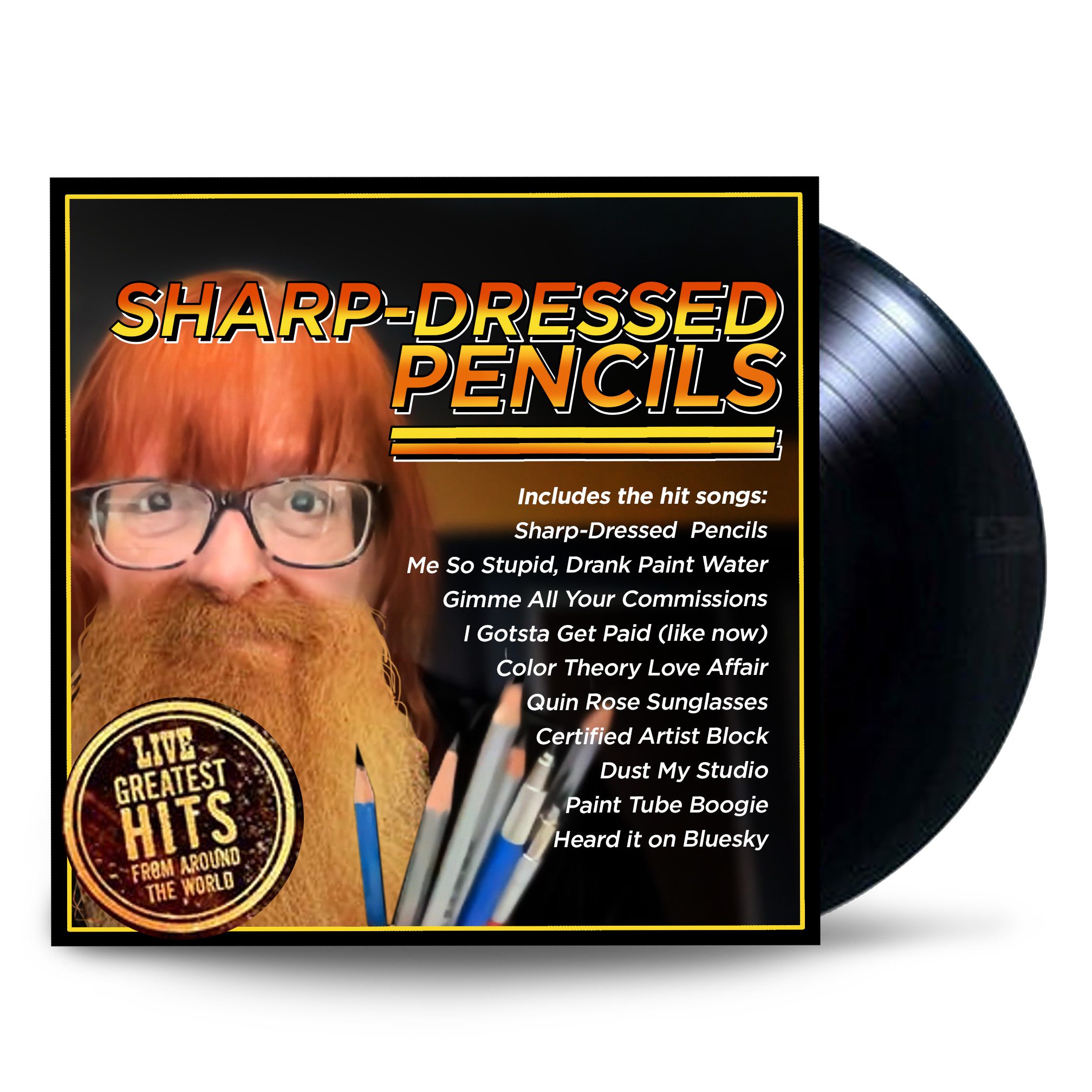
My sharp-dressed pencils

My sharp-dressed pencils

Sometimes songs pop into my head and while thinking about sharpeners….ZZTop entered the chat. So there we have it…I am officially old. Anyone else remember these fabulous hits from decades ago?

If this hasn’t hit you with a giggle – you might be one of the youngs , so may I introduce you to the wonders that were once popular? This terrible song by ZZtop is one I still can’t help but sing along to…. 

Tutorial: My sharp-dressed pencils

Watch the video below and scroll to the end to leave comments or questions — or click HERE to watch it on YouTube and leave comments over there. I read both dutifully!

SUPPLIES

Some product may be provided by manufacturers for review and use. Compensated affiliate links are here at no cost to you. I appreciate your support of my work with your purchases! Full affiliate and product disclosure | My trusted partners in art

Sharpeners for traditional pencils

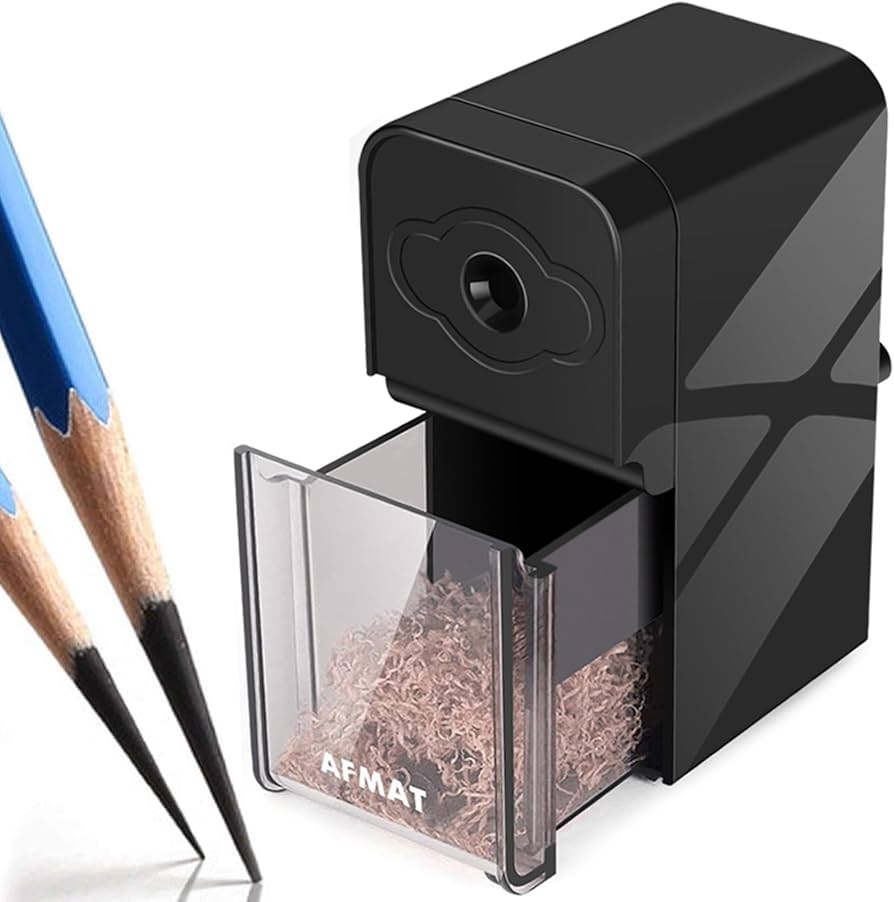
Afmat Long Point Pencil Sharpener 

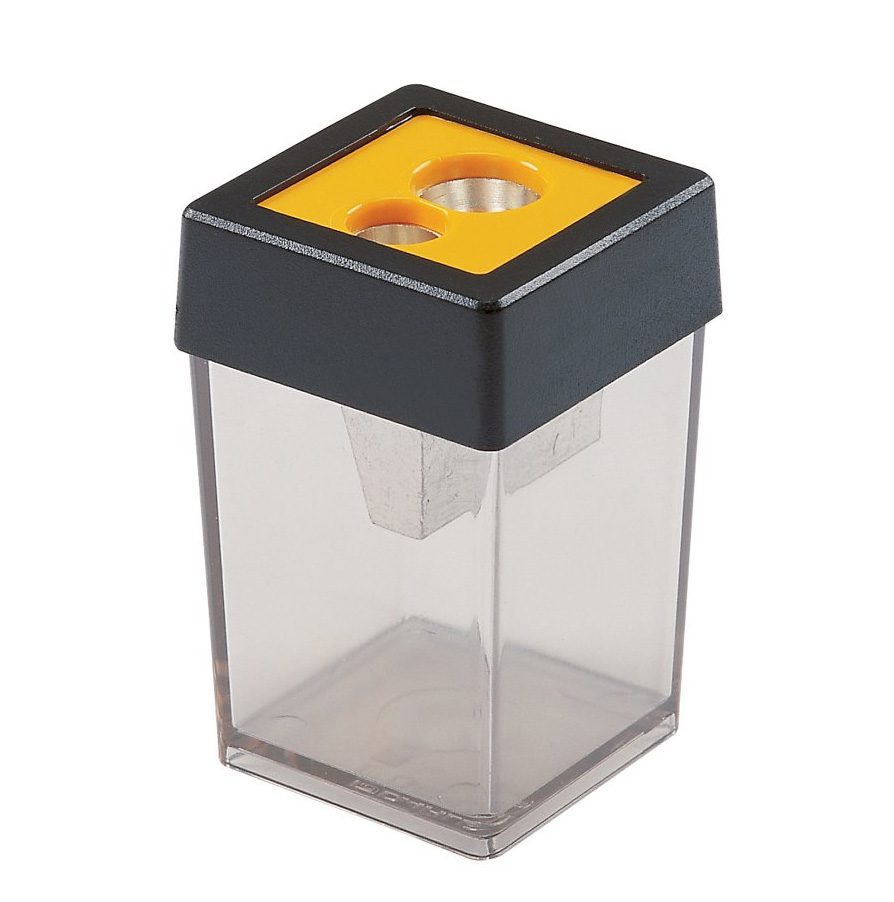
Dahle Dual hole pencil sharpener  BLICK  |  AMZ 
General’s All-Art sharpener BLICK  | AMZ | JACKSONS 
Blackwing One step long point sharpener  BLICK | AMZ  | JACKSONS 
Mobius & Ruppert  Three hole sharpener BLICK  | AMZ 
 
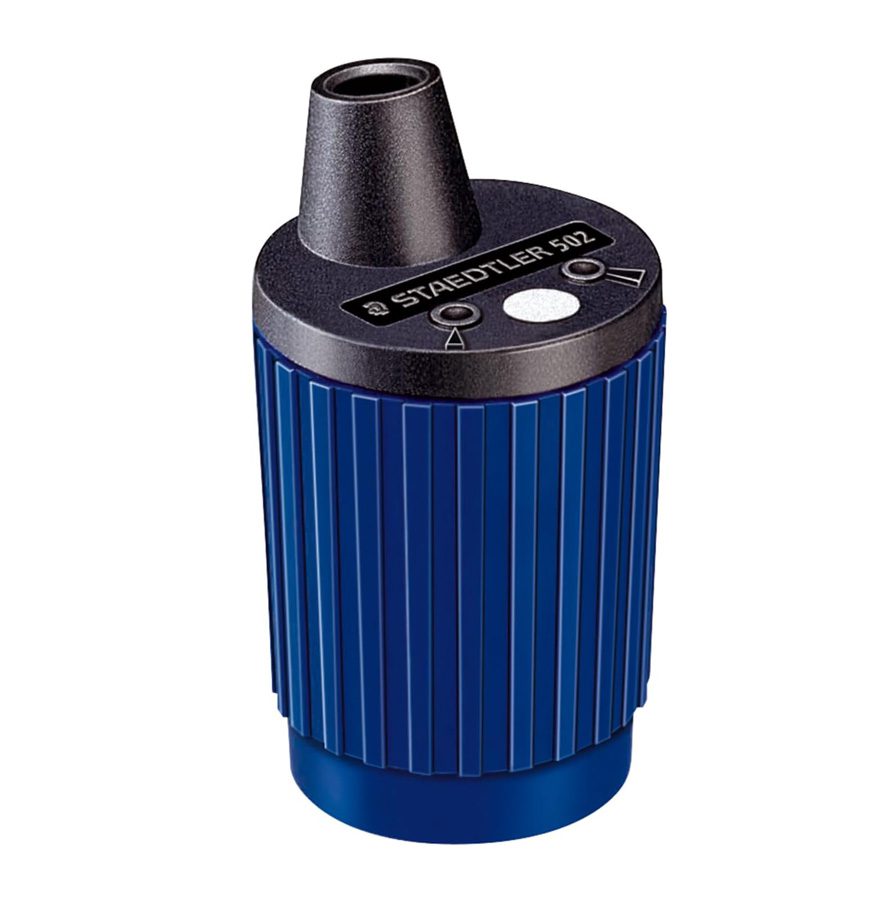
Staedtler Mars Lead holder  BLICK  | AMZ 

Technical pencils

Paper

Fabriano White White pads BLICK  |  AMZ  |  JACKSONS 

AFMAT long point

The Afmat Long Point Pencil Sharpener is not the sharpest tip unless you do something TO the tip. (This is a marketing photo from the company, I’m sure I’ve never gotten a pencil to look like that!) 

But if you like a LONG lead, this will do it. Best with harder pencils, since soft cores can easily break when not supported by a lot of wood.

Dahle dual-hole sharpener

Dahle Dual hole pencil sharpener  BLICK  |  AMZ is a great workhorse – I keep them all over the place since I work in the studio, on the sofa, in bed, at the dining room table…LOL. And it’s got the yellow cap so I can always find it among the rubble.
With any 2hole sharpener try them both separately and in succession; some are meant to have one sharpen the wood, the other sharpen the tip. And sometimes it’s just to accomodate thick/thin pencils.

General’s All-Art sharpener

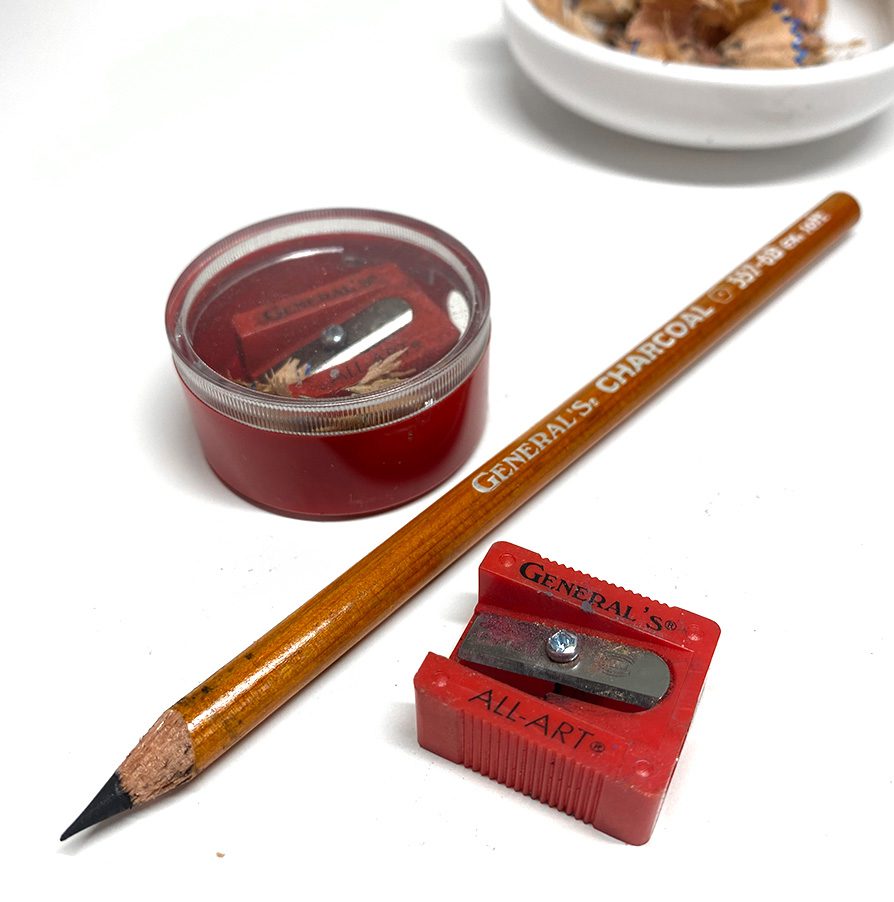
The All-Art sharpener BLICK  | AMZ | JACKSONS by Generals comes in the little round case or just the rectangle by itself – easily tucks in my travel bin for drawing group. And does a great job on thicker, softer pencils like charcoal or pastel. 


Blackwing One-step sharpener

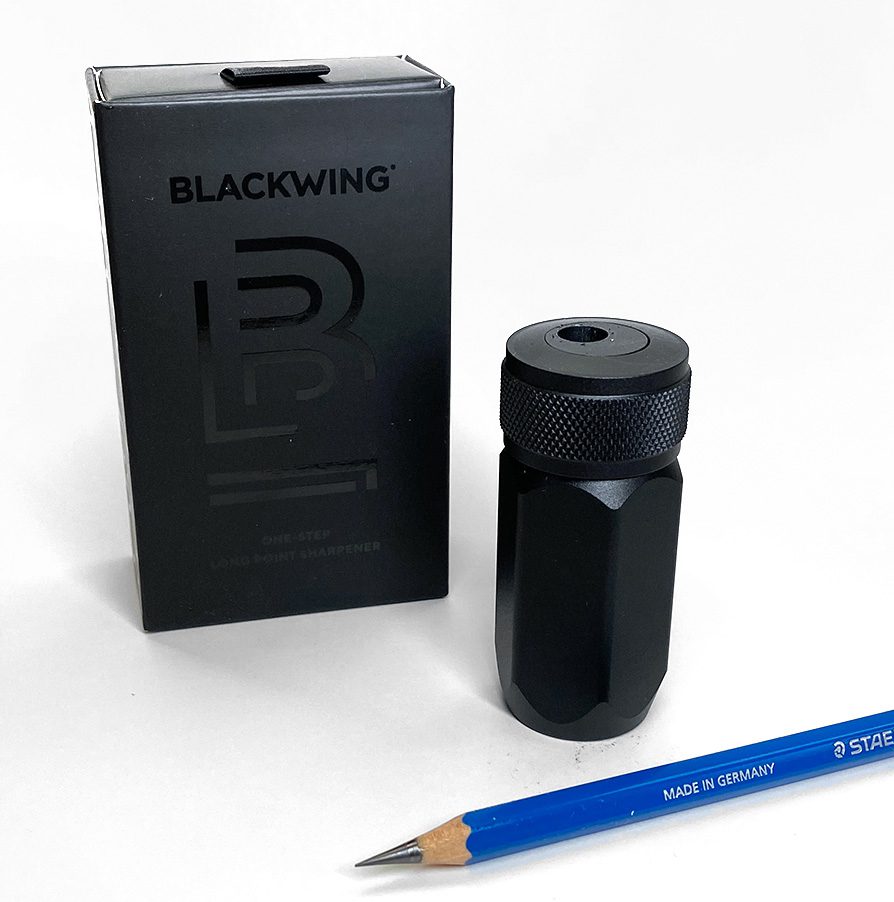
This  Blackwing  BLICK | AMZ  | JACKSONS  has marketing that calls it a long point sharpener, but I think of it more as a “safety long point” since a long longpoint can break. Ha! This one’s incredibly reliable at getting a nice point – and I like tucking it in my pocket if I’m taking work with me, like I did on a plane last week. It doesn’t “leak” pencil dust into my pocket, and is nice and heavy. And doesn’t look too weird on a restaurant table while sketching. 
Great little gift packaging too – feels elegant! 

M&R 3-hole sharpener

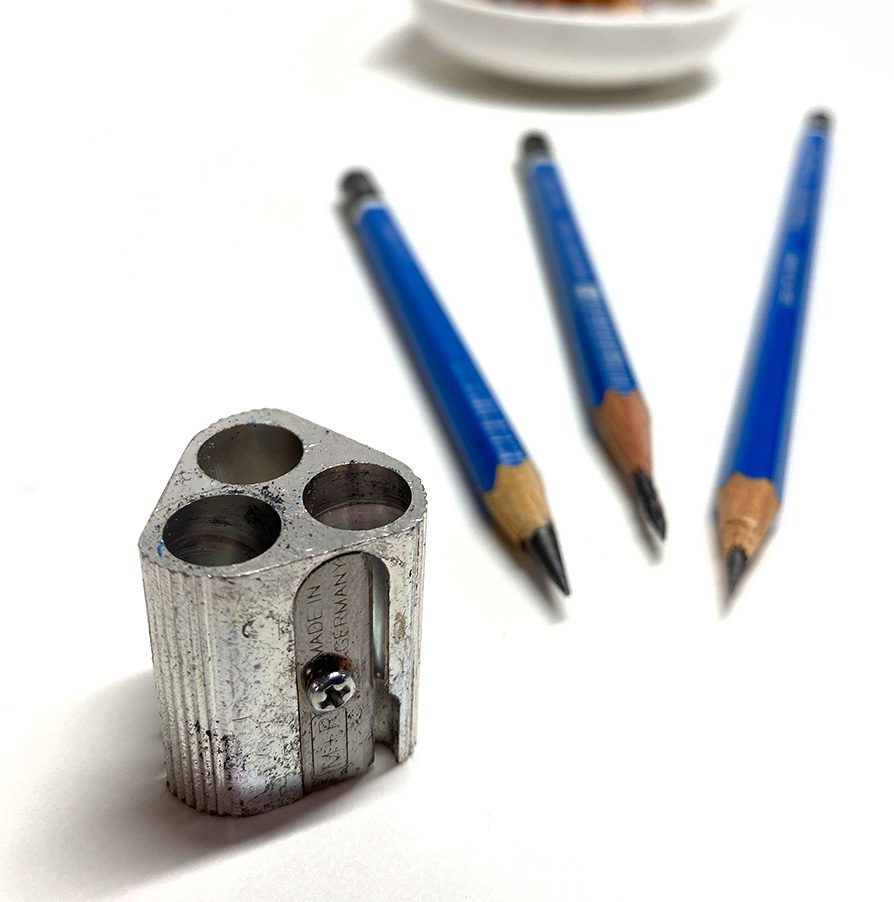
Now we’re talking customization! While it’s a bit messy with shavings that go everywhere, a bowl or ziploc contains it. But the three holes in a Mobius & Ruppert BLICK  | AMZ  give the artist a lot of ability to customize. And it’s got the most laser-sharp tips out of everything for normal pencils. (Not as sharp as the tech pencils to come but very very very nice.)


Subscribe to receive blog posts by email:

Tips

Staedtler Mars  BLICK  | AMZ and Koh-i-noor BLICK  | AMZ  |  JACKSONS
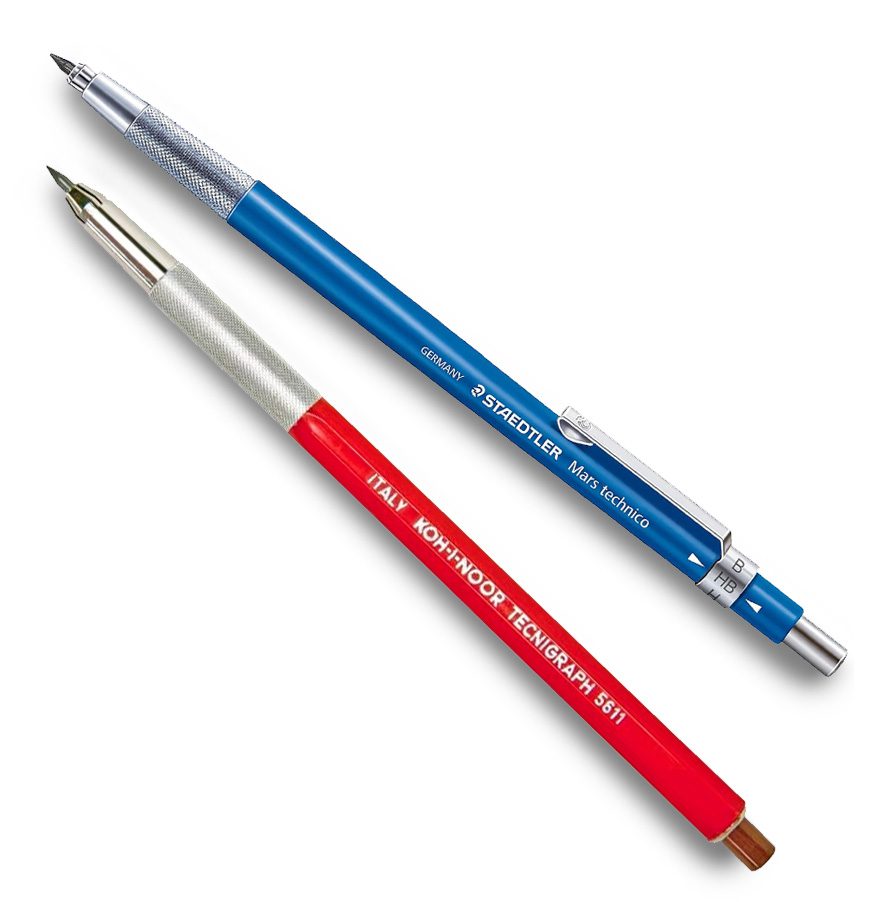
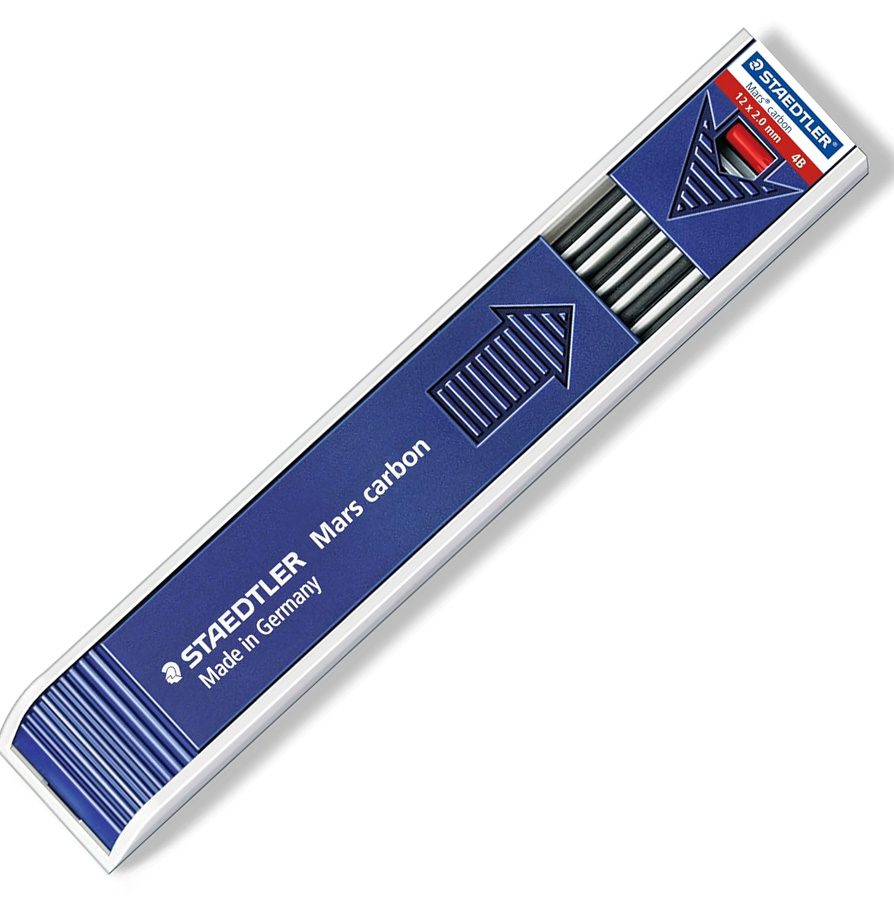
lead holders are pretty comparable. Nice weight in your hand, and the leads are interchangeable, as far as I know, with all the brands (2mm leads). When using light pressure these can keep working for longer than usual before resharpening too.
I recommend getting the pointer (sharpener) BLICK | AMZ  | JACKSONS and some 4B and 2B leads  BLICK  | JACKSONS 

What’s YOUR priority in a pencil?


Perspective in Nature: Roads and Paths part 2

Perspective in Nature: Roads and Paths part 2

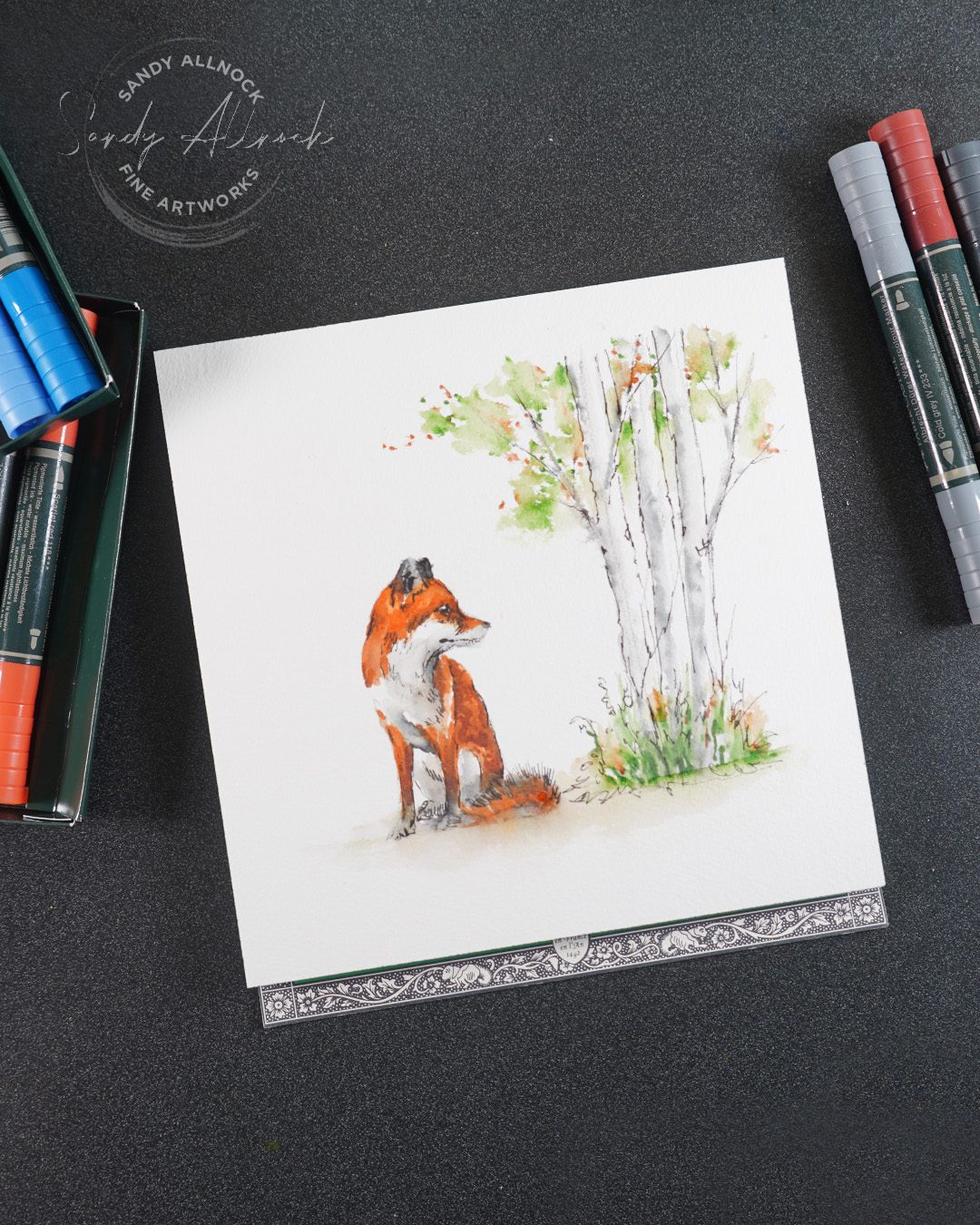
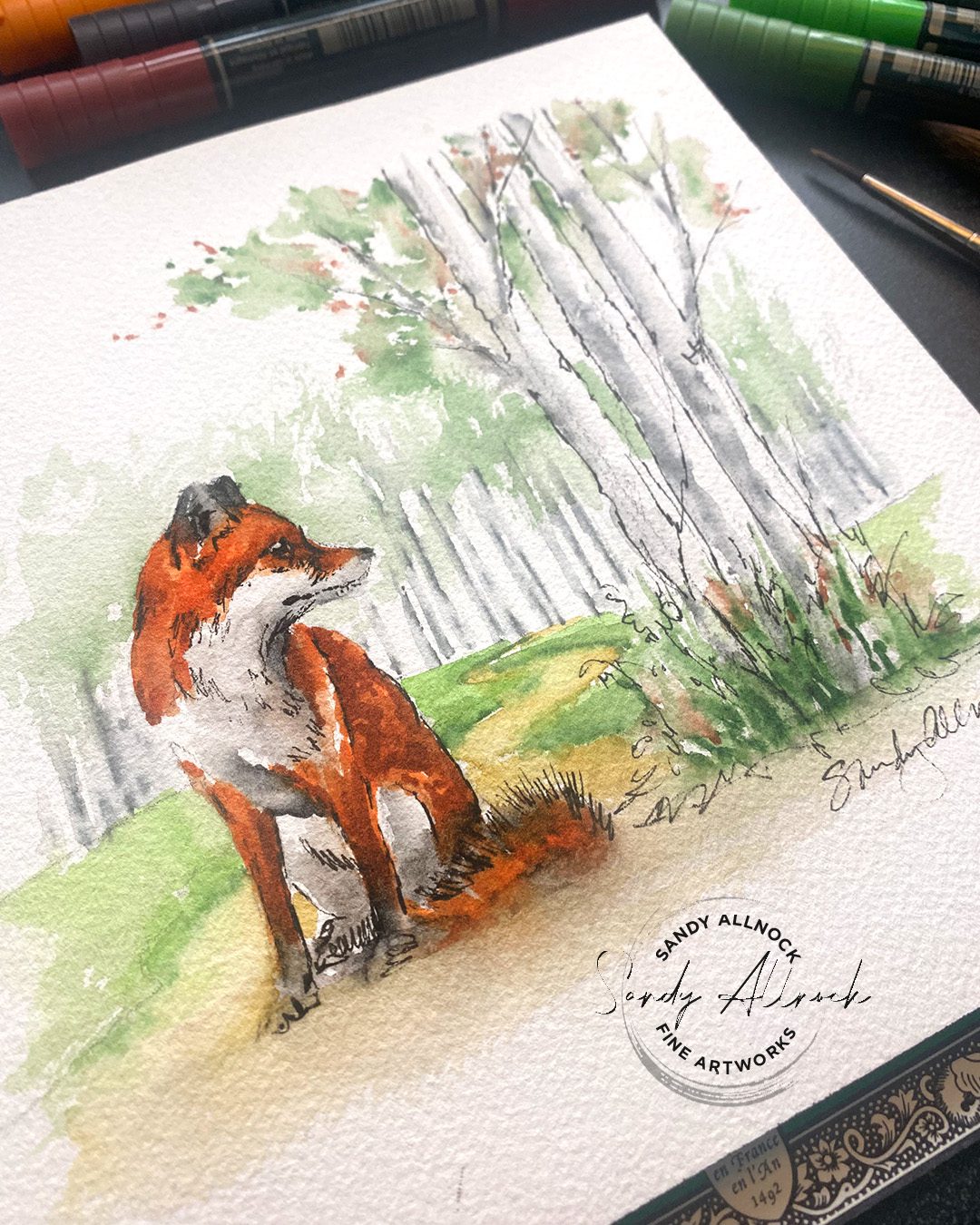
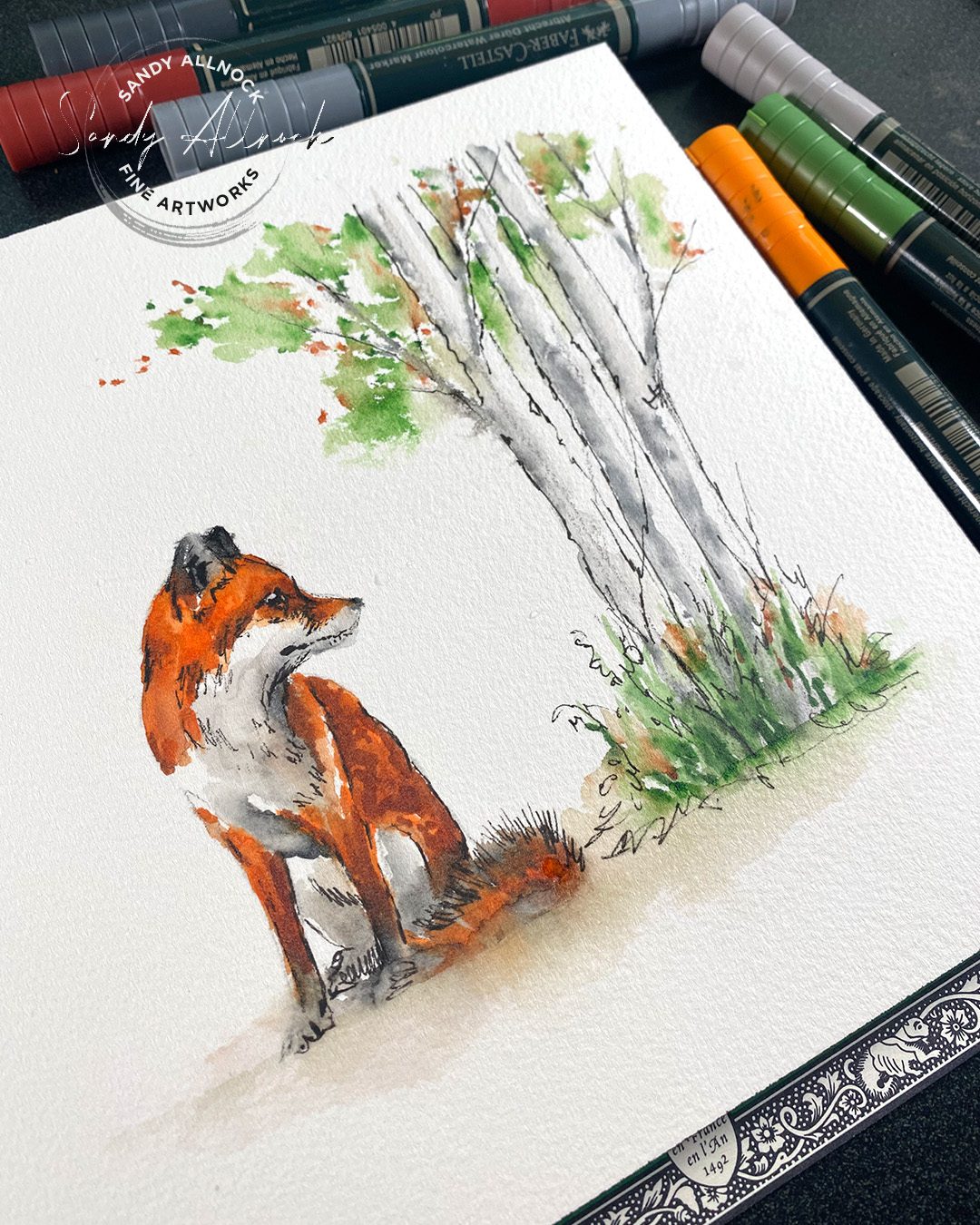
Today I bring you part 2! In the previous helpful discussion I showed photos of various paths in landscapes, and why some can be challenging when we don’t get the perspective right. In today’s project I’ll show you via a little fox how you can plan a scene when you don’t have any reference photo!

Tutorial: Perspective in Nature: Roads and Paths part 2

Watch the video below and scroll to the end to leave comments or questions — or click HERE to watch it on YouTube and leave comments over there. I read both dutifully!

Foreground elements & perspective

Whether a drawing of a fox like this one, or a stamped image – if the subject is seen at ground level, then the perspective will be low to the ground. The horizon will most often be within the subject itself – that way the subject’s head is above the horizon line.

That means if you do put a road high up in the scene with the horizon line high, it will look like a big hillside swooping upward, or else will just feel wrong. While you might think about having taken a picture of your dog and the horizon is high up – remember you’re usually looking down at your dog – and that changes the perspective.

An easy tool to develop ideas

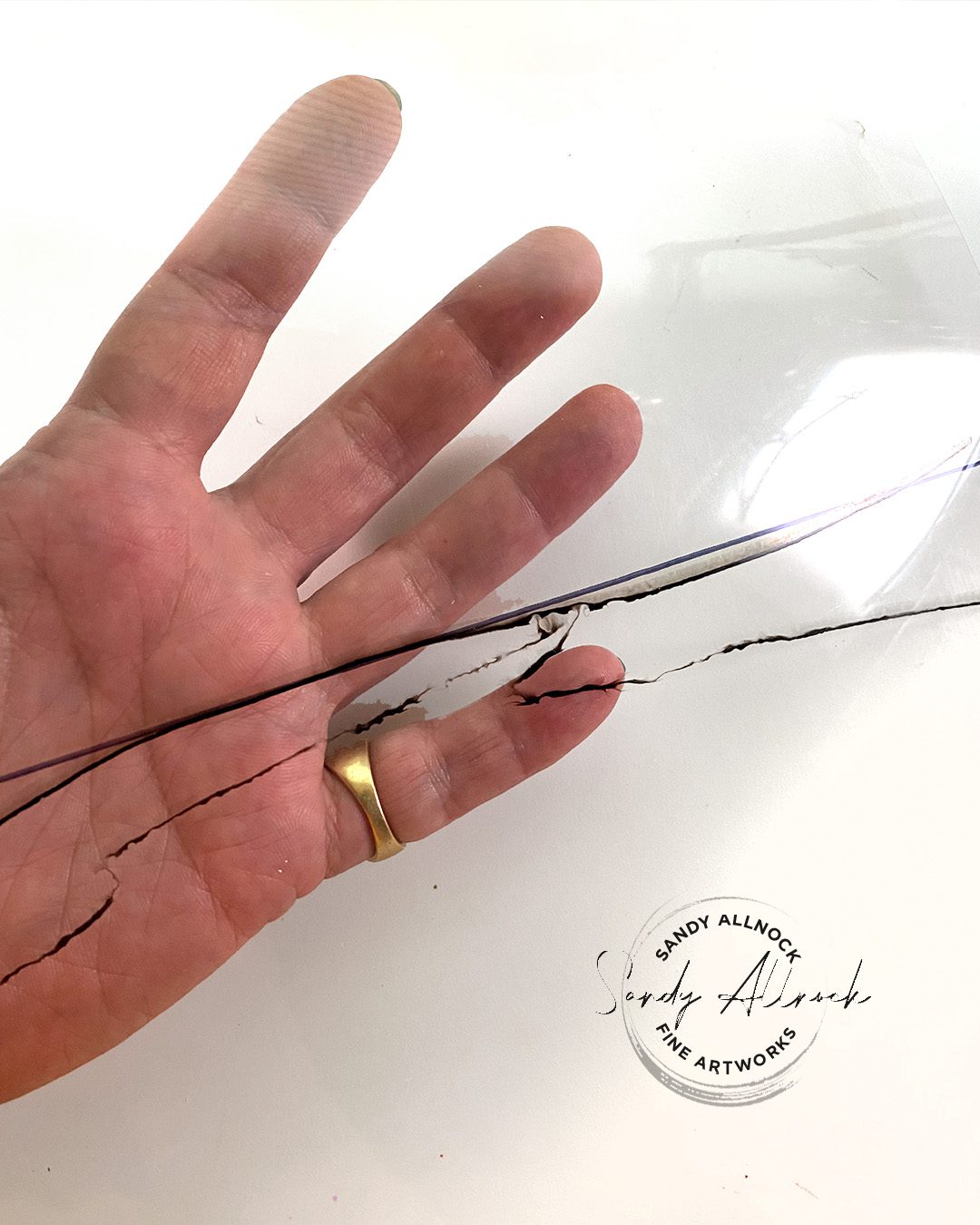
If not using a reference, sketching an idea first can be a big help! Grab a piece of acetate (it can even be old packaging or a page protector) and dedicate it to being your horizon-finder. With a permanent sharpie draw a horizon on one side. Then use a water-soluble pen or marker to sketch possible scenes. 

Place it over your initial drawing and see if a high horizon is what you need – or if you need to fight what you “know” and use a low perspective like this fox cried out for.

Subscribe to receive blog posts by email:

The Background Scene

Once you make a decision about where the focus of the scene will be on your acetate, then it’s time to sketch it onto the piece itself. 

In this image I was thinking not only of the perspective, but in keeping sccene colors light….and denser color would just be in the ground in the low section. That means the fox remains the star – and the perspective looks nice and dramatic too!

Make life easier on yourself…

If you want perspective to be simpler, find a reference! If you’re using stamps, find a scene at the same height the stamp is shown – generally low to the ground. So scenes to pick are ones that the photographer might have been seated in a chair.

That will at least help you develop the size range between elements in the scene as well as the way a pathway appears at that angle.

Supplies

Some product may be provided by manufacturers for review and use. Compensated affiliate links are here at no cost to you. I appreciate your support of my work with your purchases! Full affiliate and product disclosure | My trusted partners in art

  1. Faber Castell Albrecht Durer Watercolor Markers BLICK – AMZ 
  2. Arches Cold Press 8×8 Block BLICK – AMZ 
  3. Da Vinci Cosmotop Spin Brush Round 4 BLICK– AMZ 
  4. Winsor Newton Kolinsky Sable Series 7 Round #8 BLICK – AMZ 
  5. Sakura Micron Pigma Pens BLICK – AMZ