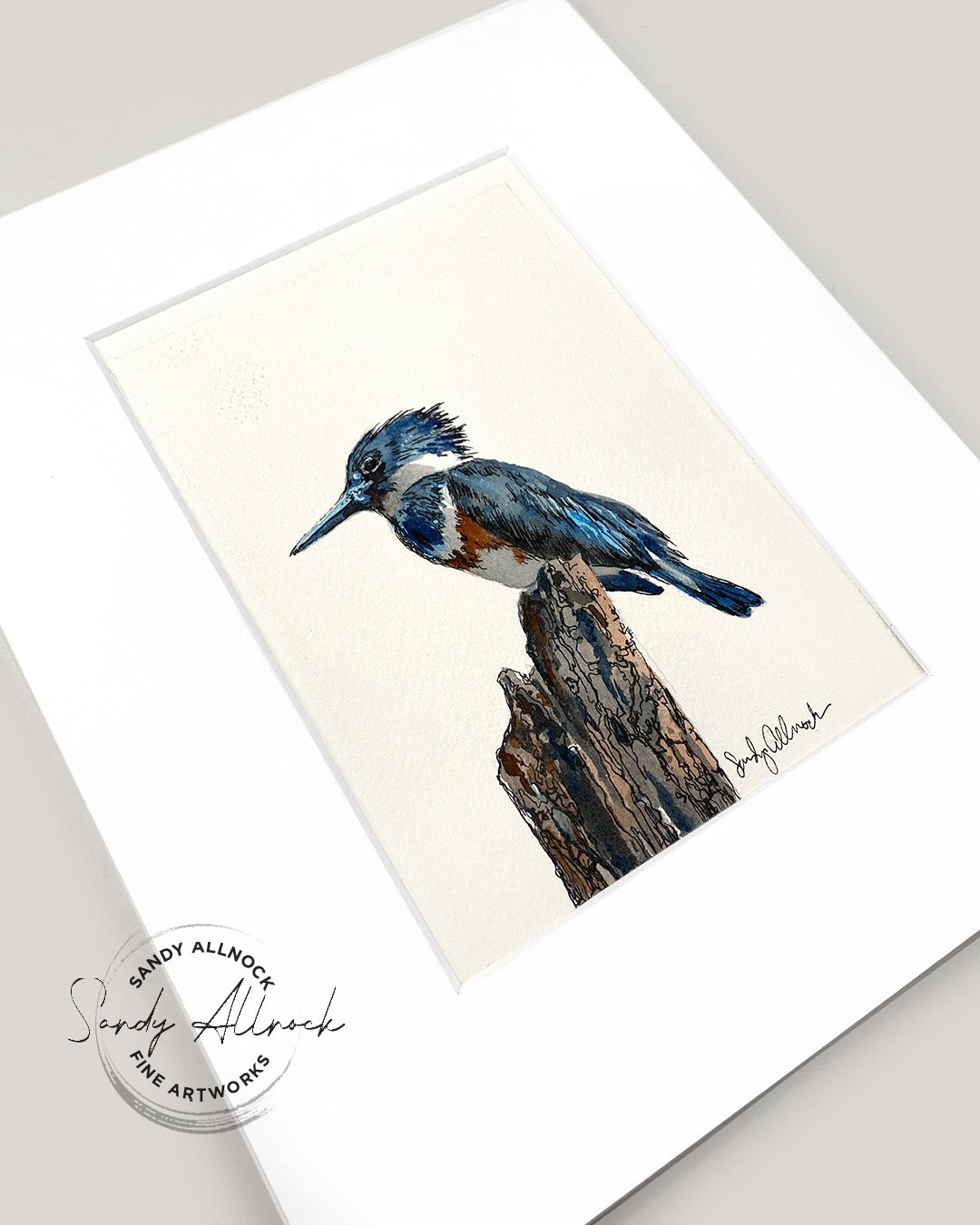
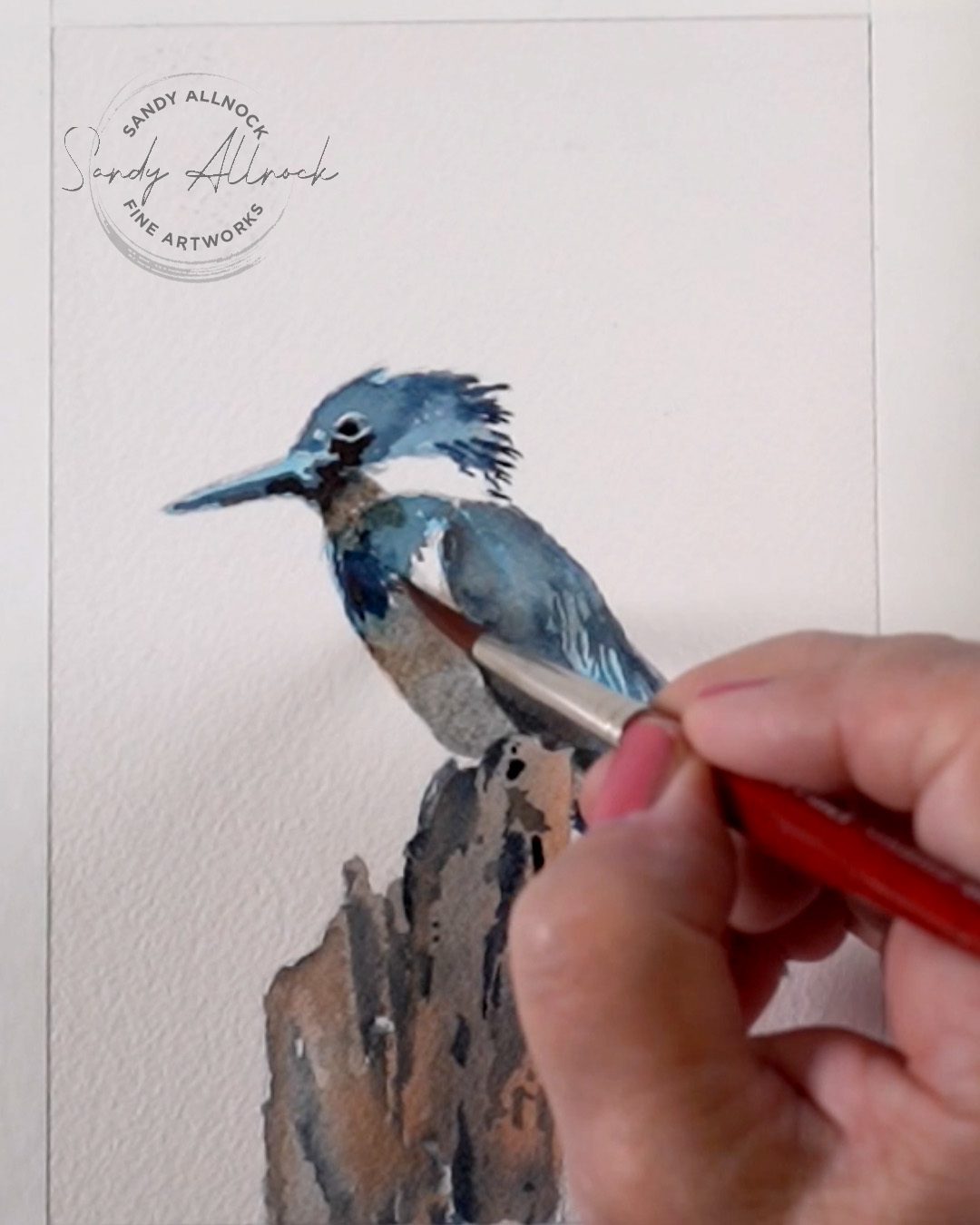
Kingfisher: Painting with palette juice and dip pen
What exactly IS palette juice? It’s the leftovers of your previous painting. Or paintings. Many artists leave that paint on the palette and re-wet it; tubes of paint aren’t cheap, and all that left behind can still be used.
But there are some caveats – and if you feel like your paintings are muddy, this post and video could explain that, as well as give you a better idea what to use all that leftover paint for!
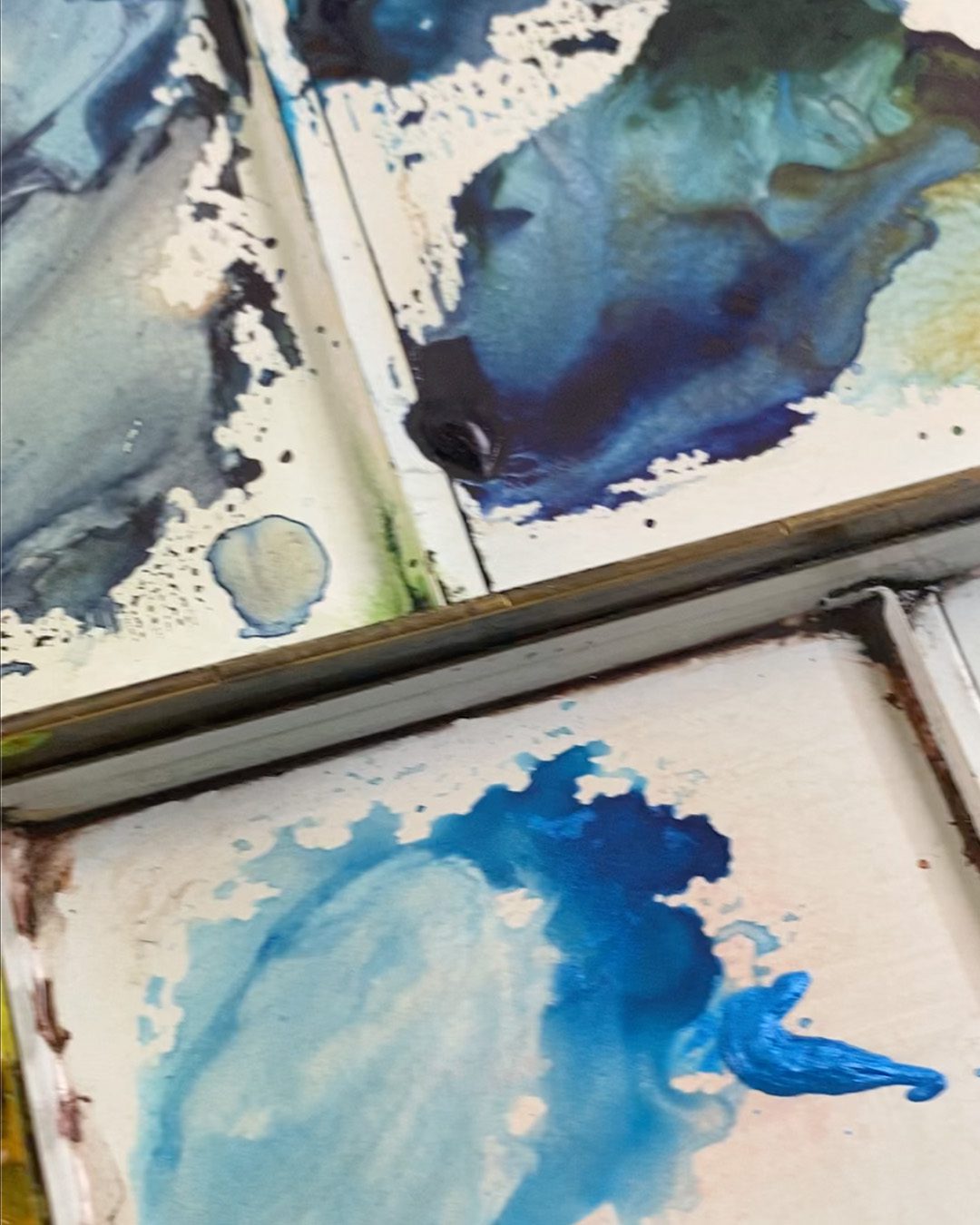
Tutorial: Painting with palette juice and dip pen
Watch the video below and scroll to the end to leave comments or questions — or click HERE to watch it on YouTube and leave comments over there. I read both dutifully!
SUPPLIES
Some product may be provided by manufacturers for review and use. Compensated affiliate links are here at no cost to you. I appreciate your support of my work with your purchases! Full affiliate and product disclosure | My trusted partners in art

Subject matter to paint with palette juice
Since paint left on a palette is generally going to have a variety of colors in it – it’s likely to start making muddy colors at some point. Perhaps if you’re fastidious about not contaminating one with another you can keep that from happening, but desaturation is a near-guaranteed outcome.
Choosing a subject with desaturation is a natural. Barns, cities, anything rusty or made of wood….anything where you want to have those neutral colors! Add something else in it as needed.
If trying to paint with clean color, though, even if it’ll be a clear mix that I control, I do wipe out the mixing well so I don’t pull in tidbits of mud even from the edges where it can get stuck; pulling it into a new mix can make quite a color change without desiring to do that.
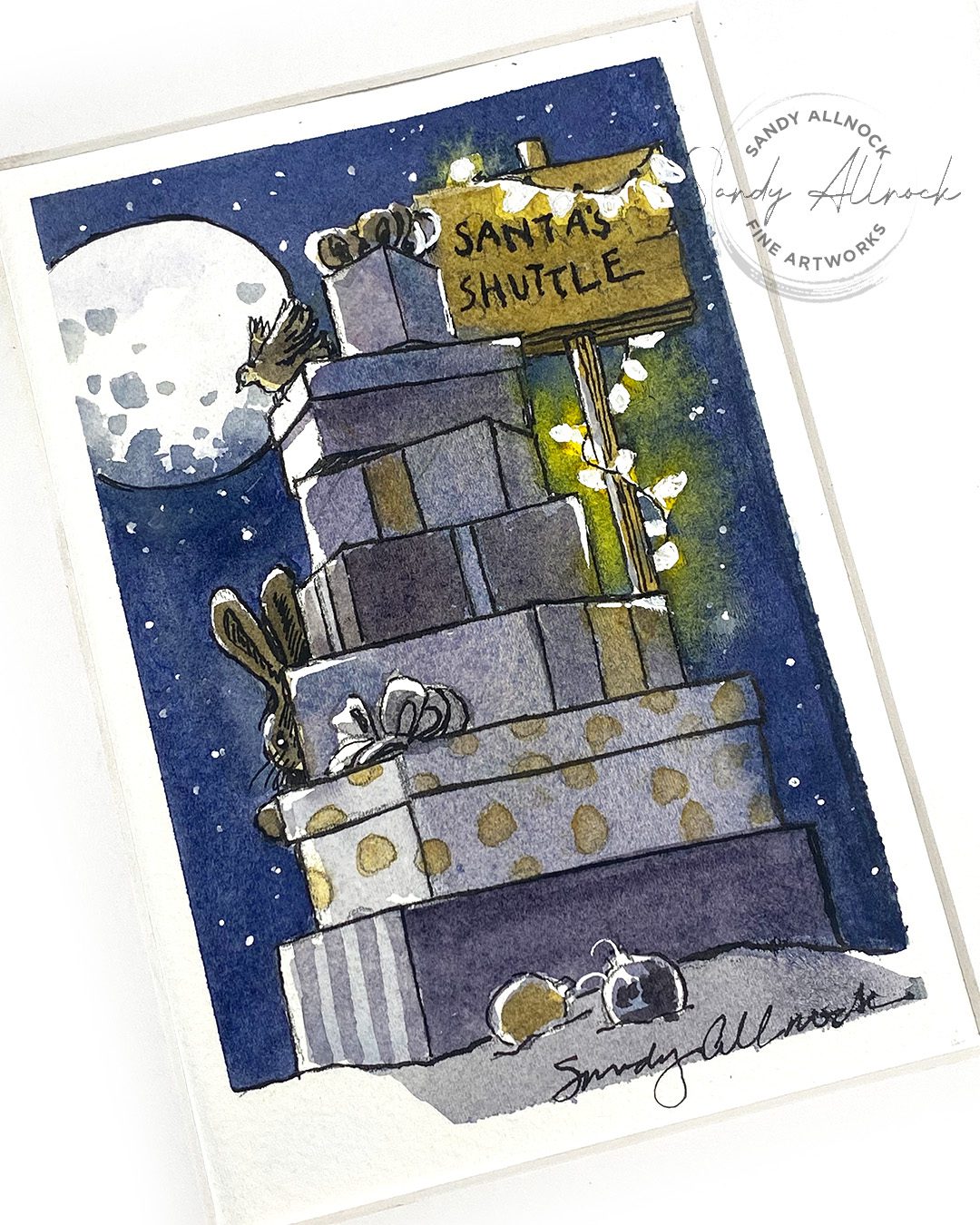
I used the messy desaturated blues for shadows on the bird, and a mix of everything on the palette to paint the post.

Subscribe to receive blog posts by email:
Big shadows: great use for muted palette juice
Artists often wonder what color a shadow is, and will mix a deliberate grey from a Paynes or Neutral Tint color well…but why not let the palette juice create a more interesting shadow? Especially if the same mixture is used elsewhere, it’ll fit in well with the character of the watercolor without introducing another color that wasn’t already in the painting.
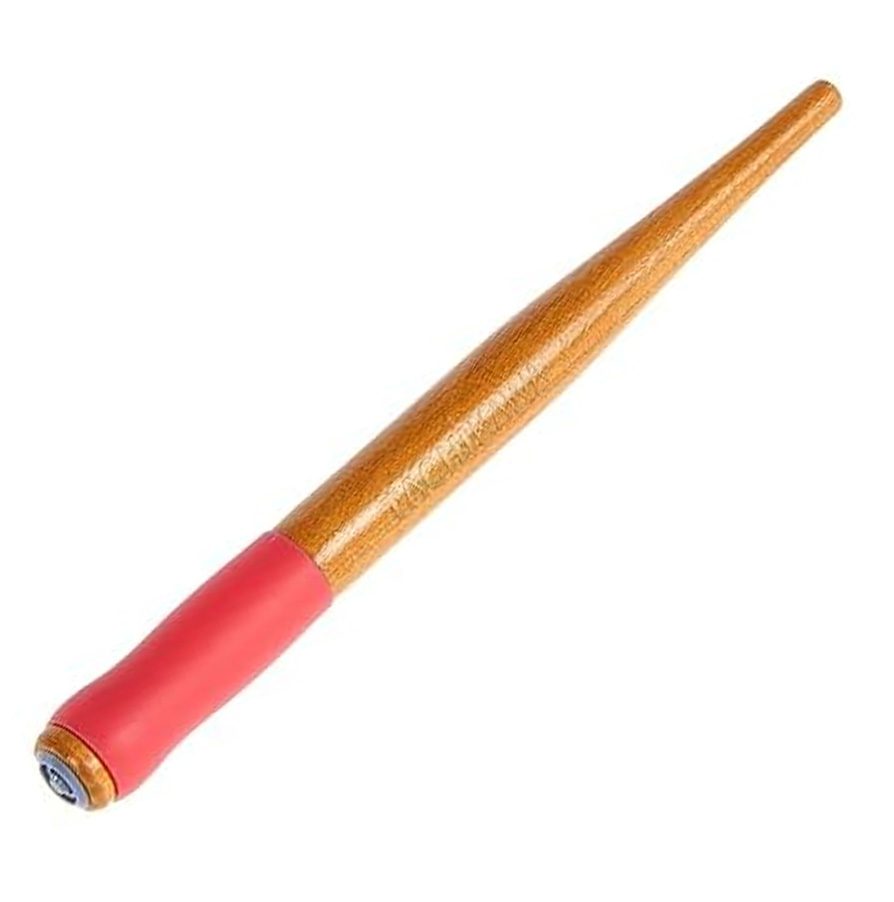
About dip pens
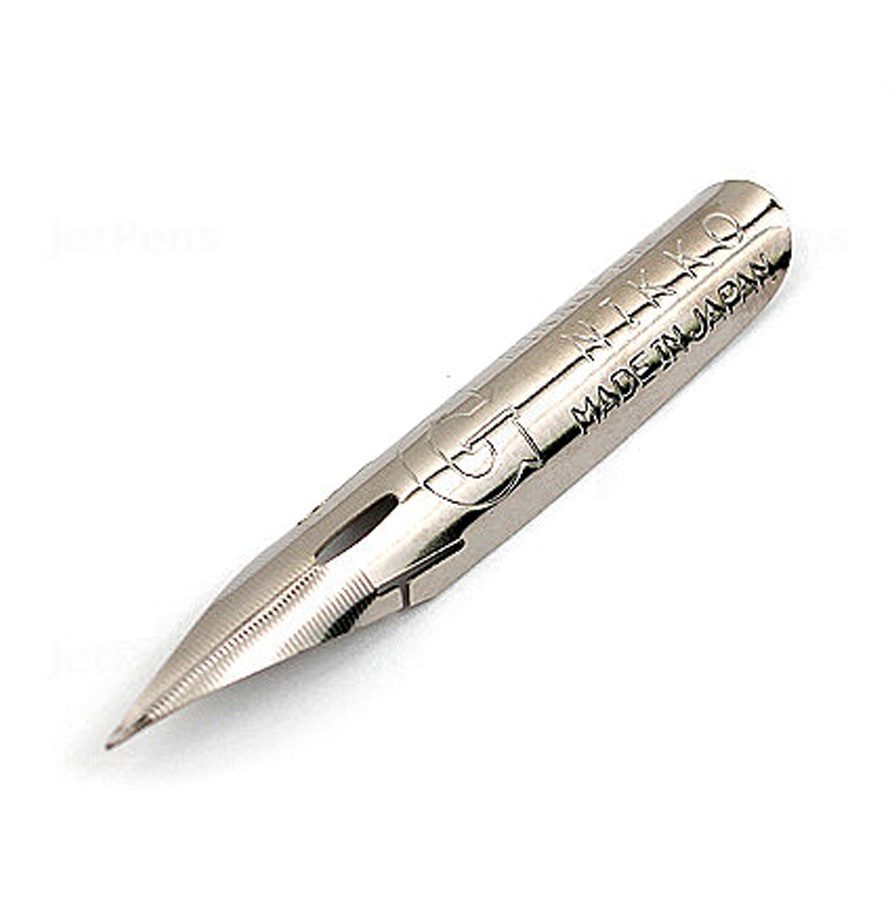
I’d not found a dip pen I liked in all these years. Granted, I didn’t try all that hard because I do love the feel of a nice substantial pen for drawing. But when Kelly Jo listed her dip pen supplies – and this dip pen was so cheap! – I had to give it a go. I was glad she also mentioned her favorite nibs because it might have been my bad nib purchases that also made me not like dip pens!
I do want to explore more, and to find a dip pen that ‘feels’ right for me, but for now, I’m loving this Tachikawa pen. Next up, nib cleaner, LOL. Clean your pens quick if you’re only going to use a damp paper towel! Live and learn, yes I do.
But having the ability to use any ink without having to do pen cleaning is very appealing. As is the ability to have a bunch of nib sizes to choose from. I just need time to do more practice and research!

Inventing wood texture by following watercolor edges
When creating my doodled shapes, I stop looking at the references once I get the major important shapes down on paper. I start to look at the watercolor’s edges – where one color met another, overlapped, or bled– or didn’t. While I might not be happy with those features when working in just watercolor, I know I can exploit those when adding pen and ink detail. It might be why I’m into pen and ink so much lately, too – it gives me freedom not to obsess over perfect painting and instead dive into the pen and ink to pair it with.

Do you paint with palette juice?
And do you make strategic decisions about desaturated subjects to paint with it, or just dive in?