Perspective in Nature: Puffy Clouds part 2
Today we tackle part 2! In the previous helpful discussion we looked at photographs of clouds and assessed the size and scale of detail in clouds. If you missed that post, you might want to check that out before starting in on this one.
This project includes a little addition of some new goodies to the studio. A bit ago when I’d received a payment for a wee freelance project, I dedicated a little of it to buying some new supplies. (My studio has been on a starvation diet kinda like my waistline, and the studio has lost more weight so I’m a tad jealous.) And since I’m now an affiliate for Jackson’s Art, I wanted to try out a few of their branded line of products.
If you’re in America and haven’t heard of Jackson’s – there’s a reason! It’s a company with little footprint in the US, but they do have a US website. So you can buy from them – but please watch shipping costs. My box was quite heavy with all the paper and was almost $20.
If you’re in Europe, you know Jackson’s well, most likely! I’ve been adding Jackson’s to my supply lists for the last several projects and classes; I’m working on building up my link list so when I release my updated artist gift guide for 2024, links for you will be included. And yes, I get to post one link and it works for both the US and EU sites, which makes my life so much easier!

All this means that when I release my artist holiday gift guide for 2024, I’ll get to include Jackson’s links for my overseas pals! So excited.
And if you want to purchase something that I haven’t provided a direct link for, I’d love it if you’d pop over to my blog and use this link in the sidebar of the blog to start your purchase – just like the Blick link.
As with all affiliate links the LAST one you clicked on is the one who gets the credit.
Tutorial: Perspective in Nature: Puffy White Clouds part 2
Watch the video below and scroll to the end to leave comments or questions — or click HERE to watch it on YouTube and leave comments over there. I read both dutifully!
SUPPLIES
Some product may be provided by manufacturers for review and use. Compensated affiliate links are here at no cost to you. I appreciate your support of my work with your purchases! Full affiliate and product disclosure | My trusted partners in art

Watercolor painting
- Jackson’s Watercolor sketchbook
- Brushes:
- Jackson’s Kite brush size 12
- Isabey Kolinsky Round 4 Brush
- Daniel Smith Watercolors:
Pen and ink:
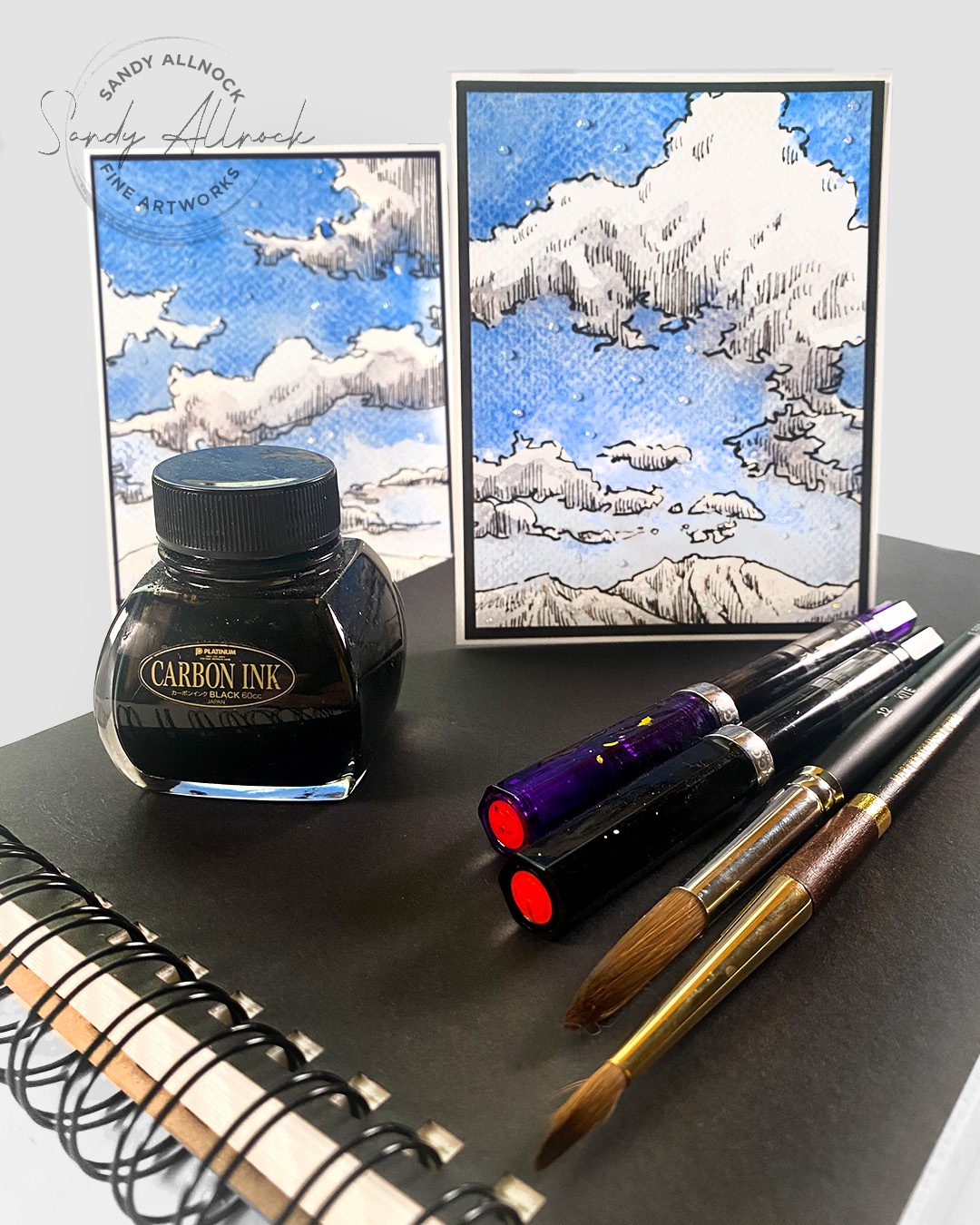
The art supplies
I did enjoy the sketchbook a lot – the paper reminded me of the sketchbook I have by Senellier. Same weight as Arches, not as soft but a nice texture to it. The blocks are the same paper, quite nice. But I think the other pads were on clearance, which might be why they hopped into my cart!
As for the brushes, the Isbey was very nice, and I’ll see over time whether the hairs do any more of the splaying; it didn’t bug me while painting so far. The Kite brush was, well, disappointing. I’m so sad, I had hopes for it!
The TWSBI Eco Medium and Fine nib pens are ones I picked up elsewhere
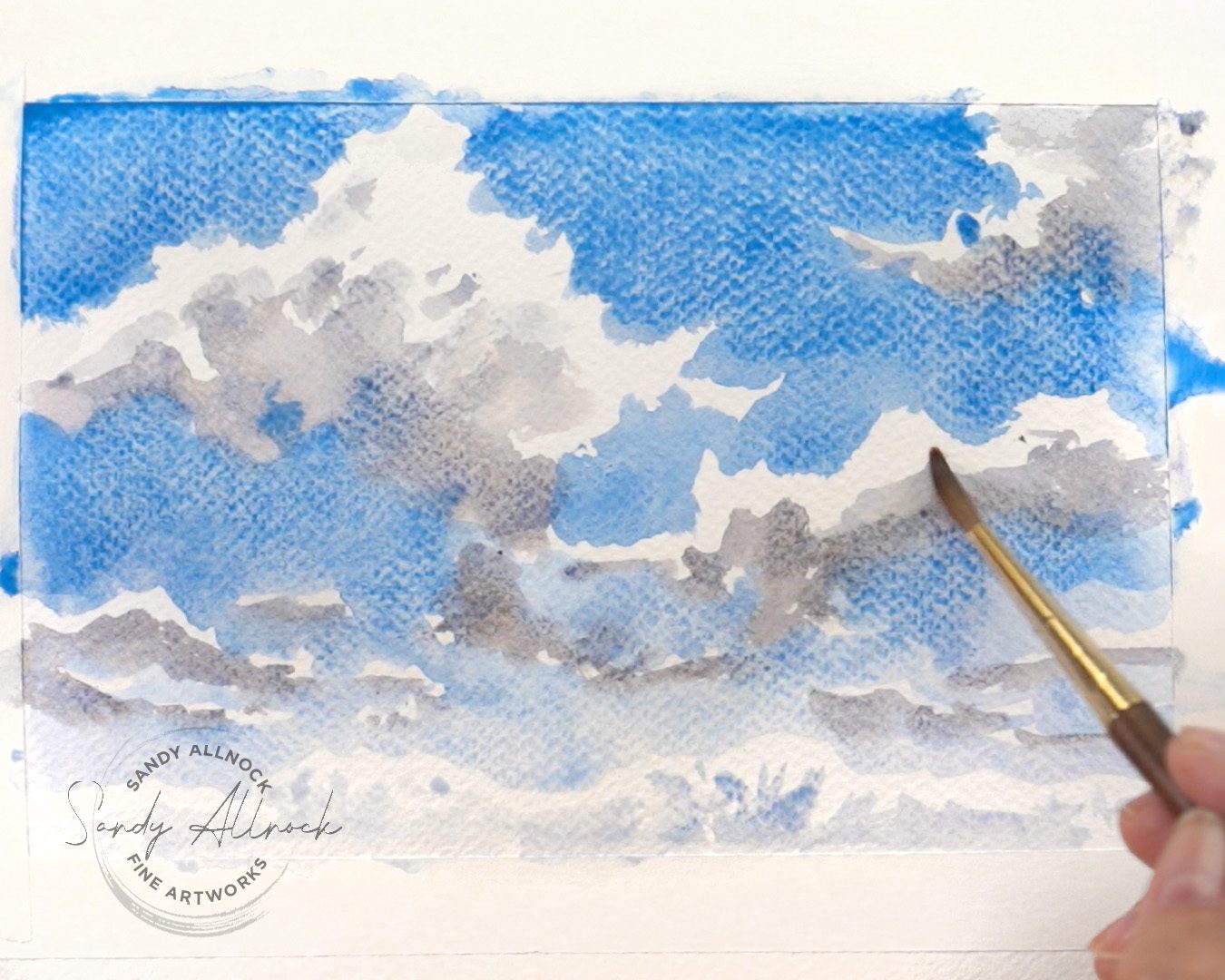
Loose watercolor first
Keeping it loose with watercolor helps in the next step to get the pen and ink to be looser. Why loose? Because it’s hard to get things “perfect,” and after our AI discussion about a week ago – I love having a more artsy piece of art!
Obviously if you want both to be tighter, then sketching everything out and doing the pen work before painting.
Subscribe to receive blog posts by email:
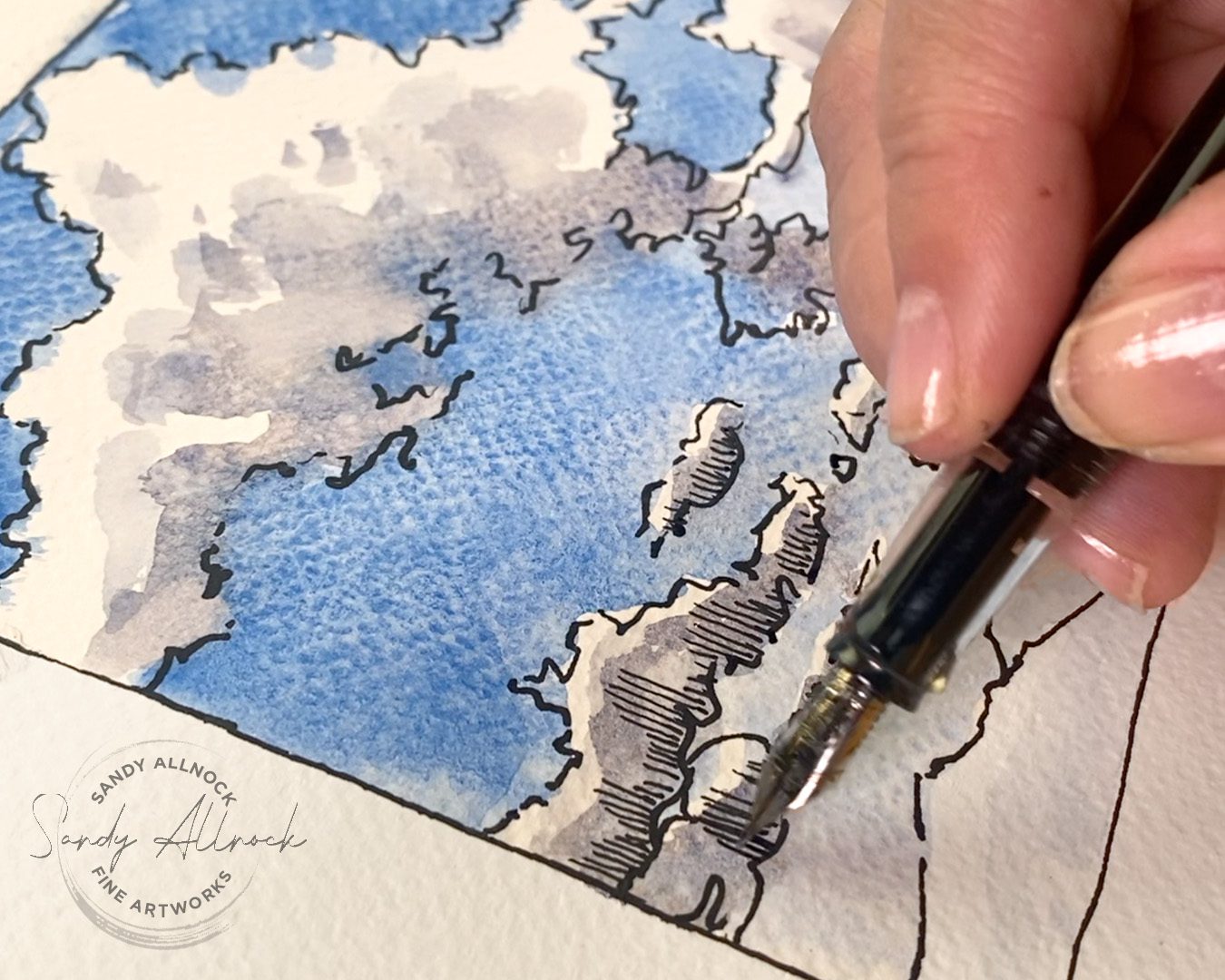
Two pens
The medium nib provides a nice heavy line for the outlines – broken, loose, and fresh. Shading is single hatched in one direction – vertical. Sometimes I do horizontal or angles – but when the whole drawing matches in that aspect, it brings harmony to a busy piece.
Make life easier on yourself…
If you haven’t attempted a wash before your inking, you’re missing out on something that’s possibly going to help. Give it a try!
And if you’d like to do that with some guidance, the Winter Wash and Ink class has some ‘structure’ to it combined with loose and splashy watercolor. Use photos, and trace them so you have a basis, then the watercolor – and only use pen and ink for the focal parts.