
If you’re someone who thinks professional artists don’t have their own struggles or “aha” moments – you’d be wrong! All artists go through the same thing. Sometimes it’s learning a new subject, technique, tool, or color – just like you. We’ve all got areas to grow – and we all need some fresh watercolor discoveries to keep us energized and growing.

Loosening up
Sometimes we think of getting loose as just being splashy. But I find my definition leaning more toward “less detail.” Bigger marks, simpler brushstrokes, and being much less fussy over pushing for realism. Often if we can get loose with brush work, it provides a sense of movement we’ll never get if we’re trying to “replicate reality” with all that detail. Watch the video to see some of my paintings from April – some successful, some not – and a demo of painting some daisies!
Tutorial: Fresh watercolor discoveries
Watch the video below and scroll to the end to leave comments or questions — or click HERE to watch it on YouTube and leave comments over there. I read both dutifully!
SUPPLIES
Some product may be provided by manufacturers for review and use. Compensated affiliate links are here at no cost to you. I appreciate your support of my work with your purchases! Full affiliate and product disclosure | My trusted partners in art

Practice!
I know I struggle with little flowers – not itty bitty ones but small ones. So I’ve been sketching little patches of daisies like this on the backs of old paintings destined for the circular file! I start with lightest color first using a nice big brush to keep loose, then switch to smaller brushes and thicker pigment in each layer. I’ve got to hold myself back from treating the smallest brush like a pencil – that #2 is only for the finest wispy grasses and tiny leaves, not for outlining anything.

Play with color
Each time I’ve painted these little daisies, I’ve tried a different color mix – what a great way to practice a technique and study your own paints too. I’ve tried different colors for the shadows too, and I like the French Ultramarine best.

Subscribe to receive blog posts by email:
Work larger
Trying to paint tiny is sometimes the biggest problem in trying to loosen up. I’ve done so for a variety of reasons:
- “to save paper” – to paint more things without ‘wasting’ it
- “I’m not worth more paper” – until I get better I shouldn’t use it up
- “I can’t do big brush marks” – because mine looked blobby
As for #1, it’s just paper. They keep making more. Use both sides, sure, but the more you paint, the better you’ll get, and you can always trim out sections you DO like and make a card from them, so don’t stress over the parts that didn’t work out.
Oh #2, we all have thought this – we bought cheapo paper “until we get better” but we’ll never get better using cruddy paper! It’s worth it to get the good stuff, believe me.
And #3 will never happen til you start practicing those big brushstrokes. No one’s good at it out of the womb, except maybe Joseph Z. Big beautiful brushes help you get loose by giving you plenty of water and paint to spread around; tiny brushes won’t cover much real estate.
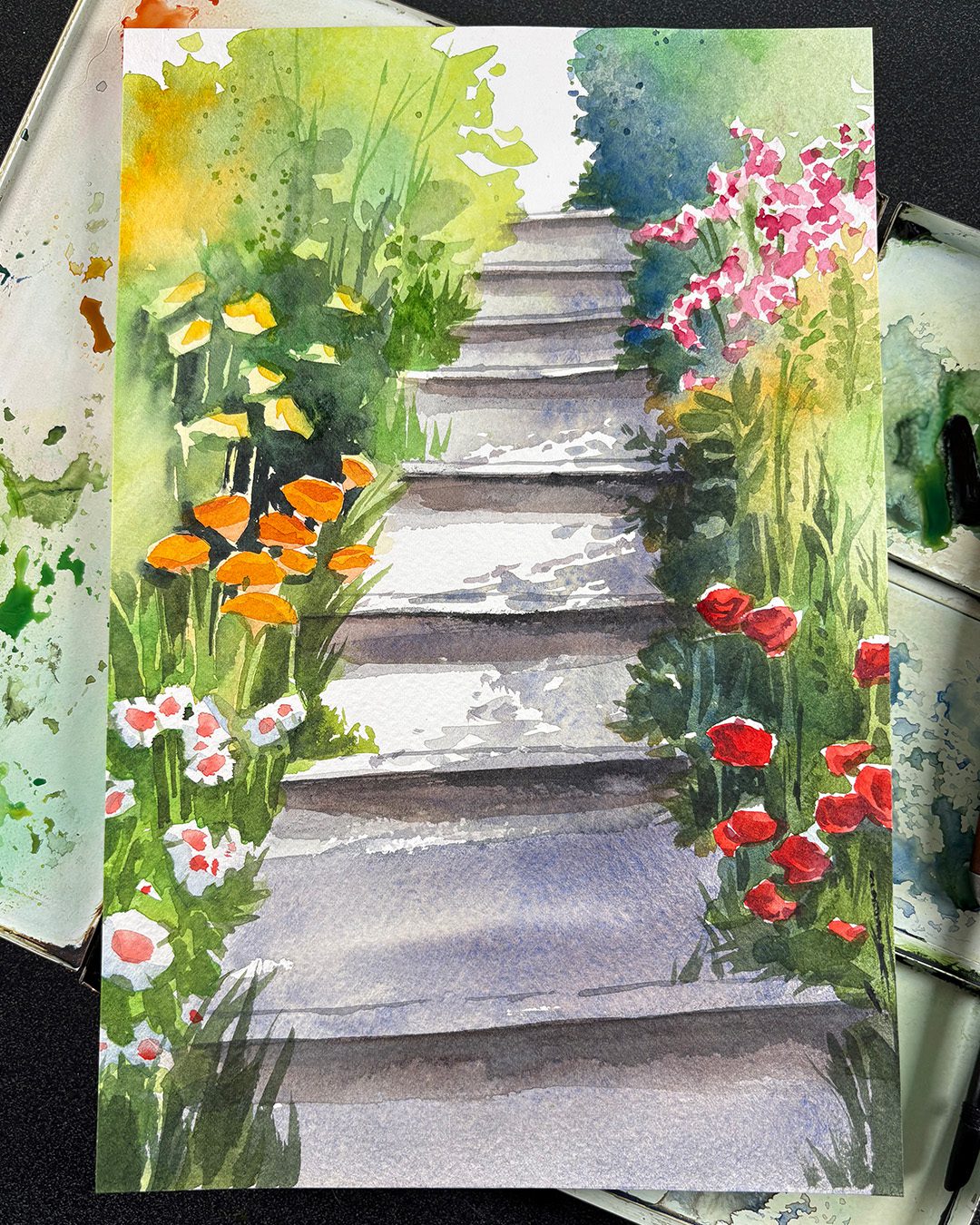
These are just two of the bigger paintings with the daisies – you can see the rest of my April paintings here.
Never too late to join in!
A bunch of us are painting together through the month of April using the 30 Days class lessons – though as I said in the video some started on April 1 and aren’t caught up to today…which is just fine! It’s a do-it-at-your-own pace class, and you can start any time of year.
Next video…
I’ll be sharing the technique for the brick floor, maybe some rocks – it’s another very loose one. See you Tuesday!




0 Comments