
This post and video are from 2015, as I documented my initial forays into watercolor. This post has been updated as of 2021 with notes about what I have come to use, and opinions of some products discussed here originally.
I started in with watercolors last fall (2014), and have been trying to learn all I could from experimenting. Many of my readers have wanted me to make recommendations – and that’s so hard! There are so many brushes, papers, and paints, and much of the decision-making has more to do with YOU and what you plan to do with it.
This post is part of a series of three, and is broken into:
- Papers and Pan Paints
- Brushes
- Technique basics
Links to products are listed below each section.

The paper test was a labor of love! I have bought so many papers that I think I’m stocked up for a good long while. And yet…I still can say I love all of these for different reasons. And I won’t stop buying. I am a total paper lover.
Terminology
- Rough: the most-textured paper.
- Cold press: a textured paper, most popular.
- Hot press: smooth paper.
- Weight: papers come in 300lb, 140lb and 90lb; most use 140lb.
- Pads: Papers attached at the top only.
- Blocks: Papers attached on all 4 sides. (More expensive)
- Sheets: Full 22″ x 30″ sheets, cut to size you want
- Enhanced Surface Cohesion: takes more beating up without pilling
Testing Notes
I chose to do the paint tests on the pad itself, rather than taping it to a board; that was not because I didn’t know to tape them down, but because I wanted to test and see if some papers had more ‘curl’ to them after being completely soaked with water and paint.
As for paints – I chose to only assess pan (cake) paints at this time. I’m trying to find apples-to-apples things to compare, and bringing tube paints and palettes into the mix can muddy the waters, so to speak. (See Getting to Know Daniel Smith for more info on tube paints.) I kept the colors similar too, so there would be fewer factors to compare. And I did not include all the paints in the testing, I had to pick four to keep it easy to follow as I photographed everything.
Below the video I’ll give you my 2021 assessment of papers and pan paints after years of experience.
2021 assessment: Canson XL is a student grade paper. Techniques that work well on artist-grade paper won’t work here; lots of blooming happens on this paper. I still use it for things like stamping Art Impressions Watercolor since the stamping comes out clearer, and it can work well if you’re trying for blooms deliberately. Canson XL Paper: EH – BLICK

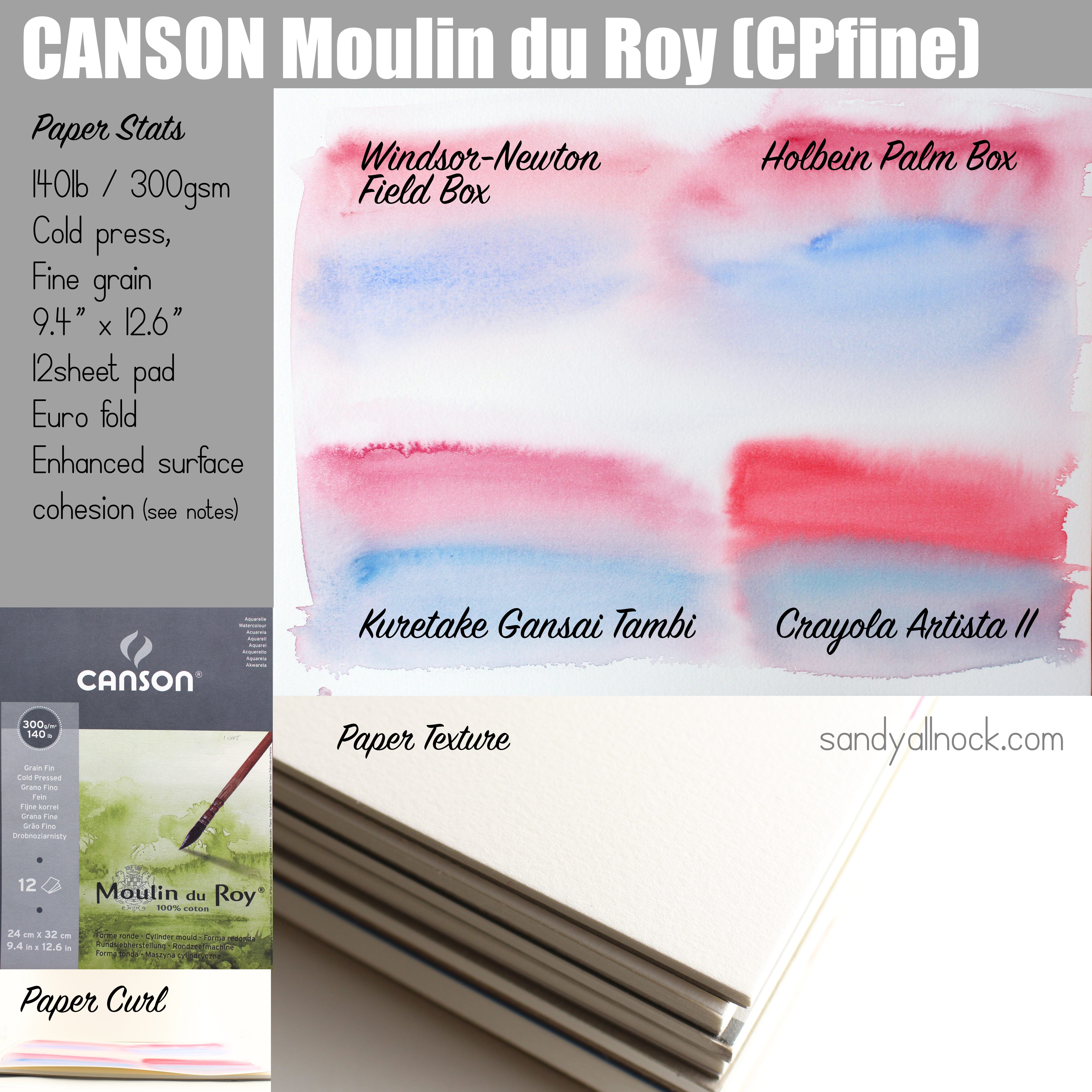
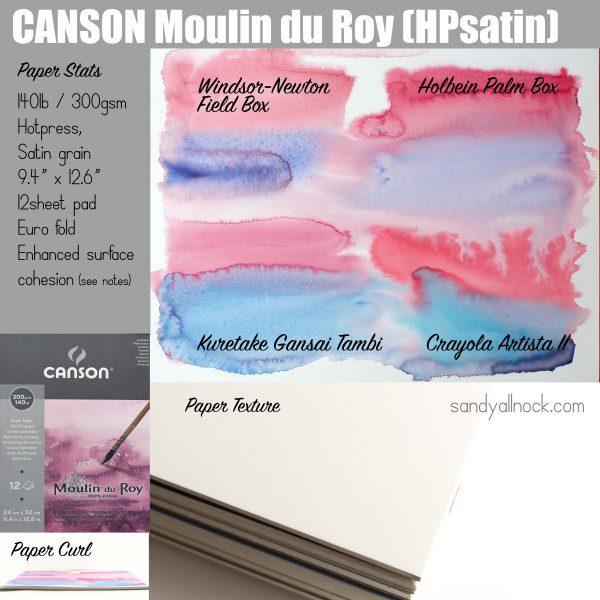
2021 assessment: I’ve never bought any more of the Moulin du Roy after this test; it performs much like the Canson XL and for more money. The rough is better than the cold press, but I didn’t find them to be good papers for me. The “satin” or hot press was really difficult to deal with as I worked through the last of that pad – so no more for me.

2021 assessment: Canson Montval is one of my tests of a block – but it’s still got a lot more blooming than I liked, and I haven’t bought any more of this paper after using up this block.

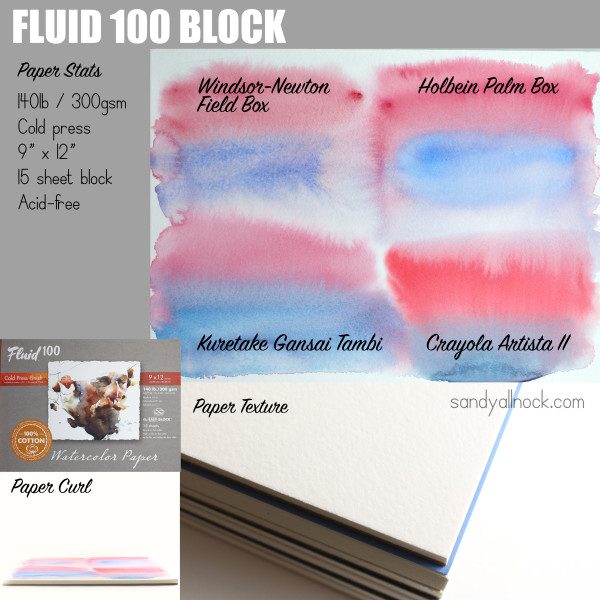
2021 assessment: While Fluid 100 papers (I only saw them in Blocks in my local art store) were far better as we move up the chain of quality, it never did end up being a favorite. Useable for sure, just not fantabulous.
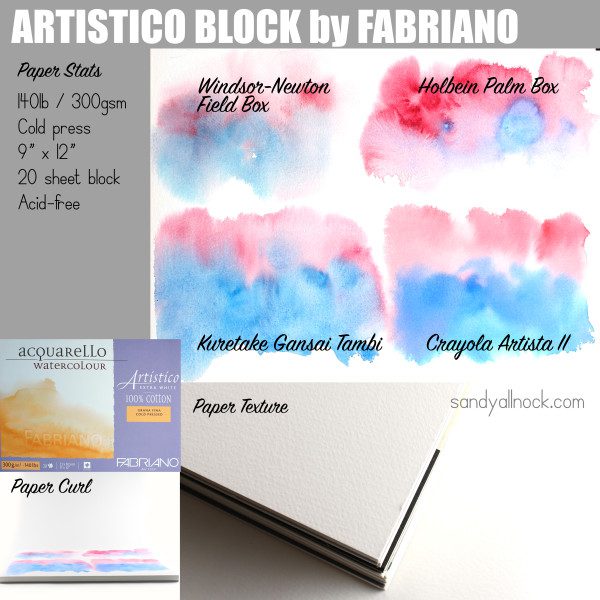
2021 assessment: Fabriano makes some nice papers – though I wasn’t as much a fan of the edges I got as I used up the block. I was intrigued by its lower price, but that didn’t prove to be what I was looking for.
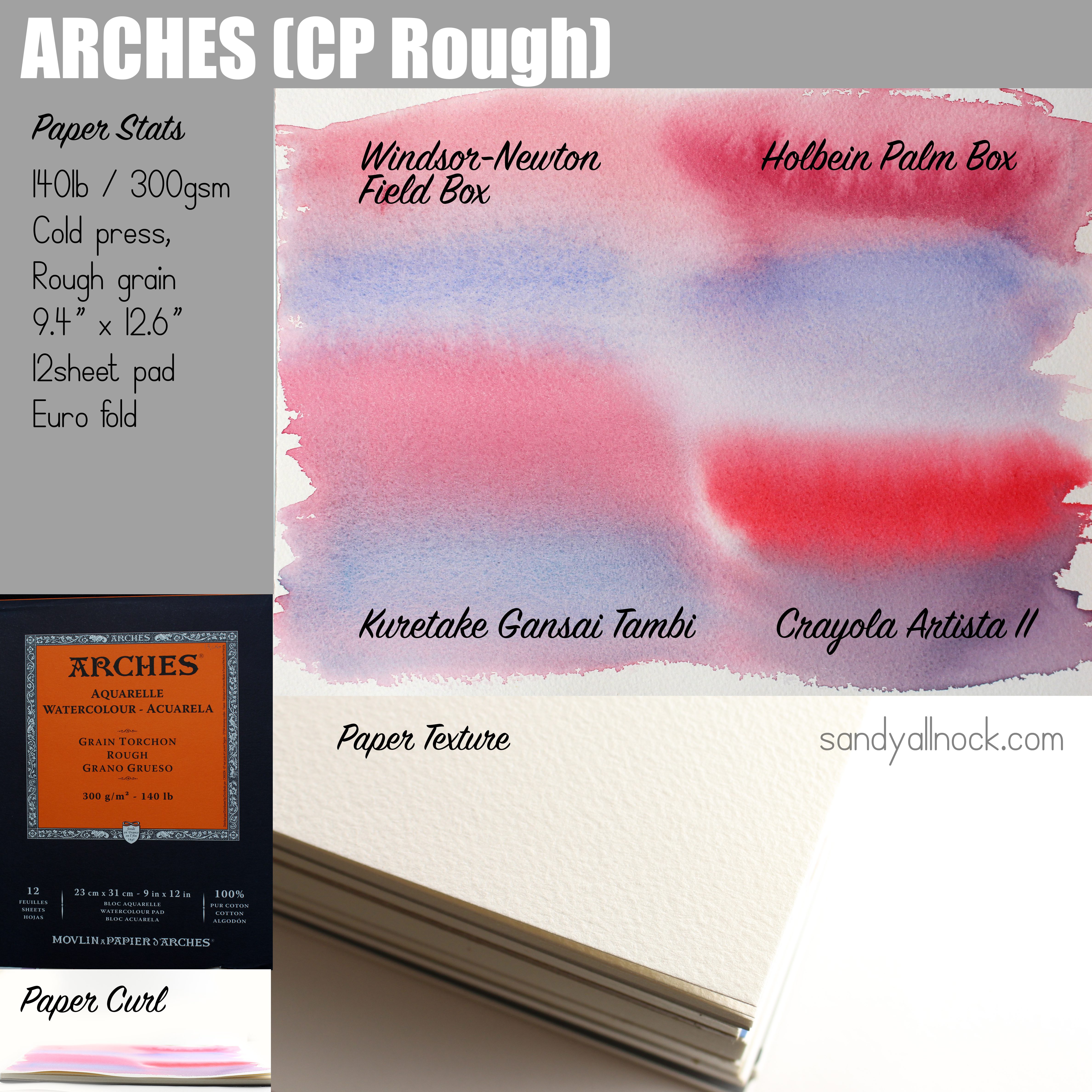
2021 assessment: the good stuff: Arches! I’ve now used it for years and it’s my #1 paper. This is artist grade paper and it’s very obvious in the way the paint moves – edges blend better, it’s easier to create beautiful edges. You can FEEL the difference – it’s softer and more velvety than the cheaper student grade papers. The rough is by far my preference now that I’m experienced; cold press is better for most people. The paper has ridges and valleys that help the paint move; think of it as pouring water on a carpet vs a linoleum floor – the linoleum will have hard puddled edges, whereas the carpet flows the liquid out in a nicer way as it works through the fibers.
Not tested at this time are papers by Saunders Waterford; I’ve become a great fan of their papers since I began this painting adventure; they only come in sheets or blocks, though. Price is relatively the same as Arches. Another I tried in 2020 is Winsor and Newton – those are almost the quality of Arches, and again comparable in price.
Recommended papers
- Arches Pads
- Arches Blocks
- Arches Bright White Sheets
- Arches Natural White Sheets
- Saunders Waterford Blocks
- Saunders Waterford Sheets
And now for paints!
2021 assessment: I’ve moved on to using tube paints almost exclusively now; while some of these paints tested are artist quality, I found I wasn’t a fan of the color selection in the artist sets, and they’re so small they don’t accommodate the large brushes I use. The craft quality sets are most certainly useable – but as I have learned more about these paints, I’ve not used them and even gave a lot of them away.
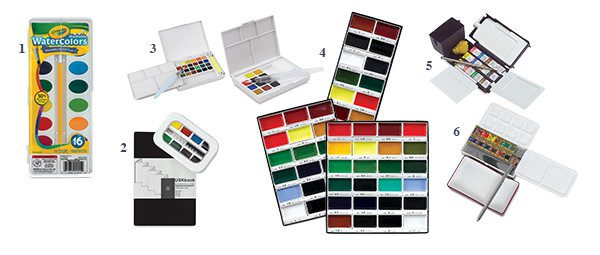
- Children’s paints: Crayola
- Artist grade:Sennelier
- Craft Grade: Sakura Koi sketchbox sets
- Craft Grade: Kuretake Gansai Tambi sets
- Artist grade:Windsor & Newton Field Box
- Artist grade:Holbein Palm Box
2021 assessment: After actually using these paints for more than the swatching tests, here’s my two cents worth:
- Children’s grade paints: fine to play with, but don’t expect them to do much in terms of techniques you’re trying to achieve. Even for Bible journaling these paints can be bad – SOME brands of Crayola and equivalent dollar store paints will bleed through Bible paper, so test carefully!
- Craft grade paints: The Gansai Tambi paints had a little more painterly edges, though the Crayola paints just smooth out whatever paper they’re used on, and colors do get muddy sometimes. It’s a bit of proof that we get what we pay for
- Artist grade paints: The sets shown here are travel sets – while I definitely pull them out when flying somewhere if I don’t want to cart my whole kit n kaboodle, I just don’t find these sets super useful. That doesn’t mean they aren’t good! Just that I’ve found things that work better.
If you’re into traveling and watercoloring, there’s a video all about tiny palettes you can use with your tube colors!
Watercolor Supplies I use in 2021
Some product may be provided by manufacturers for review and use. Compensated affiliate links are here at no cost to you. If you choose to shop using my EH (Ellen Hutson) links, please accept cookies on that site in order to retain the link to my blog, or that compensation does not happen for me. I appreciate your support of my work with your purchases! Full affiliate and product disclosure | My trusted partners in art
- Recommended paper:
- Daniel Smith Tube Watercolors
- Palette:
- Spray bottle
- White artist tape, 3/4”
- Synthetic blend watercolor brushes:
- Natural hair watercolor brushes:



So much good information in these videos. You have no idea how much I appreciate the time, expense & expertise you bring to us. I hope you stay in touch with your blog posts for a long time to come Sandy.